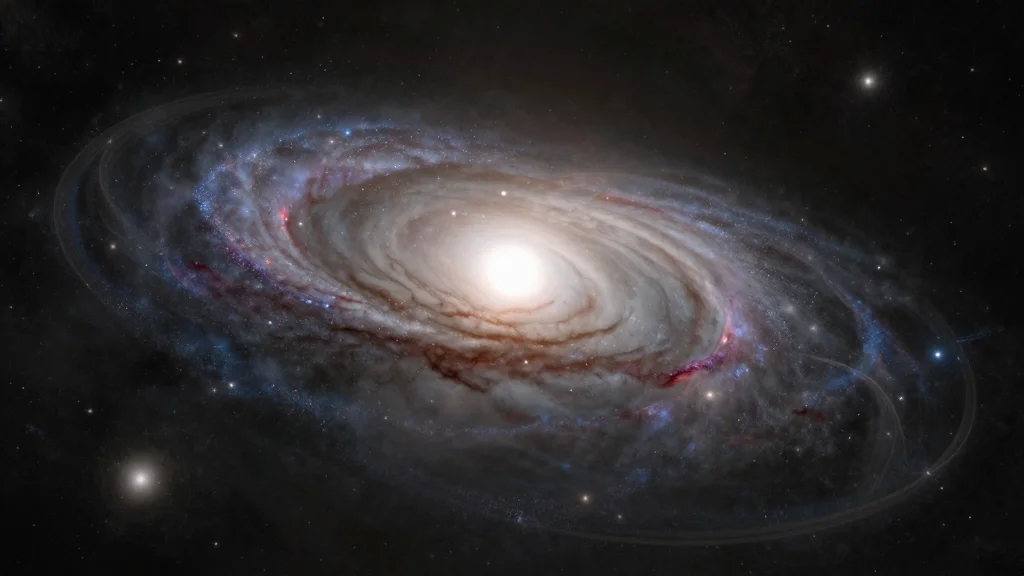
Cosmic Test Confirms Inverse‑Square Law of Gravity Across Hundreds of Millions of Light‑Years

Why It Matters
Validating Newton’s inverse‑square law on inter‑cluster distances eliminates a major loophole that could have allowed modified‑gravity theories to replace dark matter in explaining cosmic structure. The result also demonstrates the power of kSZ measurements as a tool for precision cosmology, opening a new avenue for testing fundamental physics across the observable universe. Beyond the immediate scientific impact, the study showcases how collaborative, multi‑instrument approaches—combining microwave background data with extensive galaxy surveys—can resolve longstanding questions about the universe’s composition. As larger datasets become available, similar techniques may be applied to test other aspects of general relativity and to search for subtle signatures of new physics.
Key Takeaways
- •University of Pennsylvania-led team confirms inverse‑square law across ~100‑200 million light‑year separations
- •Analysis uses kinematic Sunyaev‑Zeldovich effect data from the Atacama Cosmology Telescope
- •Findings align with predictions of the standard ΛCDM model and reinforce dark‑matter necessity
- •Study places new limits on Modified Newtonian Dynamics and other alternative gravity theories
- •Future observations from Simons Observatory and CMB‑S4 will extend the test to larger cosmic volumes
Pulse Analysis
The confirmation of Newtonian gravity on such grand scales is a watershed for cosmology, not because it overturns existing theory, but because it removes a critical uncertainty that has lingered for decades. Modified‑gravity frameworks have long leveraged the lack of direct tests at inter‑cluster distances to argue that dark matter might be an artifact of an incomplete gravitational model. By delivering a robust, observation‑driven refutation of that loophole, the University of Pennsylvania study narrows the viable parameter space for any theory that seeks to replace dark matter.
Methodologically, the work illustrates the maturation of kSZ cosmology. Ten years ago, the kSZ effect was a theoretical curiosity; today it serves as a precision probe of bulk motions in the universe. The ability to translate minute temperature shifts in the cosmic microwave background into reliable velocity estimates marks a significant technical leap, one that will be amplified by the higher sensitivity of upcoming CMB experiments. As the data quality improves, researchers will be able to test not only the strength of gravity but also its potential anisotropies or time‑varying behavior.
Looking ahead, the real test will be whether these techniques can uncover any subtle deviations that might hint at new physics beyond the standard model. For now, the message is clear: the gravitational rule that governs an apple falling from a tree also governs the slow, inexorable drift of galaxy clusters across the void. This continuity across 15 orders of magnitude underscores the elegance of the current cosmological framework while setting a high bar for any challenger.
Cosmic Test Confirms Inverse‑Square Law of Gravity Across Hundreds of Millions of Light‑Years
Comments
Want to join the conversation?
Loading comments...