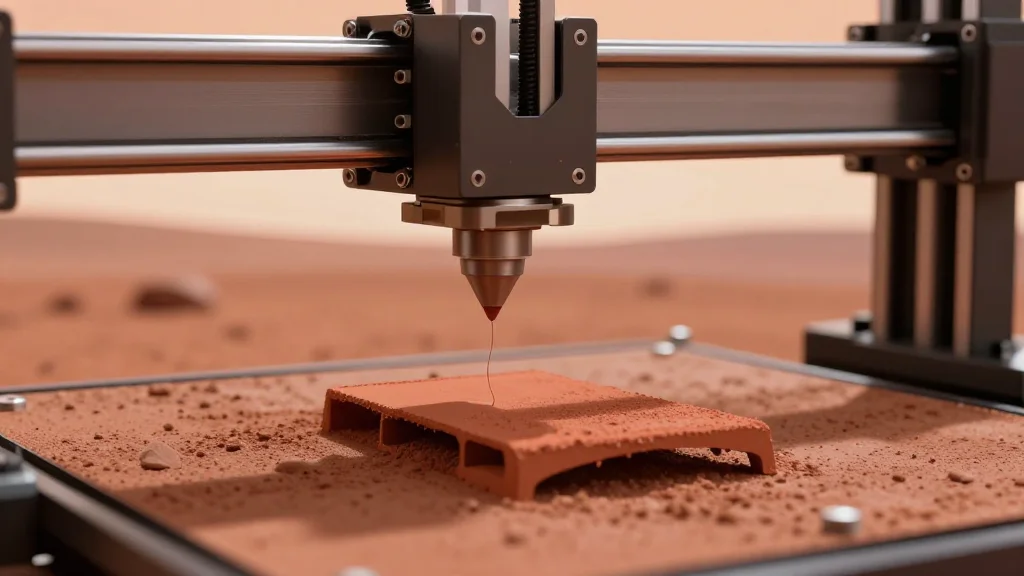
Could Future Mars Settlers Print Their Own Tools?
Why It Matters
Enabling metal printing with Martian CO₂ reduces launch mass and logistical complexity, accelerating the feasibility of autonomous habitat construction on Mars.
Key Takeaways
- •3D metal printing tested in CO₂ atmosphere simulating Mars
- •CO₂ prints performed better than air but weaker than argon
- •Recyclable metal powder reduces material waste for Martian habitats
- •Findings support in‑situ manufacturing, cutting launch mass and costs
- •Study published in Journal of Manufacturing and Materials Processing
Pulse Analysis
The prospect of permanent human outposts on Mars hinges on the ability to fabricate tools and structural components far from Earth’s supply chains. Traditional logistics demand that every kilogram of equipment be launched across 34 million miles, inflating mission costs and limiting design flexibility. In‑situ resource utilization (ISRU) has therefore become a cornerstone of NASA’s and commercial partners’ architecture, with additive manufacturing emerging as the most versatile ISRU technology. By converting raw feedstock into functional parts on the planet’s surface, 3‑D printing can dramatically shrink payloads and accelerate construction timelines.
University of Arizona undergraduate Zane Mebruer, under Professor Wan Shou, explored whether metal powder‑bed fusion can operate within a carbon‑dioxide‑rich environment that mirrors the Martian atmosphere. Using laser‑beam powder‑bed fusion, the team printed simple metal lines in argon, CO₂, and ambient air, then examined micro‑structural defects. While argon still delivered the highest density and strength, CO₂‑printed samples outperformed those made in air, showing acceptable surface uniformity despite increased oxidation. The experiment demonstrates that a CO₂‑filled chamber could serve as a viable, low‑mass alternative to transporting argon supplies.
These findings open a pathway toward scalable, on‑planet manufacturing that leverages locally sourced gases and recyclable metal powder. Future work will need to address the reduced inter‑layer cohesion observed in CO₂, perhaps through alloy selection or post‑process heat treatments, and integrate Martian regolith as a feedstock. If resolved, the technology could cut launch mass by tens of percent, lower overall mission budgets, and shorten the timeline for habitat assembly. The broader aerospace sector is watching closely, as similar ISRU strategies could reshape satellite servicing and lunar base construction.
Could future Mars settlers print their own tools?
Comments
Want to join the conversation?
Loading comments...