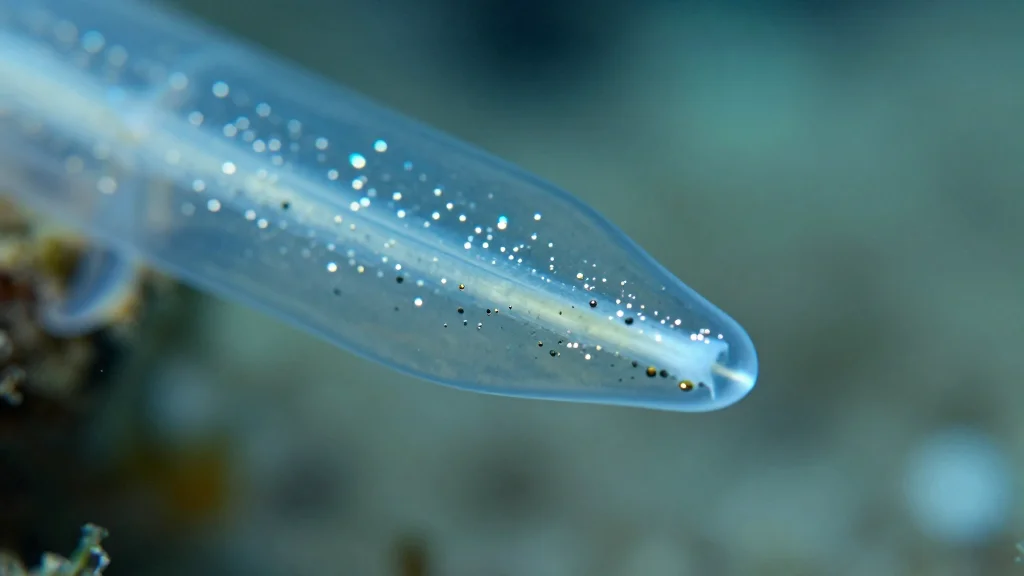
Could Sea Squirts’ Nano-Packaging Unlock a New Era in Sea Forest Restoration?
Why It Matters
The mechanism provides a scalable model for eco‑friendly underwater adhesives, directly addressing restoration of marine habitats and opening new markets in biotech and industrial coatings.
Key Takeaways
- •Sea squirts package adhesive proteins in metal‑ion nanocondensates.
- •Iron, chromium, vanadium stabilize proteins during intracellular transport.
- •Nano‑packaging enables controlled release at rhizoid tips for strong adhesion.
- •Biomimetic insights could improve underwater adhesives for seaweed restoration.
- •Findings may inspire eco‑friendly coatings for medical implants and industry.
Pulse Analysis
Marine bioadhesion has long been dominated by mussel‑derived DOPA chemistry, yet the recent POSTECH study reveals a distinct strategy employed by tunicates. By synthesizing adhesive proteins intracellularly and sequestering them in metal‑ion‑coordinated nanocondensates, sea squirts circumvent premature degradation and ensure precise deployment at the substrate interface. This internal logistics system, visualized through high‑resolution electron microscopy, underscores nature’s capacity to engineer complex material transport pathways in harsh, aqueous environments.
The research details how iron, chromium and vanadium act as temporary stabilizers, forming solid particulates that travel through dedicated cellular vesicles to the rhizoid holdfast. Upon reaching the outer cuticle, the metal ions disengage, triggering a rapid conformational shift that activates the adhesive proteins. This two‑stage process—protective packaging followed by on‑site activation—offers a template for synthetic adhesives that require both storage stability and instant bonding strength, a combination rarely achieved in current wet‑adhesive technologies.
Beyond academic intrigue, the findings have immediate commercial relevance. Replicating the nanocondensate architecture could produce biodegradable adhesives for seaweed farming, enhancing early‑stage attachment to rocky substrates and supporting carbon‑sequestration initiatives. Parallel applications span biomedical implants, where controlled release of adhesive agents can improve tissue integration, and industrial coatings that must endure dynamic marine conditions. As climate‑driven ocean degradation accelerates, translating this tunicate blueprint into scalable products may become a cornerstone of sustainable marine engineering and a lucrative niche for material‑science startups.
Could Sea Squirts’ Nano-Packaging Unlock a New Era in Sea Forest Restoration?
Comments
Want to join the conversation?
Loading comments...