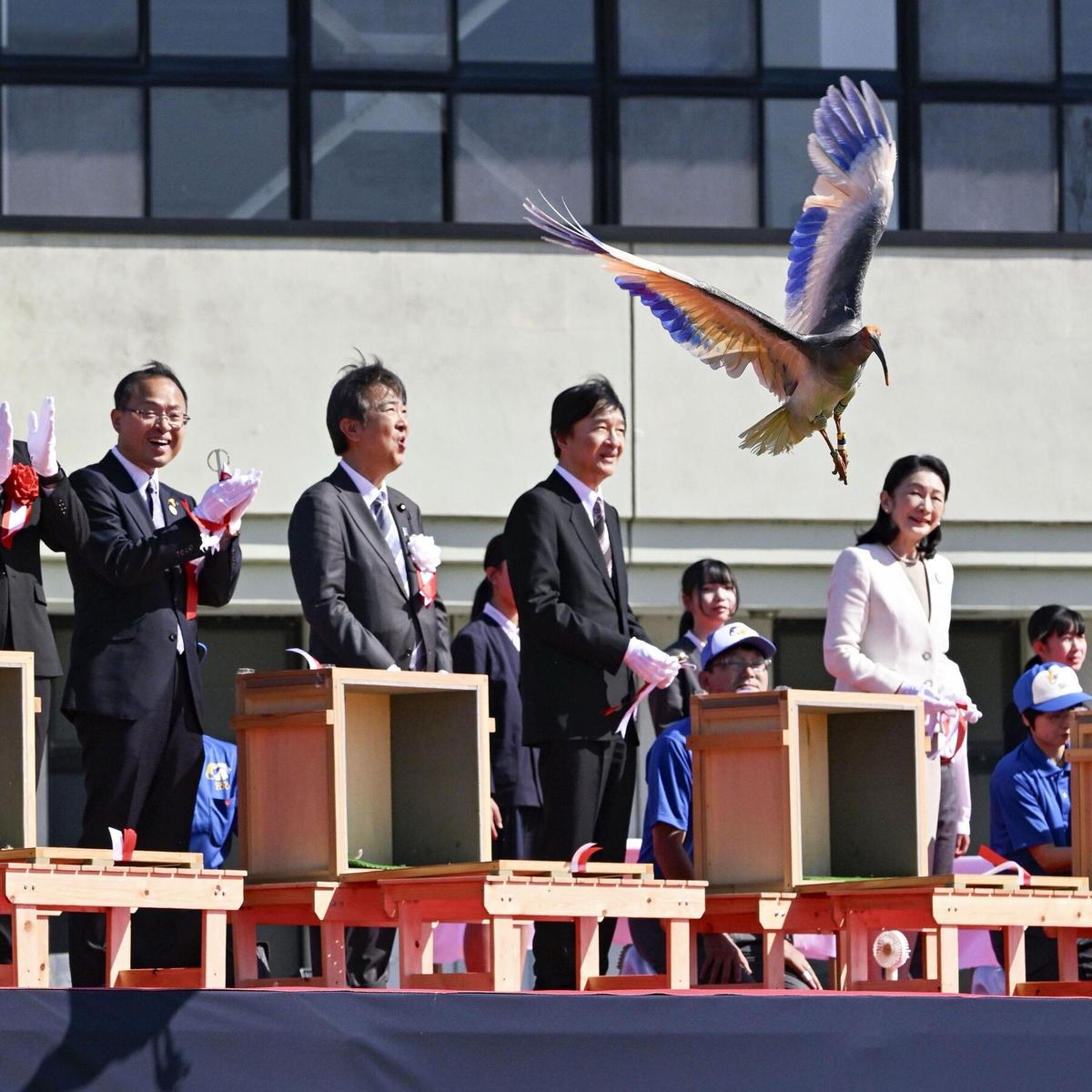
Crested Ibises Get the Royal Treatment in Japan as They Fly Again
Why It Matters
The release shows that cross‑border breeding and reintroduction can restore an endangered species, strengthening Japan’s biodiversity and reinforcing international conservation partnerships.
Key Takeaways
- •First wild crested ibis release on Honshu in 50+ years
- •Population rose to ~500 birds after Japan‑China breeding partnership
- •Each bird completes three‑month acclimatization before release
- •Royal attendance underscores national commitment to wildlife recovery
- •Ongoing nesting behavior signals a self‑sustaining wild population
Pulse Analysis
The Asian crested ibis, known as toki in Japan, once dotted rice paddies from Hokkaido to Kyushu, appearing in 8th‑century chronicles and imperial tombs. By the mid‑20th century habitat loss, pesticide use, and hunting drove the bird to the brink of extinction, leaving only a handful in captivity. The loss resonated culturally as well as ecologically, because the bird’s striking plumage had long featured in court ceremonies and folk songs. Its disappearance highlighted the fragile balance between traditional agriculture and wildlife in a rapidly modernising nation.
Rescue began in the 1990s when Chinese zoos, which had maintained a small captive stock, supplied Japan with genetically compatible individuals. Joint breeding centers on Sado Island and in Kyoto employed artificial incubation and habitat simulation, gradually increasing the captive cohort to over 200 birds. By 2024 the Japanese environment ministry reported roughly 500 crested ibises roaming semi‑wild reserves, and several pairs had started building nests and laying eggs without human assistance. This rebound illustrates how trans‑national genetic exchange and sustained funding can reverse a species’ decline within a generation.
The June ceremony, attended by Crown Prince Fumihito and Princess Kiko, turned the ecological milestone into a national symbol of renewal. Royal endorsement amplified public awareness, encouraging citizen scientists to report sightings and support habitat restoration in rice paddies. As the birds adapt to Honshu’s climate, researchers will monitor breeding success and predator interactions, data that could inform reintroduction strategies for other threatened wetland species. Ultimately, the crested ibis story offers a template for leveraging cultural heritage, diplomatic cooperation, and science to achieve measurable biodiversity gains.
Crested Ibises Get the Royal Treatment in Japan as They Fly Again
Comments
Want to join the conversation?
Loading comments...