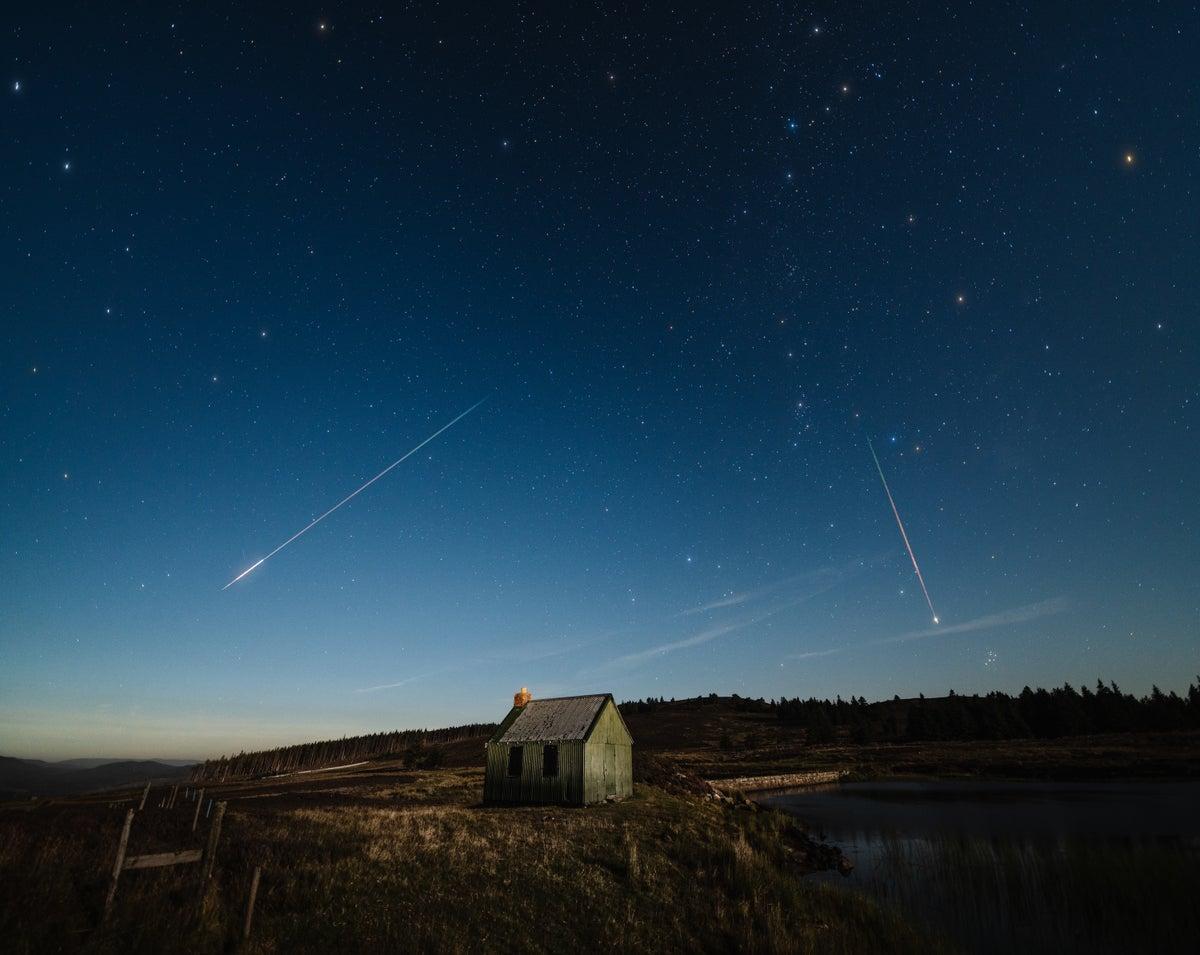
Crowdsourcing Could Discover New Meteor Showers and More
Why It Matters
More cameras translate into precise trajectories, enabling better planetary‑defense assessments and richer samples of extraterrestrial material. The data also accelerates discovery of unknown meteor showers and interstellar meteors, expanding our understanding of the solar system’s debris environment.
Key Takeaways
- •Global Meteor Network operates >1,500 all‑sky cameras worldwide
- •SMART’s 106‑camera array in Spain has recorded meteoroid spectra since 2006
- •March 2026 fireball count doubled, raising questions about asteroid debris
- •Crowdsourced setups cost under $200, lowering entry barrier for hobbyists
Pulse Analysis
The meteoric influx that constantly rains on Earth—estimated at 50 to 100 metric tons daily—remains largely invisible without a dense observational net. Professional camera arrays like the Spectroscopy of Meteoroids in the Atmosphere with Robotic Technologies (SMART) have demonstrated the power of multi‑station imaging to derive three‑dimensional trajectories and elemental compositions. Yet even these sophisticated networks cover only a fraction of the globe, leaving many sporadic events and faint showers unrecorded. By integrating low‑cost, wide‑field cameras contributed by citizen scientists, the coverage gap shrinks dramatically, turning ordinary rooftops into scientific outposts.
Beyond sheer numbers, the quality of data improves dramatically when multiple observers capture the same fireball. Triangulated paths enable precise orbit calculations, linking meteoroids back to parent comets or asteroids and sometimes revealing previously unknown streams. This capability is crucial for identifying potentially hazardous objects before they intersect Earth’s orbit and for guiding rapid meteorite recovery missions that preserve pristine samples for laboratory analysis. The March 2026 spike in bright fireballs, for example, could be clarified within days if a denser camera lattice records velocity vectors and entry angles.
Crowdsourcing also democratizes space science, inviting hobbyists to contribute to a global database that feeds academic research, planetary‑defense agencies, and commercial interests such as asteroid mining. Networks like the Global Meteor Network, SETI’s Cameras for All‑sky Meteor Surveillance, and AllSkyCams provide step‑by‑step kits for under‑$200, complete with software that uploads calibrated observations to shared repositories. As participation grows, the collective sky‑watching footprint expands, unlocking new discoveries—from weak meteor showers to interstellar meteors—while sharpening our ability to anticipate and mitigate extraterrestrial threats.
Crowdsourcing could discover new meteor showers and more
Comments
Want to join the conversation?
Loading comments...