CU Anschutz Researchers Reinvent the Denture: Faster, Smarter, and Built to Fight Bacteria
Companies Mentioned
Why It Matters
The breakthrough could slash denture manufacturing time and price while improving oral health outcomes, reshaping a market serving 180 million wearers worldwide.
Key Takeaways
- •Multimaterial inkjet printing creates monolithic dentures without bonding step.
- •New photo‑curable polymers improve durability, speed, and cost of dentures.
- •Integrated antimicrobial additive reduces bacterial growth in printed dentures.
- •3D Systems' NextDent jetted denture already FDA‑cleared, launching EU 2026.
- •Novenda raised $6.1 M to produce up to eight dentures per hour.
Pulse Analysis
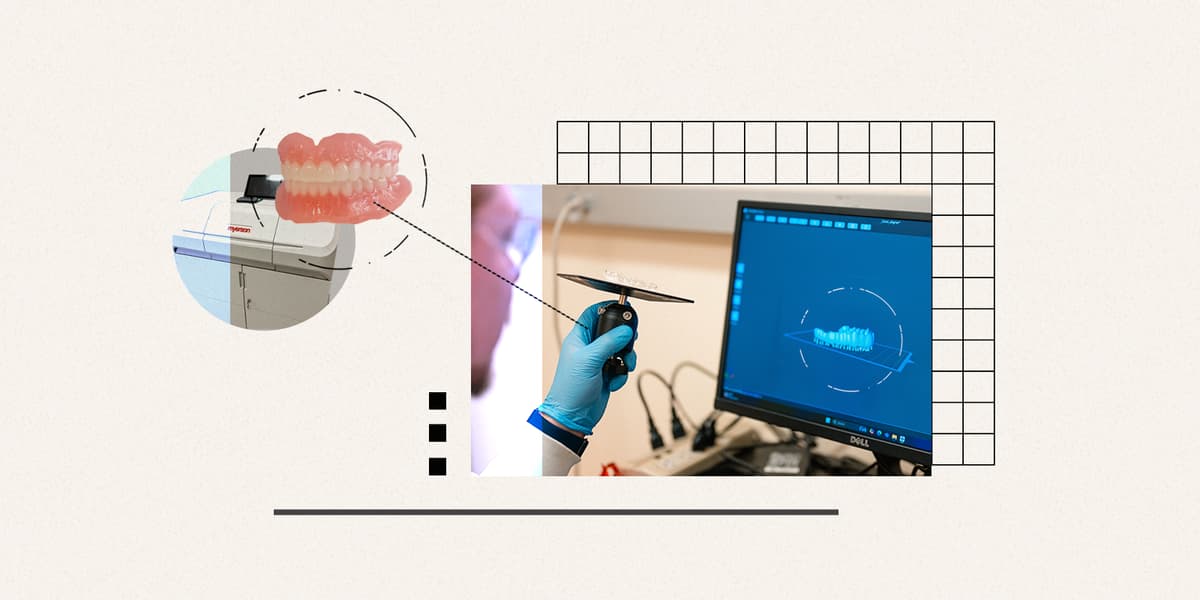
The denture market has long relied on analog workflows that demand multiple manual steps—impressions, molding, separate fabrication of teeth and bases, and final bonding. Each stage introduces potential distortion and adds to the overall cost, which can climb into the thousands of dollars per set. Over the past decade, digital dentistry has introduced intraoral scanners and subtractive milling, but even vat‑based 3D printing still required separate components and a weak bond. CU Anschutz’s multimaterial inkjet platform flips this paradigm by depositing distinct resins layer‑by‑layer, curing them instantly into a unified structure, thereby eliminating the bonding phase and delivering a tighter, more accurate fit.
Beyond structural integrity, the technology unlocks unprecedented material customization. By varying resin composition within a single print, manufacturers can tailor translucency gradients, color matching, and localized stiffness, mimicking the natural complexity of human teeth. The research team also incorporated a novel antimicrobial additive that, once cured, actively suppresses bacterial and fungal colonization—a feature absent from any currently cleared denture product. While the additive will need separate FDA approval, early in‑vivo data show a marked reduction in microbial load, promising better oral health and fewer post‑fit complications.
Commercially, the timing aligns with a surge of activity in dental 3D printing. 3D Systems’ NextDent jetted denture has already secured FDA 510(k) clearance and is poised for a European rollout in 2026, while Dutch startup Novenda secured $6.1 million to scale a platform capable of eight dentures per hour. CU Anschutz’s academic advances could feed these commercial pipelines, offering a next‑generation, high‑performance, antimicrobial denture that could lower patient costs, accelerate delivery, and set a new standard for prosthetic dentistry worldwide.
CU Anschutz Researchers Reinvent the Denture: Faster, Smarter, and Built to Fight Bacteria
Comments
Want to join the conversation?
Loading comments...