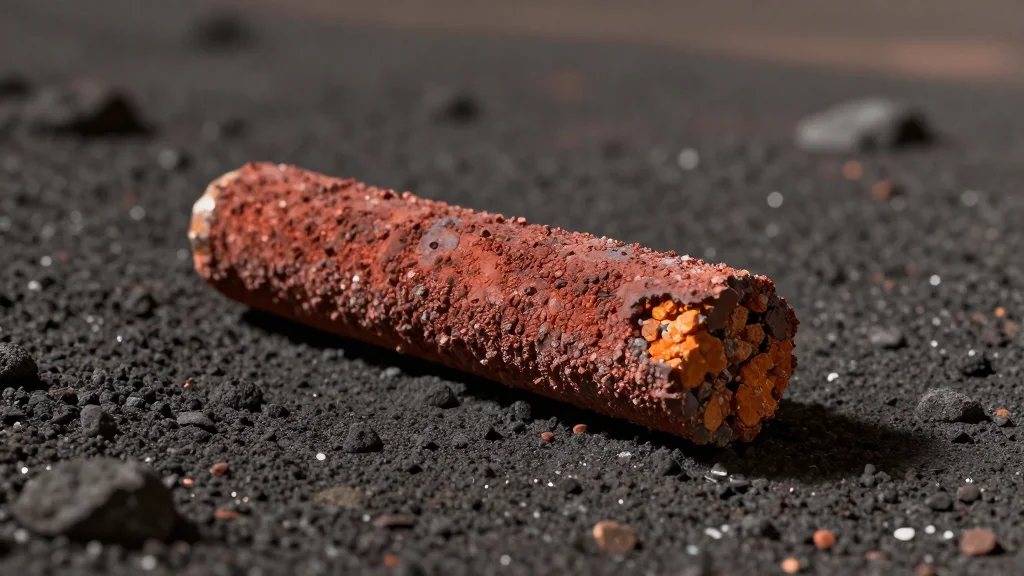
Curiosity Drill Samples Taken at Different Elevations Show Different Martian Climates
Why It Matters
The study delivers direct, mineral‑based proof of past climate zonation on Mars, reshaping models of habitability and guiding future exploration targets.
Key Takeaways
- •20 Curiosity drill cores reveal elevation‑dependent climate shifts
- •Hematite crystals <10 nm high, ~65 nm low
- •Goethite present only in higher‑elevation samples, indicating cooler conditions
- •Lower Gale Crater layers hosted millions‑year warm water
- •First on‑Mars mineral proxy confirms climate variability without models
Pulse Analysis
The Curiosity rover’s extensive drilling campaign has now yielded a rare geological archive that lets scientists read Mars’ ancient climate like tree rings on Earth. By comparing 20 core samples spanning roughly 2,500 feet of elevation gain up Mount Sharp, researchers identified systematic changes in hematite crystallite size and the presence of goethite. These mineralogical markers act as thermometers and hydrologic gauges, revealing that lower‑lying strata were bathed in warm, neutral‑to‑alkaline water for millions of years, while higher elevations experienced colder, short‑lived wet episodes.
On Earth, hematite and goethite form under distinct pH and temperature regimes, and the same principles apply on Mars. The study shows that at higher altitudes, hematite crystals remained under 10 nanometers and co‑occurred with goethite, signaling cooler conditions that limited crystal growth. In contrast, deeper, lower‑elevation layers exhibit hematite up to 65 nanometers, a product of Ostwald ripening driven by prolonged warm water. This mineral‑scale evidence corroborates earlier orbital observations of past lakes and fluvial activity, but it does so with direct, in‑situ data rather than indirect modeling.
The implications extend beyond academic curiosity. Demonstrating that Mars hosted stable, warm water environments for extended periods strengthens the case for past habitability and informs the selection of future landing sites aimed at detecting biosignatures. Moreover, the ability to use mineral crystallite size as a climate proxy opens new pathways for interpreting samples returned by upcoming missions such as NASA’s Mars Sample Return, potentially allowing scientists to reconstruct a detailed, elevation‑resolved climate history of the Red Planet.
Curiosity drill samples taken at different elevations show different Martian climates
Comments
Want to join the conversation?
Loading comments...