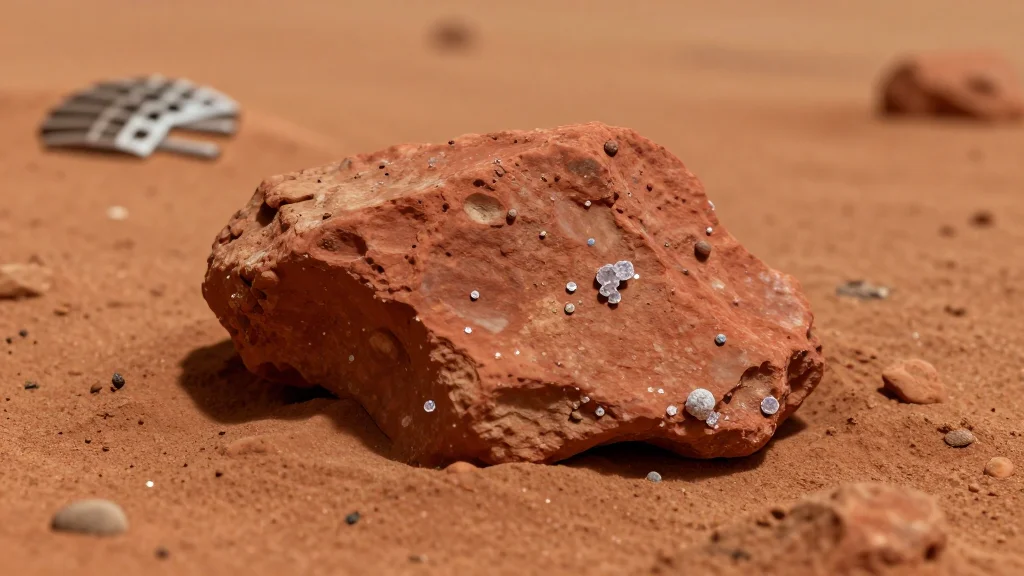
Curiosity Rover Finds Rock with Seven New Organic Molecules on Mars

Why It Matters
The detection of seven previously unknown organic molecules on Mars pushes the frontier of planetary science by expanding the known chemical inventory of the planet’s surface. Each new compound offers a clue about the redox environment, water activity, and energy sources that may have existed when Mars was wetter and warmer. Understanding whether these organics are remnants of ancient biological activity or products of purely geological processes will shape the narrative of Mars’ habitability and guide the allocation of billions of dollars in future missions. Beyond academic interest, the discovery influences policy and funding decisions for international collaborations such as the Mars Sample Return program. A richer organic record strengthens arguments for accelerating sample‑return timelines, which could yield definitive answers about life beyond Earth and inspire the next generation of scientists and engineers.
Key Takeaways
- •Curiosity’s SAM suite identified seven organic molecules never before seen on Mars
- •The rock, dubbed "Mary Anning 3," was drilled in 2020 in Gale Crater
- •Molecules include aromatic and nitrogen‑bearing compounds, expanding the known chemical diversity
- •Finding fuels debate over biogenic versus abiotic origins of Martian organics
- •Results bolster the scientific case for the upcoming Mars Sample Return mission
Pulse Analysis
The Curiosity discovery arrives at a pivotal moment for Mars exploration, where the scientific community is transitioning from detecting isolated organics to mapping a comprehensive molecular landscape. Historically, each organic detection—starting with the 2012 perchlorate findings—has incrementally shifted the perception of Mars from a sterile world to one that once harbored complex chemistry. The seven‑molecule suite represents a qualitative leap, suggesting that the planet’s ancient environments could sustain a richer organic chemistry than previously assumed.
From a strategic standpoint, the result validates the investment in in‑situ analytical payloads. The SAM instrument, despite its age, continues to outperform expectations, demonstrating that robust, multi‑modal labs on rovers can yield high‑impact science without the need for ever‑larger payloads. This success may influence the design philosophy of future rovers, encouraging a balance between instrument sophistication and mission risk.
Looking ahead, the real test will be the Mars Sample Return effort. If the returned samples confirm the diversity seen by Curiosity, they could finally provide the isotopic and chiral data needed to discriminate biological signatures. Such a breakthrough would not only rewrite planetary science textbooks but also have profound implications for astrobiology, planetary protection protocols, and the broader quest to understand life's prevalence in the universe. Until then, the Curiosity findings serve as both a milestone and a reminder that Mars still holds many secrets beneath its rust‑colored surface.
Curiosity Rover Finds Rock with Seven New Organic Molecules on Mars
Comments
Want to join the conversation?
Loading comments...