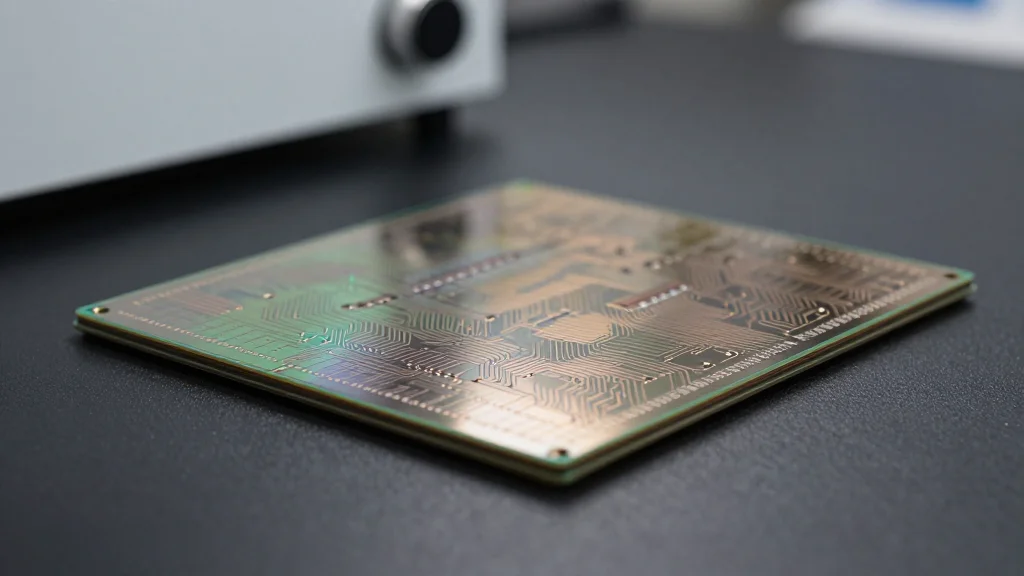
D-Wave Secures Year 2 Microelectronics Commons Funding for Scalable Superconducting Qubit Fabrication
Why It Matters
Scaling superconducting qubit production is critical for U.S. quantum competitiveness and for meeting defense‑driven demand for error‑corrected quantum processors. The grant accelerates a domestic supply chain that could shorten time‑to‑market for commercial and military quantum systems.
Key Takeaways
- •D‑Wave receives $5.4 M Year 2 funding for superconducting qubit fab
- •Project targets scalable 300 mm wafer production of low‑loss qubits
- •Consortium includes IBM, Cornell, RPI, and Air Force Research Lab
- •SQPDK aims to standardize design rules for quantum error correction
Pulse Analysis
The latest federal award to D‑Wave underscores the U.S. government’s push to translate quantum research into manufacturable hardware. By channeling $5.4 million through the Department of War’s Microelectronics Commons, the program aligns with the CHIPS and Science Act’s goal of building a resilient domestic semiconductor ecosystem. D‑Wave’s SQFab project sits at the nexus of academic breakthroughs and industrial scale‑up, positioning the company as a bridge between pioneering qubit science and commercial‑grade production.
Technical progress in SQFab focuses on two pivotal challenges: reducing dielectric loss in superconducting thin films and adapting the process to industry‑standard 300 mm silicon wafers. The development of a Superconducting Quantum Process Design Kit (SQPDK) will codify layout rules, interconnect topologies, and packaging standards, enabling repeatable fabrication and the integration of low‑crosstalk wiring essential for quantum error correction. By automating end‑of‑line testing, the project aims to deliver qubit chips with markedly improved coherence times, a prerequisite for scaling beyond noisy‑intermediate‑scale quantum devices.
Beyond the technical realm, the initiative leverages a broad public‑private consortium that includes IBM, Cornell, RPI, and the Air Force Research Lab, linking academic expertise with defense and commercial manufacturing capabilities. This collaborative model not only accelerates technology transfer but also fortifies the U.S. supply chain for dual‑use quantum components. As the consortium integrates with parallel NORDTECH projects—such as photonic integrated circuits and heterogeneous quantum networking—the ecosystem is poised to deliver end‑to‑end quantum hardware solutions, strengthening national security and opening new markets for quantum‑enabled applications.
D-Wave Secures Year 2 Microelectronics Commons Funding for Scalable Superconducting Qubit Fabrication
Comments
Want to join the conversation?
Loading comments...