Daresbury-Built Detector Components Arrive in US for the Flagship Neutrino Experiment
•March 5, 2026
0
Why It Matters
The milestone validates the UK’s engineering capacity and secures a critical component for DUNE, accelerating the experiment’s timeline to probe fundamental neutrino physics.
Key Takeaways
- •First UK‑built APAs shipped directly to Fermilab
- •UK responsible for 137 of 150 DUNE APAs
- •Each APA measures 6.3 m × 2.3 m, with 24 km wire
- •Shipping frames monitor shock, vibration, temperature, humidity
- •Milestone advances UK’s role in global neutrino research
Pulse Analysis
The Deep Underground Neutrino Experiment (DUNE) is poised to become the world’s most powerful long‑baseline neutrino facility, sending a high‑intensity beam from Fermilab to a detector complex 1,300 km away in South Dakota. Understanding neutrino oscillations and the matter‑antimatter asymmetry hinges on the experiment’s massive liquid‑argon time‑projection chambers, where the anode plane assemblies (APAs) serve as the primary read‑out. The recent arrival of four UK‑manufactured APAs at Fermilab marks the first direct transatlantic delivery, underscoring the United Kingdom’s substantial share of the 150‑unit APA inventory.
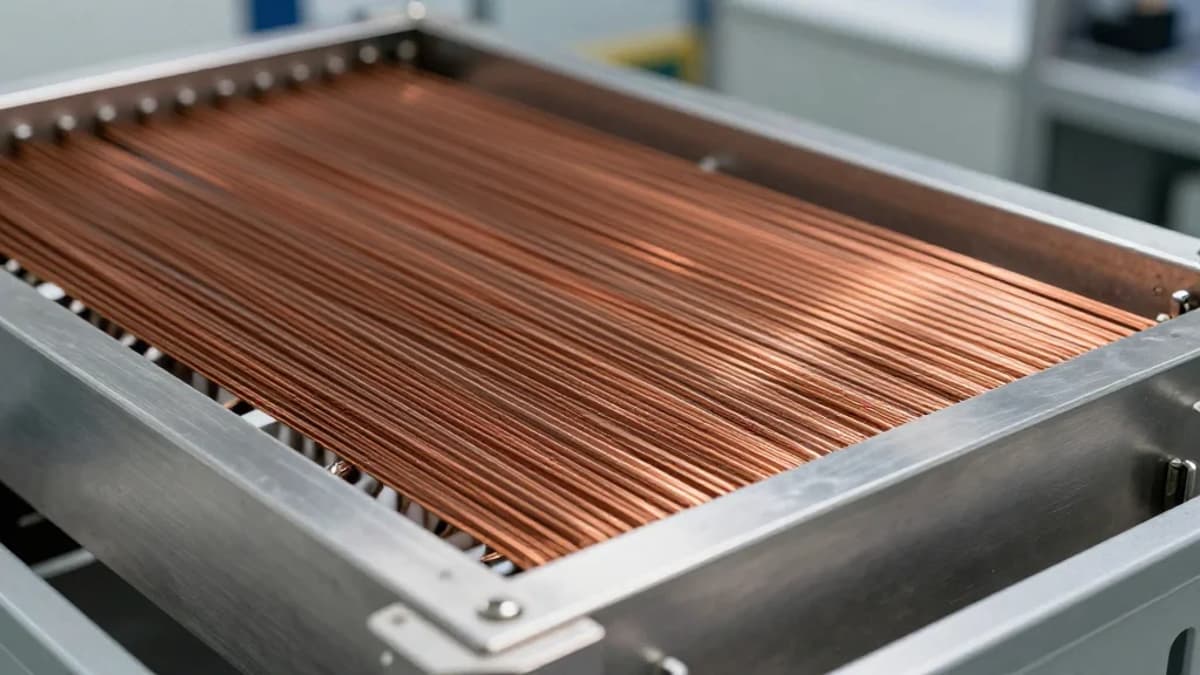
Each APA spans 6.3 m by 2.3 m and carries roughly 24 km of ultra‑fine copper‑beryllium wire, tensioned and hand‑soldered to capture the faint electrical signals generated by neutrino interactions. The sheer size—comparable to a two‑storey building—creates logistical hurdles in storage, handling, and transport. To mitigate risk, Daresbury engineers designed custom 60‑foot shipping frames equipped with sixteen sensors that continuously record shock, vibration, tilt, temperature, humidity and location. This data‑rich approach not only protects the delicate wire planes during the 6,000 km sea voyage but also provides valuable feedback for future shipments.
The successful delivery reinforces the UK’s reputation for high‑precision instrumentation and demonstrates the scalability of cross‑border scientific supply chains. As DUNE moves toward full detector deployment, additional APA batches from Daresbury will follow, accelerating the timeline for data collection and analysis. The collaboration also offers UK industry and academia a platform to showcase advanced manufacturing techniques, potentially attracting further investment in particle‑physics infrastructure. In the broader context, DUNE’s findings could reshape fundamental physics, while the logistical blueprint established here may inform future large‑scale experiments such as the Future Circular Collider.
Daresbury-built detector components arrive in US for the flagship neutrino experiment
0
Comments
Want to join the conversation?
Loading comments...