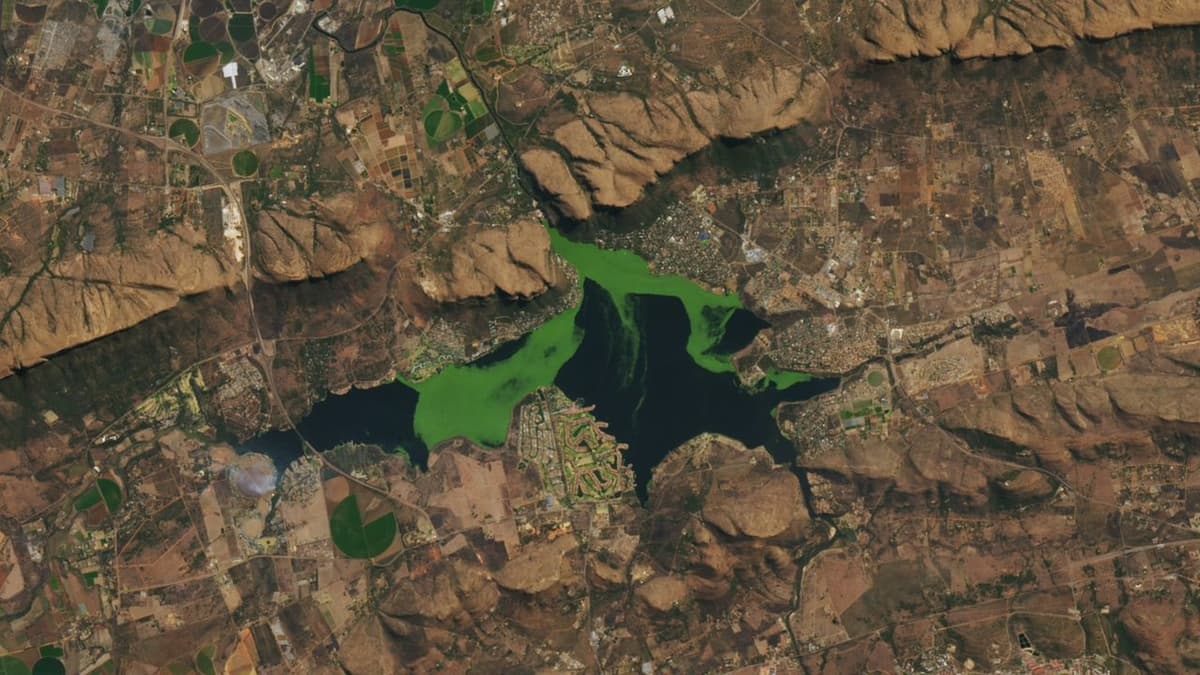
Deadly, Vivid-Green Mass Sprawls Across South African Reservoir — Earth From Space
Why It Matters
The persistent algal and plant overgrowth jeopardizes water safety, local fisheries, and recreation, while illustrating the broader challenge of nutrient pollution in freshwater systems worldwide.
Key Takeaways
- •Hartbeespoort Dam suffers chronic hypereutrophication.
- •Toxic algae and invasive plants create dead zones.
- •Nutrient runoff from Crocodile River drives blooms.
- •Fish die-offs reported 2023 and 2025.
- •Bioremediation scrapped earlier due to high costs.
Pulse Analysis
Satellite monitoring has become an essential tool for tracking freshwater health, and the Hartbeespoort Dam offers a stark illustration of why. The Landsat and Sentinel constellations provide near‑real‑time visual evidence of algal blooms, allowing scientists to quantify surface coverage and assess the severity of hypereutrophication. By linking these observations with on‑ground water‑quality data, researchers can pinpoint nutrient hotspots and model bloom dynamics, informing both local authorities and international water‑resource agencies about emerging risks.
The root cause of Hartbeespoort’s chronic green blanket lies in unchecked nutrient runoff, especially from the Crocodile River watershed. Fertilizer‑laden effluent from farms and golf courses introduces high concentrations of nitrogen and phosphorus, which fuel rapid cyanobacterial growth and the spread of invasive species like water hyacinth and Salvinia. As the mats proliferate, they block sunlight, reduce oxygen exchange, and release toxins that render the water unsafe for drinking, swimming, and even pet exposure. The resulting dead zones have already triggered multiple fish die‑offs, eroding local biodiversity and threatening the reservoir’s role as a recreational and economic asset.
Addressing the crisis demands a multi‑pronged strategy. Cost‑effective bioremediation pilots, such as targeted nutrient‑absorbing algae harvests, must be paired with stricter regulation of agricultural runoff and investment in constructed wetlands to filter pollutants before they reach the river. Moreover, sustained satellite surveillance can provide early warnings, enabling rapid response before blooms become unmanageable. For South Africa and other water‑stress regions, Hartbeespoort serves as a cautionary tale: without coordinated policy, scientific monitoring, and community engagement, eutrophication can turn vital water bodies into ecological liabilities.
Deadly, vivid-green mass sprawls across South African reservoir — Earth from space
Comments
Want to join the conversation?
Loading comments...