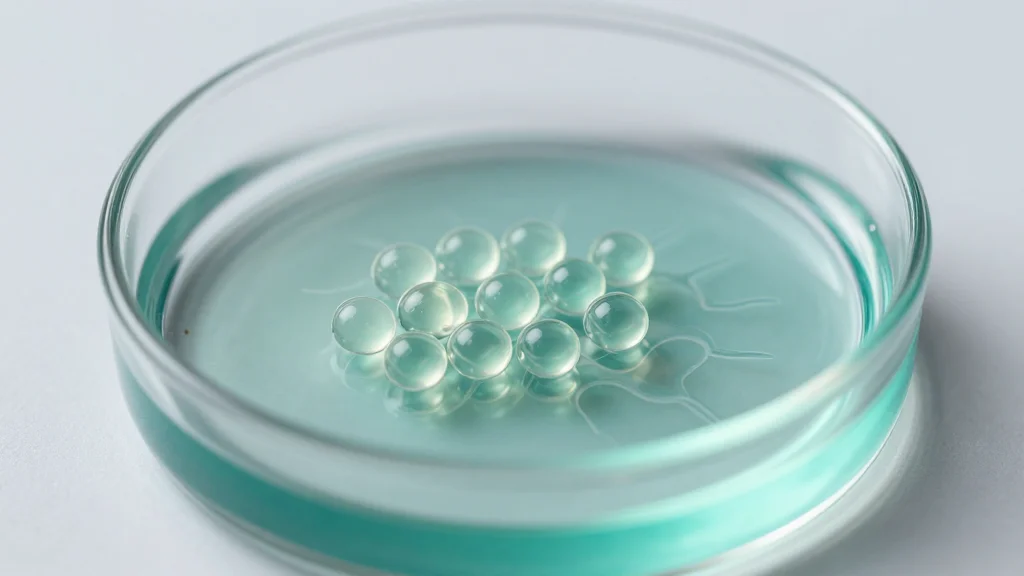
Death-Defying Protein Found in Tardigrades Preserves Synthetic Cells
Why It Matters
Enabling synthetic cells to endure drying removes the need for refrigeration, lowering logistics costs and expanding the reach of cell‑free therapeutics and biosensors.
Key Takeaways
- •CAHS12 protein enables synthetic cells to survive dehydration
- •Dehydrated synthetic cells retain DNA translation, emitting red fluorescence
- •Gel network formed by CAHS12 stabilizes membranes and interior
- •Study opens path to cold‑chain‑free biotech transport
- •Molecular modeling identified membrane‑binding and gel‑forming protein regions
Pulse Analysis
The recent Nature Communications paper from the University of Michigan and the University of Chicago reveals that the cytoplasmic abundant heat‑soluble protein CAHS12, a molecule that gives tardigrades their legendary resilience, can be transplanted into artificial lipid‑bound vesicles to confer dehydration tolerance. Tardigrades survive extreme desiccation by forming protective intracellular structures, and CAHS12 is the key driver of that process. By expressing the protein inside synthetic cells, researchers demonstrated that the same molecular shield can be harnessed outside of its native organism, opening a new toolbox for bio‑engineers.
At the molecular level, CAHS12 possesses dual affinity domains: one that interacts with the aqueous cytosol and another that anchors to phospholipid membranes. When water is removed, the membrane‑binding domain dominates, causing the proteins to aggregate and self‑assemble into a three‑dimensional gel that fills the vesicle interior. This gel network simultaneously cushions the membrane and immobilizes the enzymatic machinery, preserving functionality. The authors confirmed the effect experimentally by dehydrating engineered cells loaded with a red‑fluorescent reporter; after rehydration the cells resumed protein synthesis and emitted a bright signal.
The ability to store synthetic cells without refrigeration could reshape the logistics of biologics, cell‑free vaccines, and environmental biosensors. Cold‑chain requirements add millions of dollars to manufacturing costs and limit distribution in low‑resource settings; a dehydration‑stable platform would enable on‑demand reconstitution at the point of care or in remote field stations. Moreover, the modular nature of CAHS12 suggests that engineered variants could be tailored for specific payloads, from therapeutic enzymes to pollutant‑degrading pathways. Industry players are likely to explore licensing agreements, while academic groups will probe the protein’s limits, accelerating the transition from lab‑scale prototypes to commercial micro‑factories.
Death-defying protein found in tardigrades preserves synthetic cells
Comments
Want to join the conversation?
Loading comments...