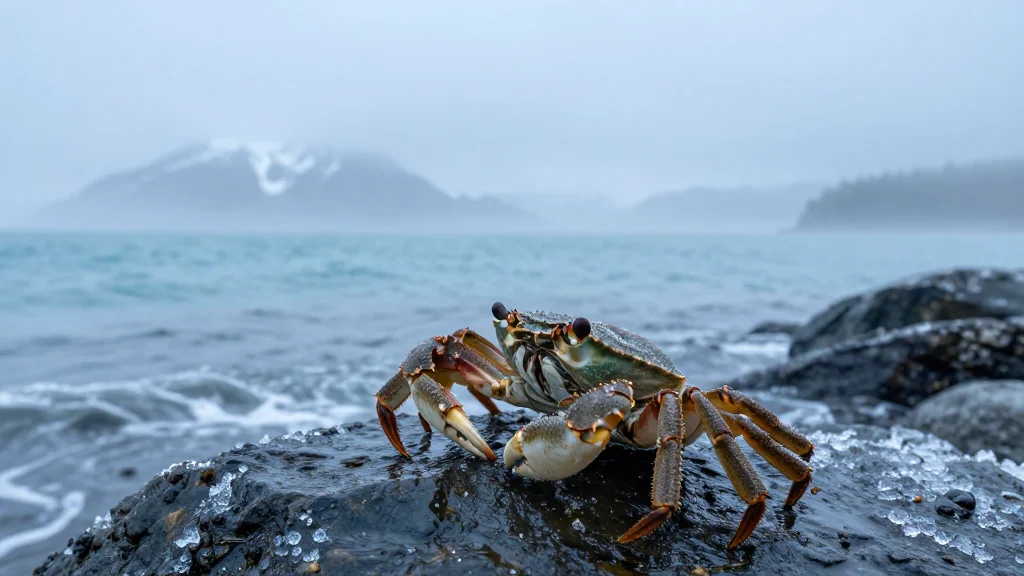
Decadal Predictions of Future Habitat Favourability of the European Green Crab (Carcinus Maenas) on the Pacific Coast of North America
Why It Matters
A crab invasion this far north could upend biodiversity and jeopardize multi‑billion‑dollar fisheries, making proactive management essential for coastal economies and ecosystems.
Key Takeaways
- •BART model predicts crab suitability up to Seward Peninsula
- •Highest emission scenarios push crab into Arctic Circle
- •All but lowest SSP show expanding suitable habitat
- •Potential ecological and economic damage to Pacific fisheries
- •Early monitoring essential for functional eradication
Pulse Analysis
Invasive species research has long focused on static, end‑of‑century projections, leaving managers with limited foresight for near‑term action. The European green crab, a notorious predator of shellfish and kelp, exemplifies this gap. By leveraging Bayesian Additive Regression Trees and integrating four Shared Socioeconomic Pathways (SSP1, SSP2, SSP4, SSP5), the RAND team delivers decadal forecasts that capture the nuanced trajectory of climate‑driven habitat shifts. This methodological advance provides a granular, scenario‑rich view that surpasses earlier binary range maps, offering stakeholders a clearer timeline for risk assessment.
The findings reveal a stark northward march: even under moderate emissions, suitable habitats reach Alaska’s Seward Peninsula, while the most extreme SSP5 scenario projects colonization within the Arctic Circle. Such expansion threatens keystone species, disrupts kelp forest dynamics, and jeopardizes the livelihoods of fisheries that generate billions of dollars annually. Indigenous coastal communities, whose subsistence and cultural practices rely on native marine resources, face heightened vulnerability as crab predation could erode traditional food sources and alter shoreline ecosystems.
Policy implications are immediate. The study underscores the urgency of establishing a proactive monitoring network across predicted hotspots, employing eDNA sampling and citizen‑science initiatives to catch incursions early. Coupled with rapid response eradication protocols, these measures could avert the ecological and economic costs of a full‑scale invasion. Moreover, the research highlights the broader need for climate‑adaptive invasive‑species management frameworks that integrate multiple emission scenarios, ensuring that mitigation strategies remain robust as global temperatures evolve.
Decadal Predictions of Future Habitat Favourability of the European Green Crab (Carcinus Maenas) on the Pacific Coast of North America
Comments
Want to join the conversation?
Loading comments...