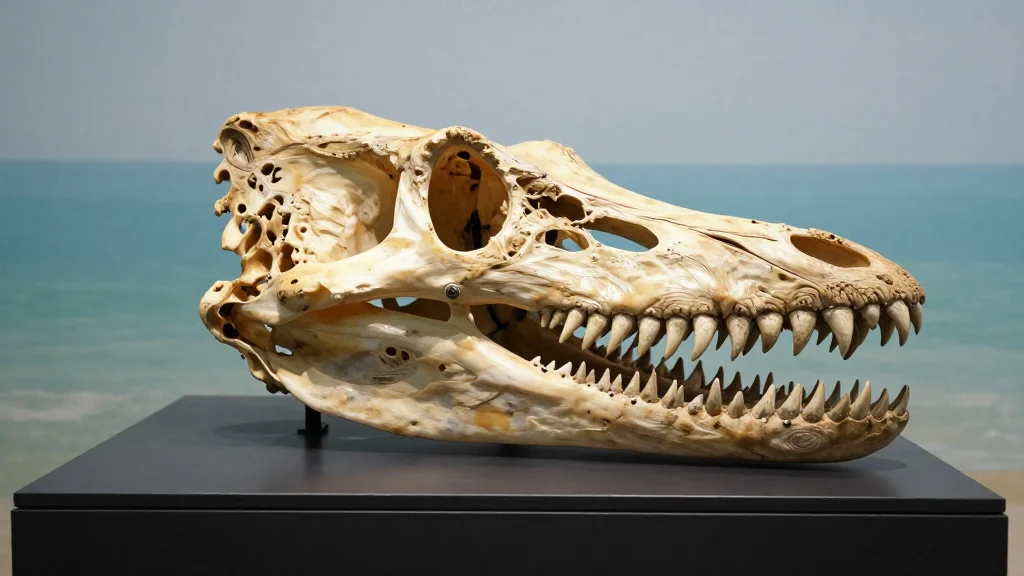
Decades‑Old Fossil Redefined as New Apex Mosasaur, Tylosaurus Rex

Why It Matters
The identification of *Tylosaurus rex* challenges long‑standing assumptions about the size limits and behavioral ecology of mosasaurs, suggesting that marine reptile apex predators were more diverse and aggressive than previously thought. This has ripple effects for reconstructing Cretaceous food webs, understanding the evolutionary pressures that led to the rise and fall of marine reptiles, and highlighting the value of revisiting archived fossils with fresh perspectives. Beyond paleontology, the find illustrates how museum collections can yield breakthrough discoveries without new field excavations, reinforcing the need for sustained funding of curation, digitization, and interdisciplinary research. It also captures public imagination by introducing a new "T‑rex of the seas," potentially boosting interest in earth‑science education and museum attendance.
Key Takeaways
- •A 1979 Texas fossil re‑identified as new species *Tylosaurus rex*.
- •Specimen measures ~13.2 m (43 ft), twice the length of the largest great‑white sharks.
- •Evidence of intraspecific combat found on the fossil's bones.
- •Researchers suggest multiple museum specimens may belong to this new species.
- •Discovery prompts revision of Cretaceous marine predator hierarchies.
Pulse Analysis
The *Tylosaurus rex* revelation arrives at a moment when paleontology is increasingly data‑driven. Advances in 3‑D imaging, quantitative morphometrics, and comparative phylogenetics enable scientists to extract new signals from old bones, turning museum backlogs into discovery pipelines. Historically, mosasaur taxonomy has been fragmented, with dozens of species named on fragmentary material. This find consolidates several ambiguous specimens under a single, well‑defined taxon, offering a clearer framework for future evolutionary studies.
From a market perspective, the story underscores the commercial and educational value of museum collections. Institutions that invest in digitizing and re‑examining their holdings can generate headline‑making research without the high costs of field campaigns. This could shift funding models toward long‑term curation projects, especially as private donors and foundations seek tangible scientific returns.
Looking forward, the *Tylosaurus rex* case may spark a wave of re‑evaluations across other fossil groups. If similar size‑inflated, aggressive predators are uncovered among ichthyosaurs, plesiosaurs, or even early cetaceans, the narrative of marine apex predators in the Late Cretaceous could be rewritten entirely. The broader implication is a reminder that the fossil record still holds hidden giants, waiting for the right combination of curiosity, technology, and institutional support to bring them to light.
Decades‑Old Fossil Redefined as New Apex Mosasaur, Tylosaurus rex
Comments
Want to join the conversation?
Loading comments...