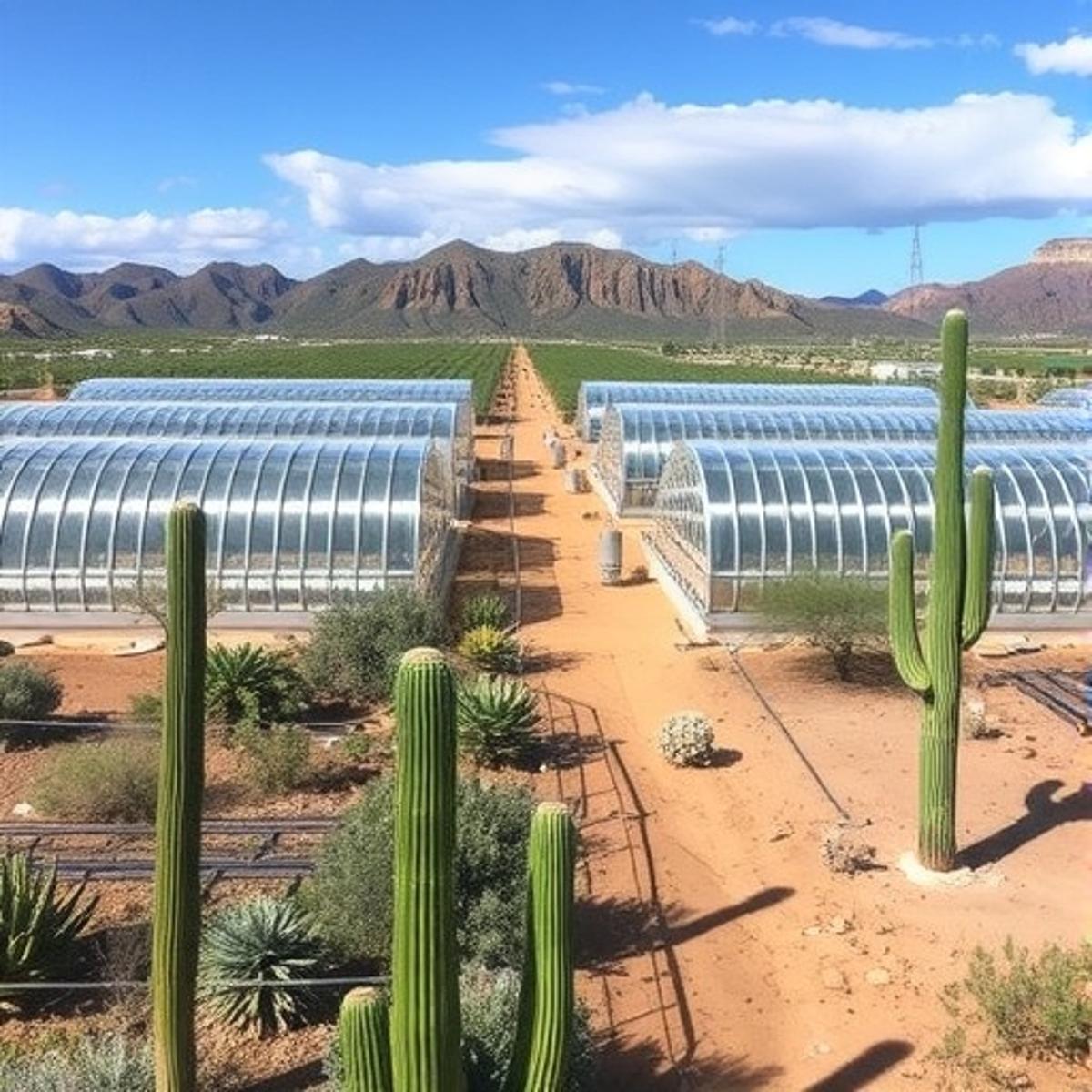
Decarbonizing Desert Greenhouses with Direct Air Capture
Why It Matters
By turning a climate‑remediation technology into a productivity enhancer, the model tackles food security and emissions simultaneously, signaling a viable path for sustainable farming in arid zones.
Key Takeaways
- •DAC system captures 2 tons CO₂ per hectare annually
- •Greenhouse yields rose 15% with recycled CO₂
- •Solar power supplies 80% of DAC energy demand
- •Project cuts greenhouse emissions by 70% versus conventional
- •Model scalable to other arid regions worldwide
Pulse Analysis
Desert agriculture has long wrestled with extreme heat, limited water and high energy costs for climate control. Direct‑air‑capture, once confined to carbon‑removal pilots, is now being repurposed as a dual‑use technology that both mitigates emissions and supplies a concentrated CO₂ stream to greenhouse crops. By coupling DAC units with solar arrays, the pilot eliminates the need for fossil‑fuel‑based heating, turning a traditionally carbon‑intensive process into a net‑negative operation.
The pilot greenhouse, spanning 5 hectares, installed a modular DAC system capable of extracting roughly 2 tons of CO₂ annually. Captured gas is piped directly into the growing chambers, raising ambient CO₂ concentrations to 1,200 ppm—optimal for photosynthesis. Resulting tomato yields climbed 15% while the facility’s overall carbon footprint fell by 70% relative to a comparable conventional greenhouse that relies on natural‑gas heating. Energy consumption is largely offset by a 2 MW solar field, which supplies about 80% of the DAC’s power demand, with the remainder drawn from the grid during night hours.
If replicated at scale, this approach could transform arid regions into productive, low‑carbon food hubs. Investors and policymakers are watching closely, as the technology aligns with emerging climate‑finance incentives and food‑security strategies. The modular nature of the DAC units means they can be retrofitted to existing greenhouses or incorporated into new builds, offering a flexible pathway for growers seeking to meet stricter emissions standards while boosting profitability. As renewable‑energy costs continue to fall, the economics of carbon‑negative greenhouse farming are poised to become increasingly attractive.
Decarbonizing Desert Greenhouses with Direct Air Capture
Comments
Want to join the conversation?
Loading comments...