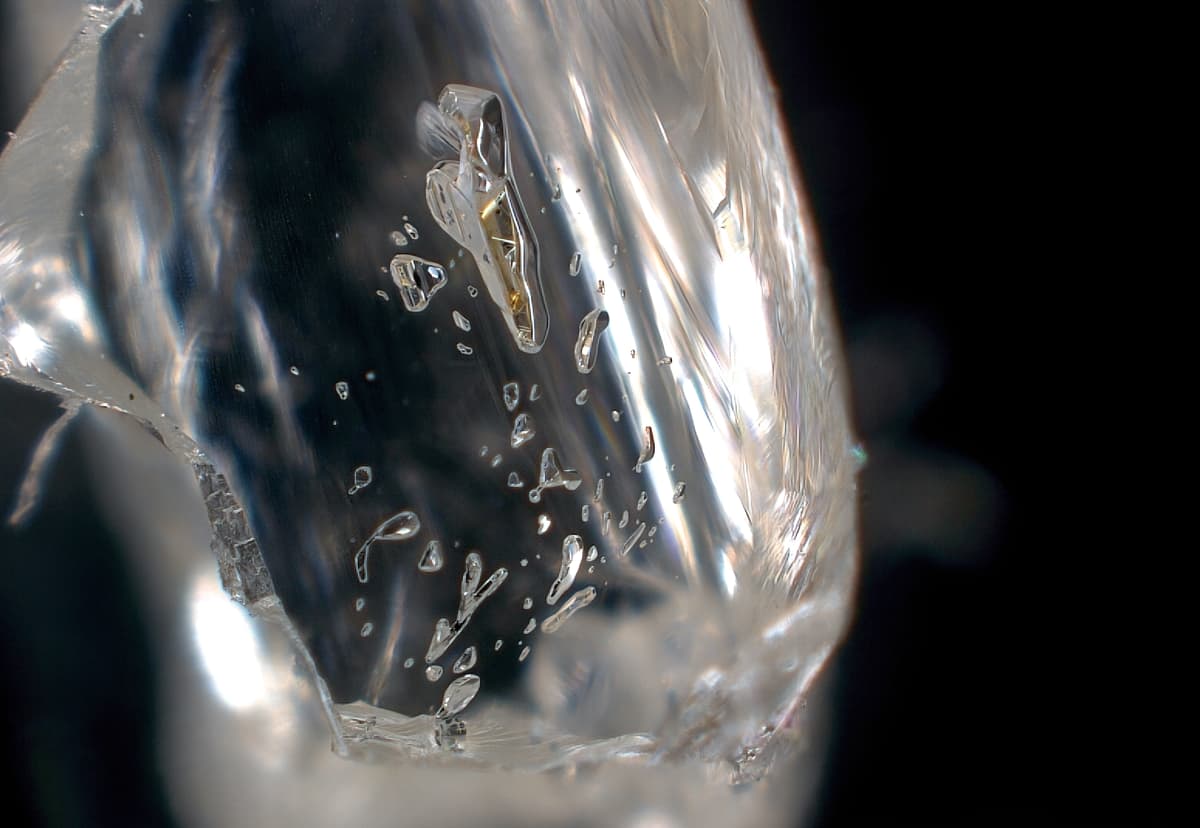
Deep-Earth Diamonds Reveal Trove of Never-Before-Seen Minerals
Why It Matters
The new minerals prove that deep‑Earth processes are more dynamic than previously thought, refining models of mantle composition and the global carbon cycle. This insight helps geoscientists predict volcanic behavior and assess long‑term climate feedbacks.
Key Takeaways
- •Bernwoodite and kopylovite identified in deep‑mantle diamonds
- •Findings prove efficient surface‑to‑mantle material cycling
- •Kopylovite indicates subducted sediments reach 200 km depth
- •Bernwoodite suggests lower‑mantle davemaoite breakdown in transition zone
- •New mineral discoveries expand mantle composition models
Pulse Analysis
The study of deep‑Earth diamonds has entered a new era thanks to high‑precision laser ablation and synchrotron X‑ray techniques. These tools can isolate and characterize inclusions only a few micrometers across, preserving their original crystal structures. By turning diamonds into natural pressure vessels, scientists gain a rare, unaltered snapshot of mantle chemistry that would otherwise be destroyed during ascent. This methodological leap has sparked an "explosion" of mineral discoveries, turning what were once speculative phases into cataloged species.
Bernwoodite and kopylovite, the latest additions, illustrate how subducted crustal material survives the trek to depths of 200 km and even the transition zone between 410 and 660 km. Kopylovite’s titanium‑rich composition signals that sediments dragged down in subduction zones retain enough bulk to crystallize, challenging earlier models that assumed most sediment melts before reaching the mantle. Meanwhile, bernwoodite’s aluminum content points to the breakdown of lower‑mantle davemaoite as it ascends, providing a chemical bridge between the deep and shallow mantle. These insights refine estimates of how much carbon, hydrogen, and other volatiles are stored underground, a key factor in long‑term climate regulation.
Beyond academic curiosity, the expanding mineral inventory reshapes how the geoscience community approaches resource exploration and hazard assessment. More accurate mantle compositional models improve seismic interpretation, aiding the prediction of deep‑earth earthquakes and volcanic eruptions. The techniques honed on diamonds could also be applied to other high‑pressure materials, opening pathways for novel synthetic compounds. As museums and mining operations continue to supply rare diamonds for study, the pace of discovery is set to accelerate, promising deeper understanding of Earth’s interior and its influence on surface environments.
Deep-Earth diamonds reveal trove of never-before-seen minerals
Comments
Want to join the conversation?
Loading comments...