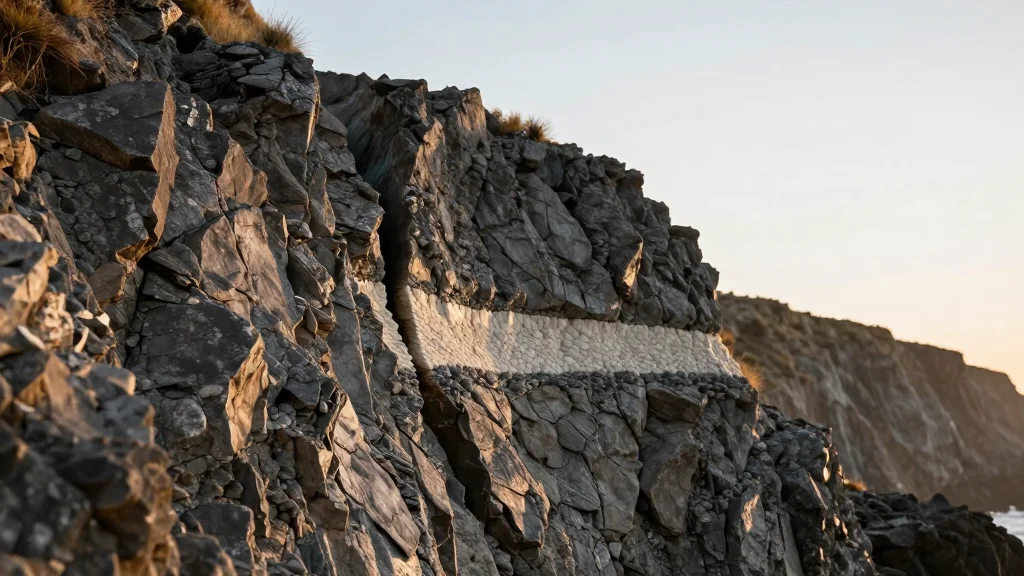
Deep‑Sea “Brakes” Found Beneath Pacific May Have Stopped Megaquakes

Why It Matters
Understanding natural barrier zones on faults transforms seismic risk modeling by introducing a factor that can limit rupture size. This could lead to more accurate hazard maps, influencing building codes, insurance premiums, and disaster preparedness for coastal populations vulnerable to megathrust earthquakes. Moreover, the study validates the strategic importance of seafloor instrumentation, encouraging investment in ocean‑based seismic networks that have been underfunded compared with land stations. If similar brake mechanisms are identified elsewhere, they may explain why some subduction zones have not produced expected megaquakes despite high strain rates, prompting a reassessment of global earthquake forecasts. Conversely, the absence of such brakes in other regions would highlight zones of heightened danger, guiding resource allocation for mitigation and early‑warning systems.
Key Takeaways
- •Indiana University researchers identified natural “brake zones” on the Gofar transform fault off Ecuador.
- •The fault produces magnitude‑6 earthquakes every 5‑6 years, a pattern now linked to barrier‑zone activity.
- •Ocean‑bottom seismometers deployed in 2008 and 2019‑2022 recorded micro‑quake swarms before larger events.
- •Barrier zones release stress through small quakes, preventing rupture growth into mega‑thrust earthquakes.
- •Findings could reshape seismic hazard assessments and prioritize seafloor monitoring worldwide.
Pulse Analysis
The discovery of deep‑sea brake zones marks a paradigm shift in earthquake science, moving away from the deterministic view that faults inevitably unleash their full stored energy. Historically, seismic hazard models have been built on the worst‑case premise: a fault segment can rupture completely, producing the largest possible quake. The Gofar fault data, however, suggest that internal frictional heterogeneities can act as energy sinks, effectively throttling rupture propagation. This insight aligns with emerging concepts of fault complexity, where variations in rock composition, fluid pressure, and temperature create a mosaic of strength and weakness.
From a market perspective, the research could stimulate demand for advanced seafloor instrumentation and data‑analytics platforms. Companies specializing in autonomous underwater vehicles, high‑bandwidth acoustic telemetry, and AI‑driven seismic interpretation stand to benefit as governments and research institutions expand ocean‑monitoring programs. Additionally, insurers may recalibrate risk models for Pacific‑rim nations, potentially lowering premiums in regions where similar brakes are confirmed, while raising them where they are absent.
Looking ahead, the key challenge will be determining the durability of these brake zones under changing tectonic stresses and climate‑induced alterations such as sea‑level rise and sediment loading. If future studies reveal that brake zones can degrade or be bypassed, the protective effect may be temporary, underscoring the need for continuous monitoring. Nonetheless, the current findings inject a dose of optimism into a field often dominated by catastrophic forecasts, offering a tangible mechanism by which the Earth itself mitigates its own most violent movements.
Deep‑Sea “Brakes” Found Beneath Pacific May Have Stopped Megaquakes
Comments
Want to join the conversation?
Loading comments...