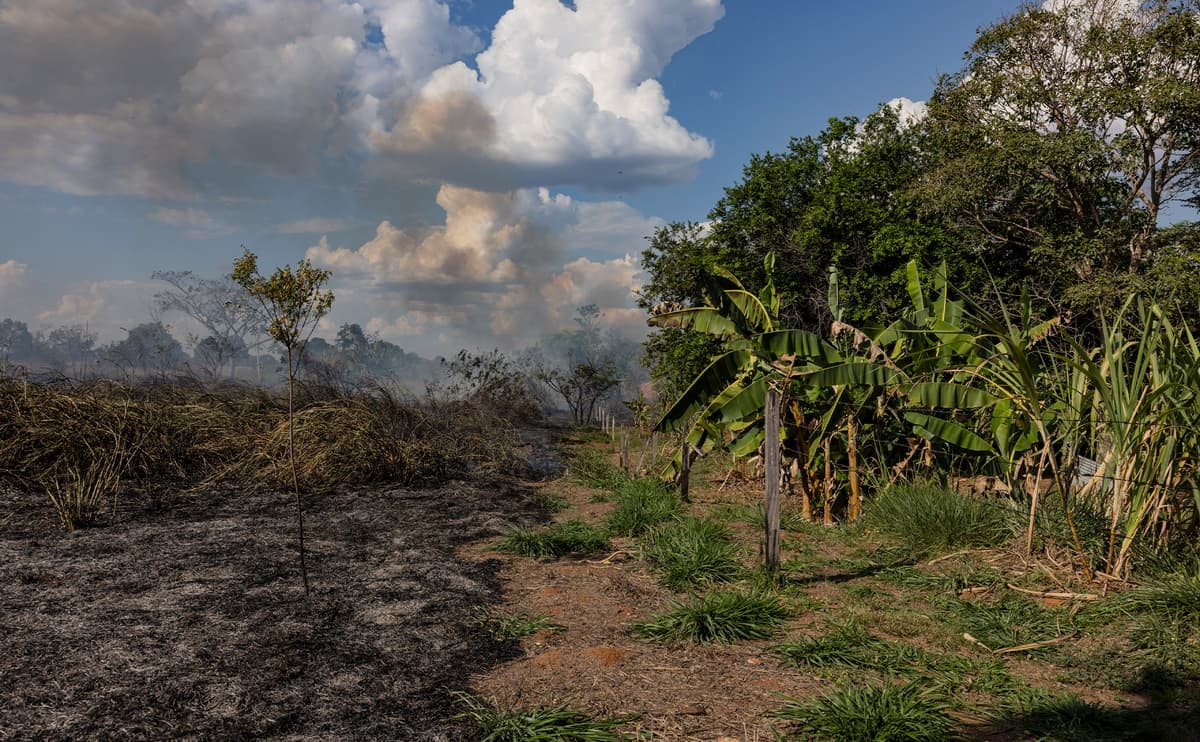
Deforestation and Warming Could Push Amazon to Tipping Point by 2040s: Study
Why It Matters
Crossing the Amazon tipping point would accelerate global CO₂ emissions and destabilize regional water cycles, threatening biodiversity and climate mitigation goals worldwide.
Key Takeaways
- •Deforestation of 22‑28% plus 1.5‑1.9 °C warming could trigger Amazon tipping point
- •Threshold may be reached in the 2040s, affecting over 70% of basin
- •Already 17‑18% of forest cleared; 1.5 °C warming expected by 2030
- •Halting deforestation and large‑scale reforestation could push critical warming to ~3.7‑4 °C
Pulse Analysis
The Amazon rainforest acts as a planetary thermostat, recycling moisture and sequestering billions of tons of carbon. Recent modeling that couples land‑use change with climate projections shows the system’s resilience is far more fragile than previously thought. When tree cover drops below roughly a quarter of its original extent, the hydrological feedback that fuels rainfall collapses, accelerating drought and paving the way for savanna‑like conditions. This mechanistic insight explains why a modest increase in global temperature—just 1.5 °C above pre‑industrial levels—can dramatically lower the deforestation threshold needed to trigger irreversible change.
For policymakers, the study reshapes risk calculations for both climate and biodiversity strategies. A rapid shift to degraded ecosystems would unleash tens of gigatons of CO₂, undermining the Paris Agreement’s carbon‑budget targets. Moreover, the Amazon’s diminished moisture export would curtail precipitation across South America, threatening agriculture, hydroelectric power, and water security for millions. The findings underscore the urgency of integrating forest protection into national emissions‑reduction pledges and highlight the need for cross‑border cooperation to curb illegal clearing, especially in Brazil’s eastern basin where deforestation concentrates.
The research also offers a hopeful counterpoint: preserving remaining forest and implementing large‑scale reforestation can delay the tipping point until warming reaches nearly 4 °C, a scenario still far beyond safe climate limits but far less catastrophic than immediate collapse. Brazil’s pledge to restore 24 million hectares provides a concrete pathway, yet success hinges on financing, land‑tenure reforms, and monitoring technologies. International climate finance mechanisms should prioritize these restoration projects, linking them to verified carbon credits. In short, the window to act narrows each year; decisive action now can safeguard the Amazon’s climate services and buy critical time for global decarbonization efforts.
Deforestation and warming could push Amazon to tipping point by 2040s: Study
Comments
Want to join the conversation?
Loading comments...