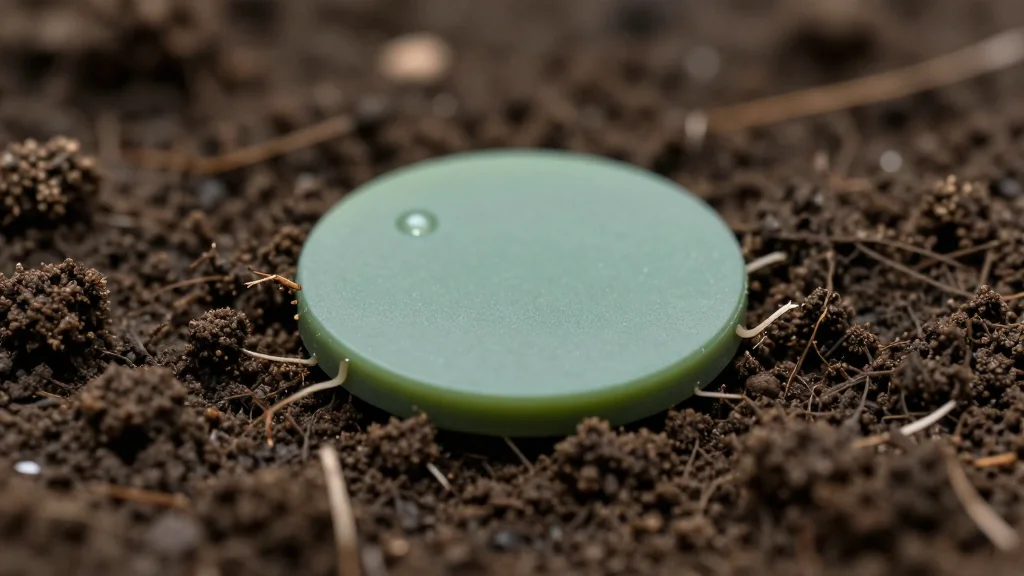
Degradable Sensors Reveal Hidden Soil Secrets After Microbes Nibble on Them
Why It Matters
Real‑time microbial activity data gives farmers and climate scientists a actionable view of soil health, enabling faster interventions and more accurate carbon‑cycle modeling.
Key Takeaways
- •PHBV-based sensors degrade, turning resistance change into microbial activity signal
- •Sensors record data every 30 minutes for up to seven weeks
- •Low-cost printed design enables large‑scale deployment across fields
- •Drought slows, flooding sustains microbial activity in wheat soils
- •Real‑time insights help farmers adjust management and improve carbon accounting
Pulse Analysis
The new PHBV‑based degradable sensor represents a shift from periodic soil sampling to continuous, in‑situ monitoring. By embedding a carbon‑flake circuit in a biodegradable polymer, the device translates the very act of microbial digestion into an electrical signal. This approach sidesteps the disturbance and latency of traditional respiration or litter‑bag methods, delivering high‑frequency data without altering the soil matrix. The technology leverages printed electronics, a manufacturing process that can produce thousands of inexpensive units, positioning it for widespread field deployment.
In controlled pot trials, the sensors tracked microbial activity under simulated drought and flood conditions across two plant systems: a species‑rich grassland and winter wheat. Results revealed a clear slowdown of microbial degradation during drought, followed by rapid recovery once water returned. Conversely, wheat soils maintained activity even under flooding, a nuance that conventional measurements would have missed. These findings illustrate how real‑time data can uncover subtle plant‑soil interactions, informing agronomic decisions such as irrigation scheduling and flood mitigation strategies.
Beyond research labs, the sensors promise tangible benefits for precision agriculture and climate‑impact assessments. Their low production cost and scalability enable growers to map microbial hotspots across entire fields, supporting variable‑rate inputs and targeted soil amendments. Moreover, continuous microbial activity metrics feed directly into carbon‑sequestration models, sharpening estimates of soil carbon storage under changing climate regimes. As the agricultural sector seeks data‑driven sustainability solutions, degradable printed sensors could become a cornerstone of next‑generation soil health monitoring.
Degradable sensors reveal hidden soil secrets after microbes nibble on them
Comments
Want to join the conversation?
Loading comments...