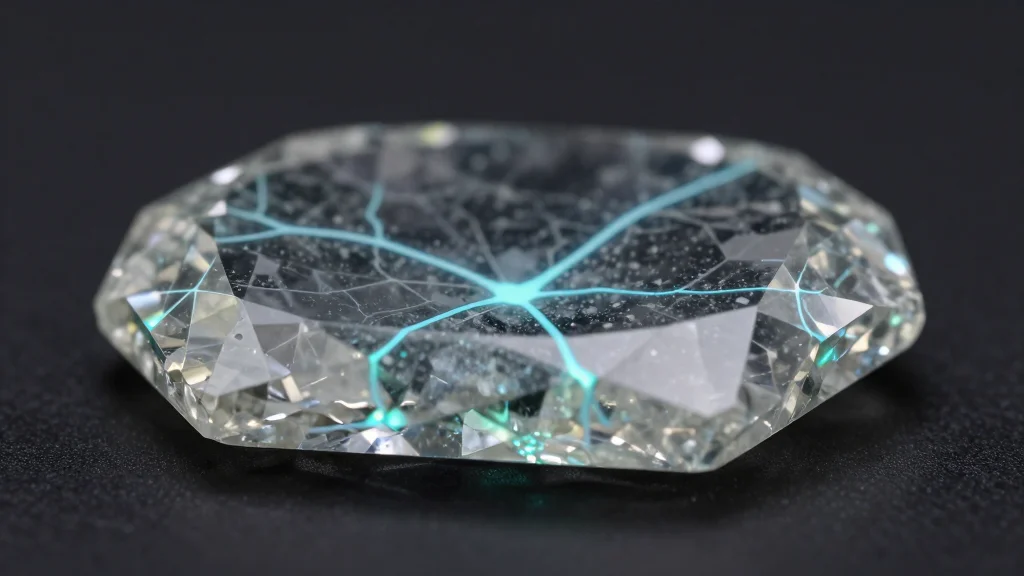
'Designer' Superconducting Diamond: Researchers Uncover Path to Multi-Modality Quantum Chips
Why It Matters
A tunable diamond superconductor could lower cooling requirements and enable on‑chip coexistence of diverse qubit modalities, accelerating commercial quantum computing and communication.
Key Takeaways
- •Boron-doped diamond forms granular superconducting “puddles” despite uniform crystal structure
- •Researchers mapped electron pathways, enabling tunable superconductivity via magnetic field, current, temperature
- •Roadmap allows engineering diamond chips that combine spin, photon, and superconducting functions
- •Higher operating temperatures could reduce cooling costs for quantum processors
- •Domestic diamond supply chain could accelerate integration of quantum and classical electronics
Pulse Analysis
Diamond has long been prized for its hardness, thermal conductivity and optical transparency, but its emergence as a superconductor is reshaping expectations for quantum hardware. Two decades after the first observation of superconductivity in heavily boron‑doped diamond, the material remained a scientific curiosity because the underlying physics were opaque. The new study leverages ultra‑pure thin‑film growth and advanced spectroscopy to peel back that opacity, revealing that even atomically uniform crystals host a hidden mosaic of superconducting regions. This granular behavior, once thought to be an artifact, is now recognized as an intrinsic feature that can be deliberately manipulated.
The research team demonstrated that the superconducting puddles respond predictably to external knobs such as magnetic field strength, bias current and temperature. By charting how electrons hop between these islands, they established a set of design parameters—boron concentration, crystal orientation, strain and film thickness—that allow engineers to “stitch” the puddles into a coherent superconducting network. This level of control transforms diamond from a passive substrate into an active platform where superconductivity, spin states, and photon interactions coexist. The ability to tune the transition temperature upward promises to cut the energy‑intensive cryogenic overhead that currently limits quantum processors.
Industry implications are profound. A diamond chip that simultaneously supports superconducting qubits, spin‑photon interfaces and magnetic control could serve as a universal quantum‑on‑chip hub, reducing the need for heterogeneous integration and complex packaging. As the United States builds a domestic diamond supply chain, the material’s compatibility with existing silicon‑based microelectronics may accelerate the rollout of hybrid quantum‑classical systems. In the near term, the roadmap outlined by the researchers offers a clear path for startups and large incumbents to prototype higher‑temperature quantum devices, potentially shrinking the gap between laboratory demonstrations and scalable commercial products.
'Designer' superconducting diamond: Researchers uncover path to multi-modality quantum chips
Comments
Want to join the conversation?
Loading comments...