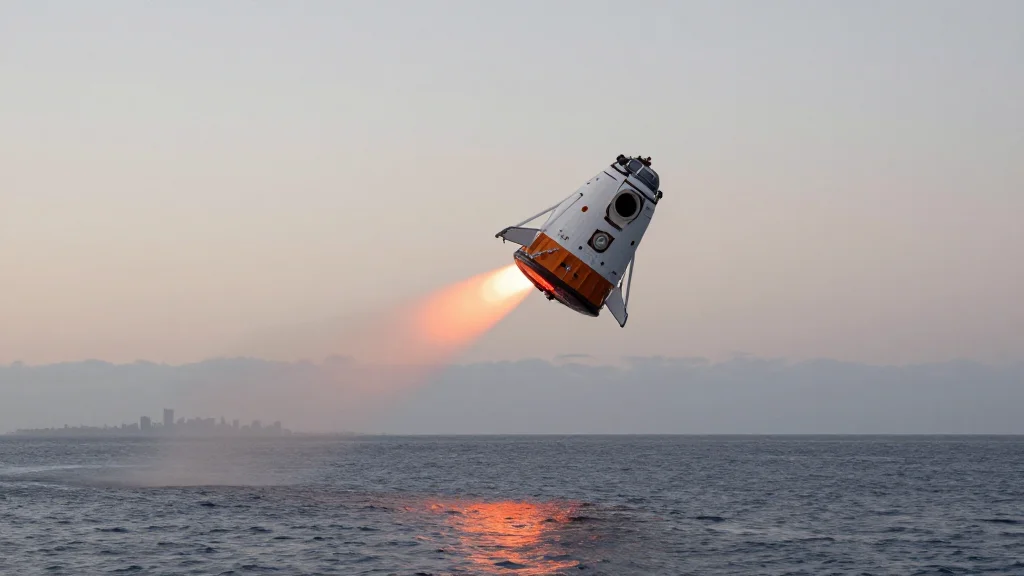
Did You Feel It? As Artemis II Nears Reentry, Scientists Want to Know How Far the Sonic Boom Travels
Companies Mentioned

NASA
Why It Matters
Understanding the propagation of re‑entry sonic booms improves safety modeling for future crewed missions and refines detection of meteors and debris, directly impacting aerospace risk management.
Key Takeaways
- •USGS launches public “Did You Feel It” survey for sonic boom reports
- •Artemis II will reenter at 30 Mach, creating a 5,000 °F fireball
- •Scientists aim to map boom propagation for future debris detection
- •Clear skies could let observers see a brief reentry streak
Pulse Analysis
The Artemis II mission marks the first crewed lunar flyby in 50 years, and its high‑velocity re‑entry offers a rare, controlled source of a sonic boom. As the Orion capsule pierces the atmosphere at roughly 30 Mach, the resulting shock wave will produce a thunderous boom that could be heard across Southern California. NASA and the U.S. Geological Survey are leveraging this event to crowdsource acoustic data, asking the public to log whether they heard the boom via an online survey. This citizen‑science approach not only engages the public but also provides a dense network of observations that traditional monitoring stations lack.
Beyond the immediate spectacle, the data collected will feed into models that predict how shock waves travel over land and water. Accurate propagation maps are crucial for distinguishing re‑entry booms from other supersonic phenomena such as missile tests, high‑speed aircraft, or meteoroid entries. By correlating reported hearing locations with atmospheric conditions, researchers can refine algorithms used to detect and track space debris, enhancing early‑warning capabilities for potential ground impacts. The initiative also offers a testbed for future missions that may generate similar acoustic signatures, ensuring that safety protocols evolve alongside launch cadence.
The broader implication is a more resilient aerospace ecosystem that blends public participation with scientific rigor. As commercial and governmental entities accelerate plans for lunar return and deep‑space exploration, understanding the acoustic footprint of re‑entry events becomes a component of mission risk assessment. Moreover, the visibility of a faint re‑entry streak under clear skies adds a visual dimension to the data set, allowing optical observations to complement acoustic reports. Together, these insights will help shape regulations, inform community outreach, and improve the overall predictability of high‑speed atmospheric entries.
Did you feel it? As Artemis II nears reentry, scientists want to know how far the sonic boom travels
Comments
Want to join the conversation?
Loading comments...