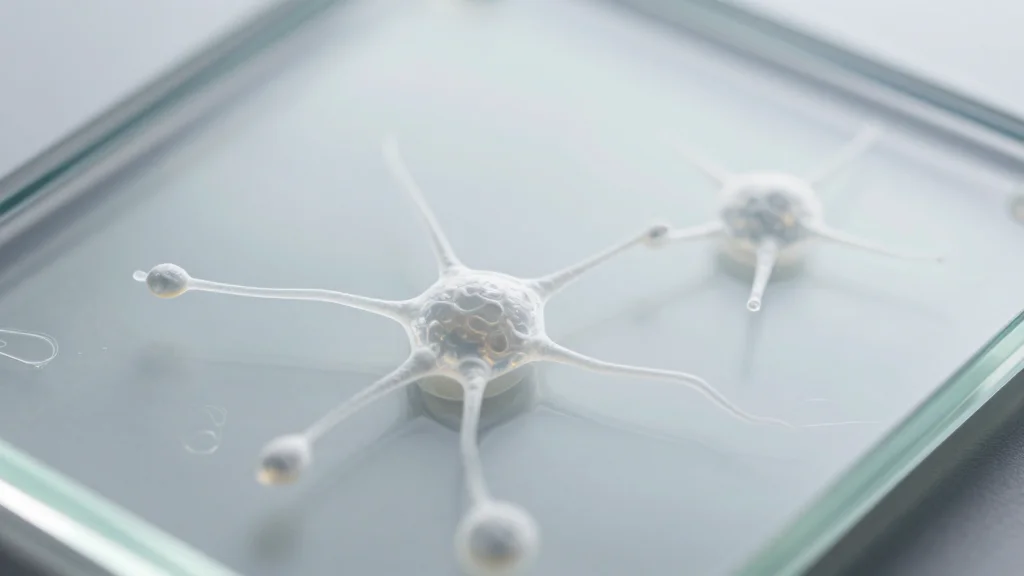
Differentiated SH-SY5Y Cells Show Neuronal Traits, Immature Synapses
Why It Matters
The lack of functional synapses in a widely used human‑derived model undermines the translational relevance of neuropharmacology data and may have led to misleading conclusions in disease research.
Key Takeaways
- •SH‑S5Y cells show neuronal markers but lack mature synaptic proteins.
- •Electrophysiology reveals no spontaneous excitatory or inhibitory postsynaptic currents.
- •Transcriptomics indicate down‑regulation of key synaptogenesis genes.
- •Study urges moving to iPSC‑neurons or organoids for synaptic studies.
- •Differentiation protocol tweaks cannot overcome intrinsic SH‑S5Y maturation ceiling.
Pulse Analysis
The human neuroblastoma line SH‑S5Y has become a workhorse in neuroscience labs because it proliferates rapidly, can be differentiated with retinoic acid, and expresses classic neuronal markers such as MAP2 and βIII‑tubulin. These traits make it attractive for high‑throughput screening, toxicology assays, and early‑stage mechanistic studies where primary neurons are impractical. Over the past two decades the cell line has been cited in thousands of publications, often as a proxy for human neurons despite its cancer‑derived origin. Its ease of handling, however, has masked deeper questions about functional fidelity.
The 2026 Cell Death Discovery paper by Leuenberger, Ott and Nevian dismantles the assumption that differentiated SH‑S5Y cells recapitulate mature synaptic function. Using confocal imaging, patch‑clamp recordings and RNA‑seq, the authors show robust neurite outgrowth and expression of early neuronal markers, yet synaptic proteins such as synaptophysin and PSD‑95 remain scarce and spontaneous postsynaptic currents are virtually absent. Gene‑expression profiling further reveals suppression of pathways governing vesicle cycling and spine formation. For drug discovery programs that rely on synaptic readouts—e.g., modulators of glutamate transmission—these gaps could generate false‑negative or misleading efficacy signals.
Consequently, the field is pivoting toward more physiologically relevant platforms. Induced pluripotent stem cell‑derived neurons now offer patient‑specific genetics and the capacity to form functional synapses, while three‑dimensional organoids and microfluidic co‑culture systems recreate network activity absent in monolayer lines. Researchers are also exploring CRISPR‑based editing of SH‑S5Y to re‑activate synaptogenic genes, though intrinsic oncogenic constraints may limit success. In the short term, investigators should validate key findings in complementary models before drawing conclusions about synaptic mechanisms, thereby strengthening translational confidence and reproducibility.
Differentiated SH-SY5Y Cells Show Neuronal Traits, Immature Synapses
Comments
Want to join the conversation?
Loading comments...