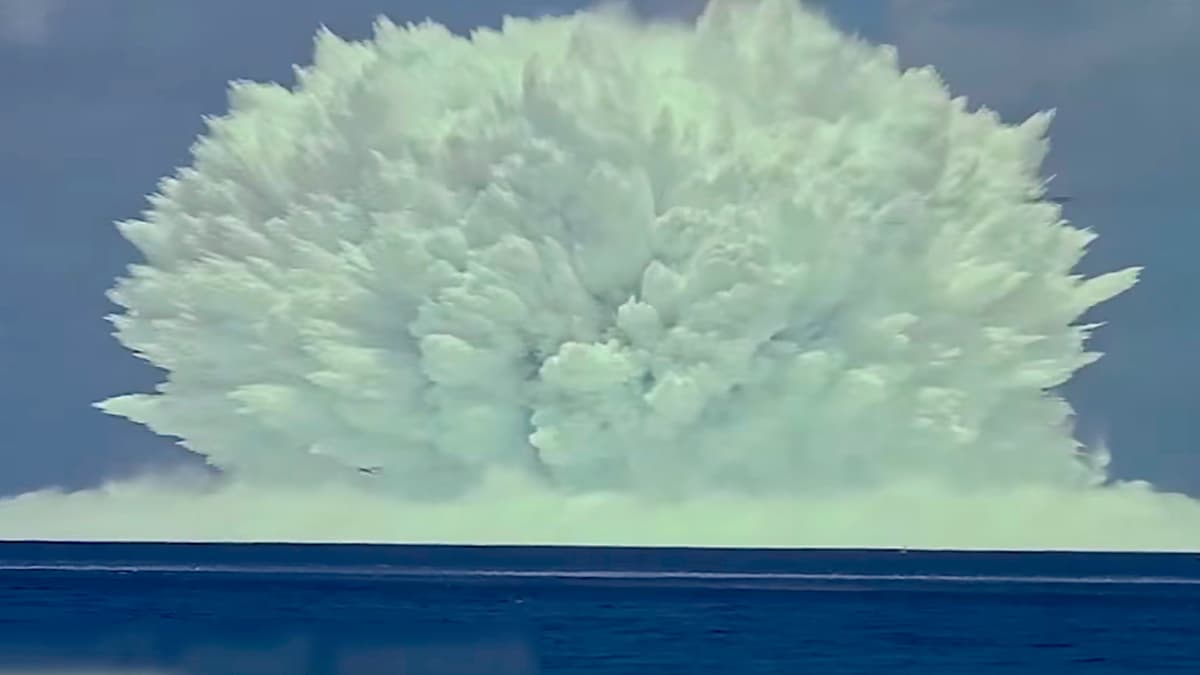
Dinosaur-Killing Asteroid Spawned a 1-Mile-High Mega-Tsunami (Video)
Why It Matters
Understanding the scale of the Chicxulub tsunami refines modern hazard models for asteroid impacts and extreme coastal events, informing both scientific research and disaster‑preparedness strategies.
Key Takeaways
- •Impact created 1.5 km high tsunami across Gulf of Mexico
- •Sediment volume moved: 48,000 cubic miles, reshaping coastlines
- •Earthquakes up to magnitude 11 triggered by impact shockwave
- •Deeper water impact could have produced 4.6 km wave
- •Study informs modern asteroid impact and tsunami risk models
Pulse Analysis
The Chicxulub impact, which ended the Cretaceous period, remains a benchmark for planetary‑scale catastrophes. Recent modeling shows the initial wave towered at 1.5 kilometers, dwarfing the 2004 Indian Ocean tsunami and delivering massive sediment loads that blanketed the Gulf region. By quantifying the energy release—roughly 100 teratons of TNT—scientists can better calibrate simulations of impact‑generated tsunamis, linking geological deposits to specific wave heights and providing a clearer picture of how the event reshaped Earth’s surface.
Geologists have traced the 48,000 cubic‑mile sediment plume through stratigraphic layers in Florida, Texas, and the Caribbean, confirming that the tsunami’s force extended far beyond the impact site. These deposits serve as a natural laboratory for studying wave dynamics, sediment transport, and post‑impact climate shifts. Modern coastal planners can draw parallels between ancient megatsunamis and today’s risk assessments, especially as sea‑level rise amplifies the potential damage from extreme wave events.
The implications for contemporary planetary defense are profound. While the odds of a Chicxulub‑scale asteroid striking Earth are low, near‑Earth object monitoring programs now incorporate tsunami modeling into impact scenarios. By understanding how water depth influences wave magnitude—potentially reaching 4.6 km in deeper oceans—policymakers can design more robust evacuation protocols and infrastructure resilience measures. Integrating geological insights with space‑watch data ensures that the lessons of the dinosaurs translate into actionable strategies for protecting modern societies.
Dinosaur-Killing Asteroid Spawned a 1-Mile-High Mega-Tsunami (Video)
Comments
Want to join the conversation?
Loading comments...