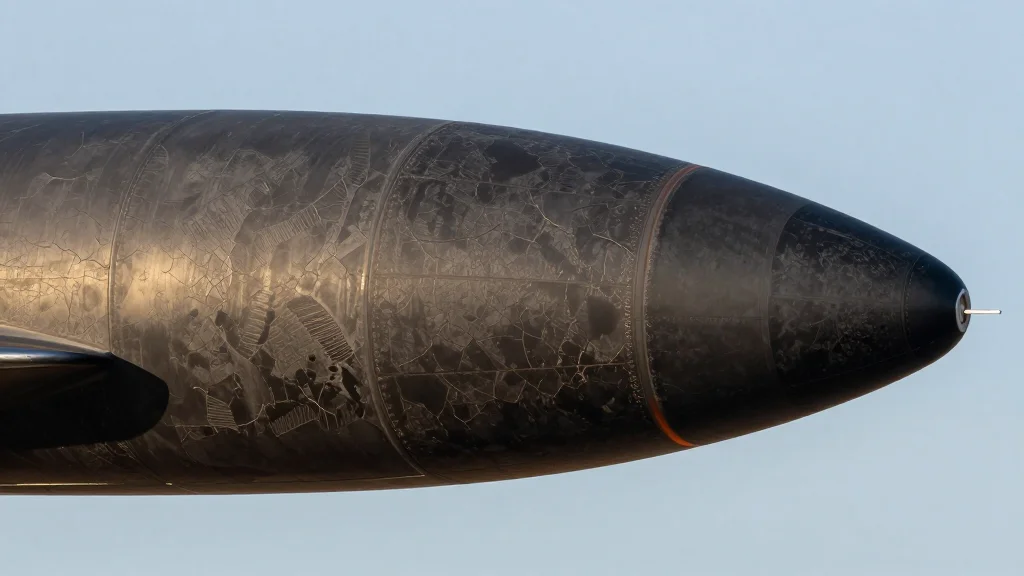
DLR Publishes Findings From CMC Forebody for Hypersonic Sounding Rocket STORT
Companies Mentioned
Why It Matters
Validated CMC thermal protection demonstrates a viable route to lighter, reusable launch vehicles, accelerating the commercial and governmental push for cost‑effective space access.
Key Takeaways
- •STORT flight reached 9,000 km/h at 38 km altitude
- •CMC TPS enabled reusable forebody to survive extreme aerothermal loads
- •DLR validated thermo‑mechanical models with real flight data
- •Multidisciplinary design reduced weight while maintaining structural integrity
- •Findings support future reusable launchers like ESA’s Space Rider
Pulse Analysis
Hypersonic re‑entry presents one of the toughest engineering puzzles: materials must survive rapid heating while keeping vehicle mass low. Ceramic matrix composites have emerged as a leading solution, offering high temperature tolerance, low density, and resistance to oxidation. By integrating CMCs into the forebody of the STORT rocket, DLR tackled these constraints head‑on, creating a thermal protection system (TPS) that can be reused across multiple flights—a critical step toward sustainable launch operations.
The STORT program, executed from 2019 to 2022, culminated in a three‑stage rocket launch from Norway’s Andøya Space site. The vehicle achieved roughly 9,000 km/h at 38 km altitude before the upper stage descended for recovery. During the flight, a suite of sensors streamed temperature, pressure, and structural strain data back to ground stations. DLR’s new paper translates this data into validated thermo‑mechanical models, proving that the CMC‑based TPS performed within predicted margins and that the multidisciplinary design methodology reliably predicts real‑world behavior.
These results have immediate relevance for Europe’s upcoming reusable launchers, such as ESA’s Space Rider, and for private firms eyeing rapid‑turnaround, low‑cost access to orbit. By confirming that CMC TPS can endure repeated hypersonic cycles, DLR reduces the technical risk and development cost for next‑generation launch systems. The broader industry can now leverage these validated models to accelerate material qualification, shorten design cycles, and ultimately bring down the price per kilogram of payload delivered to space.
DLR publishes findings from CMC forebody for hypersonic sounding rocket STORT
Comments
Want to join the conversation?
Loading comments...