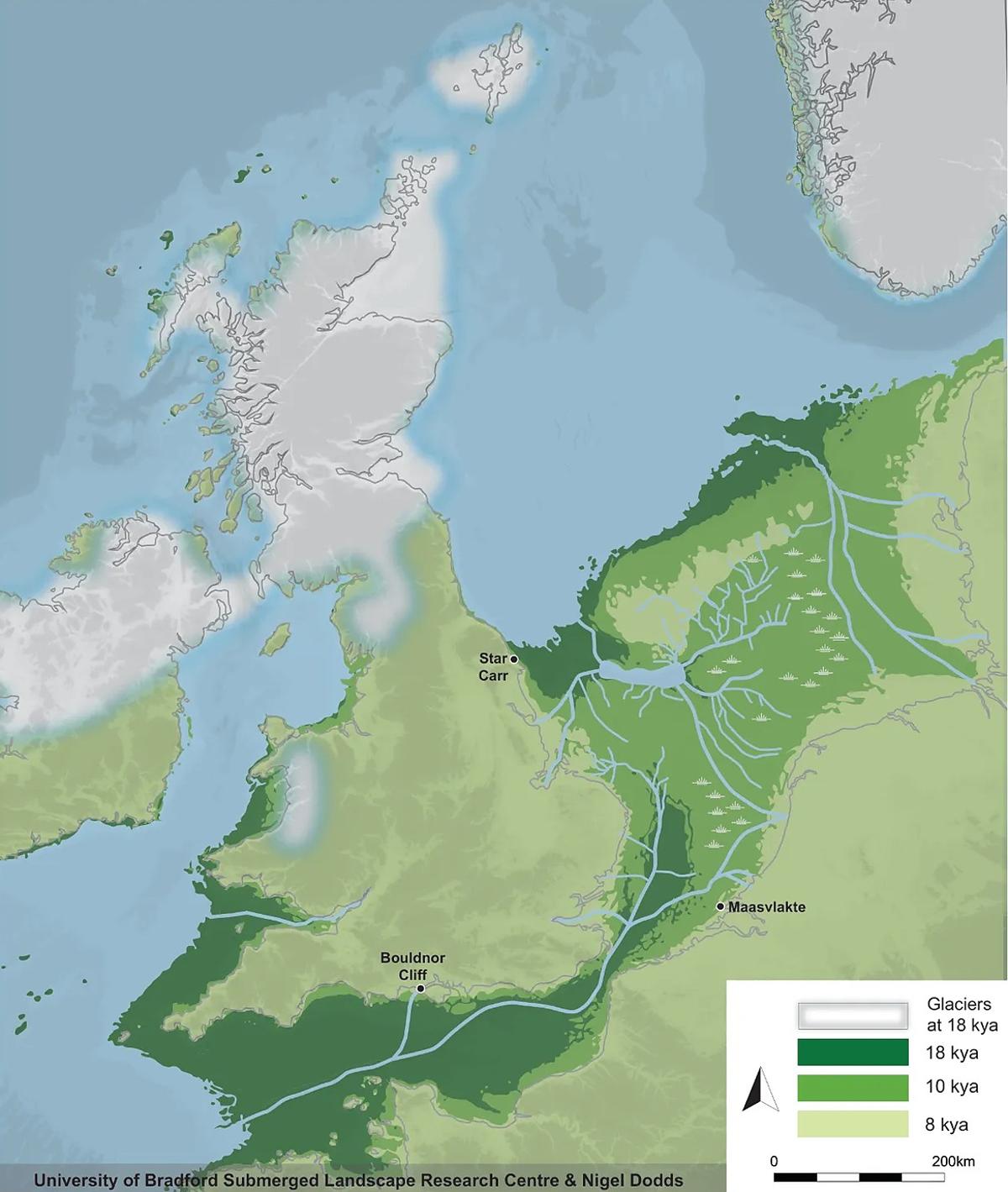
DNA Maps Doggerland Forests: 16,000-Year Secret Buried Under the North Sea
Why It Matters
The study reshapes our understanding of post‑glacial forest dynamics and micro‑refugia in northern Europe, informing climate‑change models and heritage preservation of submerged landscapes. It also provides a new benchmark for using sedaDNA to date coastal inundation events.
Key Takeaways
- •Oak, elm, hazel DNA found 16,000 years ago in Doggerland
- •Lime trees appear 2,000 years before mainland record
- •Pterocarya DNA pushes extinction date back hundreds of millennia
- •North Sea formation dated later than pollen‑based reconstructions
Pulse Analysis
Sedimentary ancient DNA is emerging as a powerful complement to traditional pollen analysis, especially in marine settings where alluvial sediments preserve genetic traces of past flora. Allaby’s team extracted sedaDNA from tightly controlled cores, separating locally sourced material from reworked deposits, which allowed them to pinpoint a pre‑Allerød temperate forest cover in Doggerland. This methodological rigor not only validates the presence of oak, elm and hazel far earlier than pollen records suggested, but also uncovers the surprising appearance of lime and the rare Pterocarya, a walnut relative thought extinct in north‑western Europe for 400,000 years.
The discovery of these warm‑adapted species during the Late Pleniglacial supports the micro‑refugia hypothesis, where isolated pockets of favorable climate enable cold‑sensitive trees to survive beyond their typical range. Such refugia help resolve Reid’s Paradox, explaining how European forests recolonised vast areas rapidly after the last glaciation despite limited seed dispersal. By extending the known survival window for Pterocarya, the study suggests that genetic lineages persisted in hidden niches, offering new insights into plant resilience under fluctuating climates.
Beyond paleo‑ecology, the research reshapes archaeological narratives of Doggerland, portraying it as a lush, resource‑rich heartland rather than a mere migration corridor. The later timing of North Sea submergence revises models of Mesolithic settlement patterns and sea‑level rise impacts. As climate change accelerates coastal erosion, the ability to reconstruct submerged landscapes through sedaDNA will become crucial for heritage management and future risk assessments, positioning this work at the forefront of interdisciplinary climate and archaeological science.
DNA Maps Doggerland Forests: 16,000-Year Secret Buried Under the North Sea
Comments
Want to join the conversation?
Loading comments...