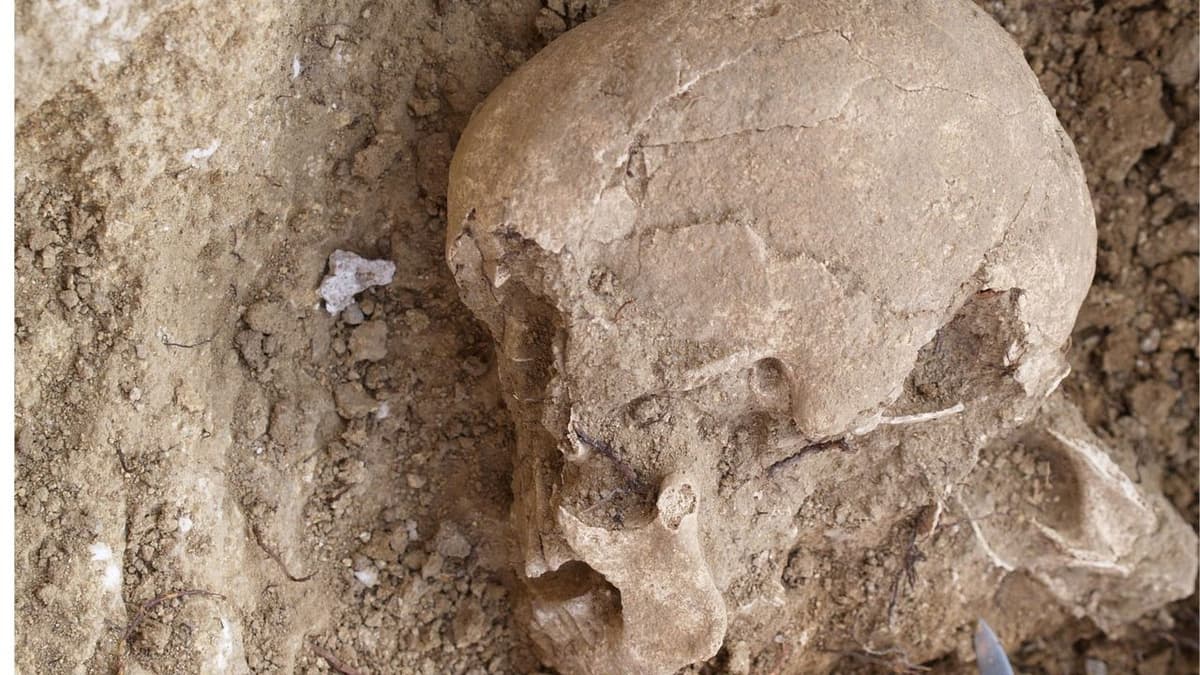
DNA Reveals Ancestry of Man Buried in Stone Age Monument in Spain, but His Religion Remains a Mystery
Why It Matters
The findings illustrate extensive cross‑Mediterranean mobility and genetic continuity in medieval Iberia, reshaping our view of cultural and religious interactions during the Al‑Andalus period.
Key Takeaways
- •DNA shows European, North African, Middle Eastern ancestry
- •Y‑chromosome lineage present in Spain since Copper Age
- •Burial orientation faces southeast, toward Mecca
- •No grave goods; possible mix of Islamic and pagan beliefs
- •Highlights medieval reuse of prehistoric monuments in Al‑Andalus
Pulse Analysis
The archaeogenetic profile of the Menga dolmen interments underscores how medieval Iberia was a genetic crossroads. By linking a 10th‑century individual to lineages spanning Europe, the Maghreb and the Near East, the study confirms that trade routes, pilgrimages and political alliances facilitated gene flow long before modern nation‑states. The Y‑chromosome’s continuity from the Chalcolithic era further demonstrates that ancient Iberian populations contributed enduring genetic threads to later societies, challenging simplistic narratives of isolated medieval communities.
Equally intriguing is the burial orientation, with both bodies placed facing southeast, the direction of Mecca. While such alignment hints at Islamic influence, the absence of typical Islamic necropolis features and the use of a prehistoric megalith suggest a syncretic worldview. Scholars propose that the dolmen may have been reinterpreted as a sacred cave—a motif resonant in both Islamic mysticism and pre‑Christian pagan traditions. This blend of spatial symbolism and material austerity points to a fluid religious identity among local elites navigating the multicultural landscape of Al‑Andalus.
The Menga case adds to a growing body of evidence that medieval societies routinely repurposed Neolithic monuments for new funerary practices. Similar patterns in southern Portugal and elsewhere indicate a broader cultural phenomenon where ancient structures served as tangible links to a revered past. Future interdisciplinary work, combining high‑resolution DNA sequencing with detailed osteological and isotopic analyses, promises to refine our understanding of mobility, diet and belief systems in medieval Europe, offering a richer, more nuanced portrait of the era’s social fabric.
DNA reveals ancestry of man buried in Stone Age monument in Spain, but his religion remains a mystery
Comments
Want to join the conversation?
Loading comments...