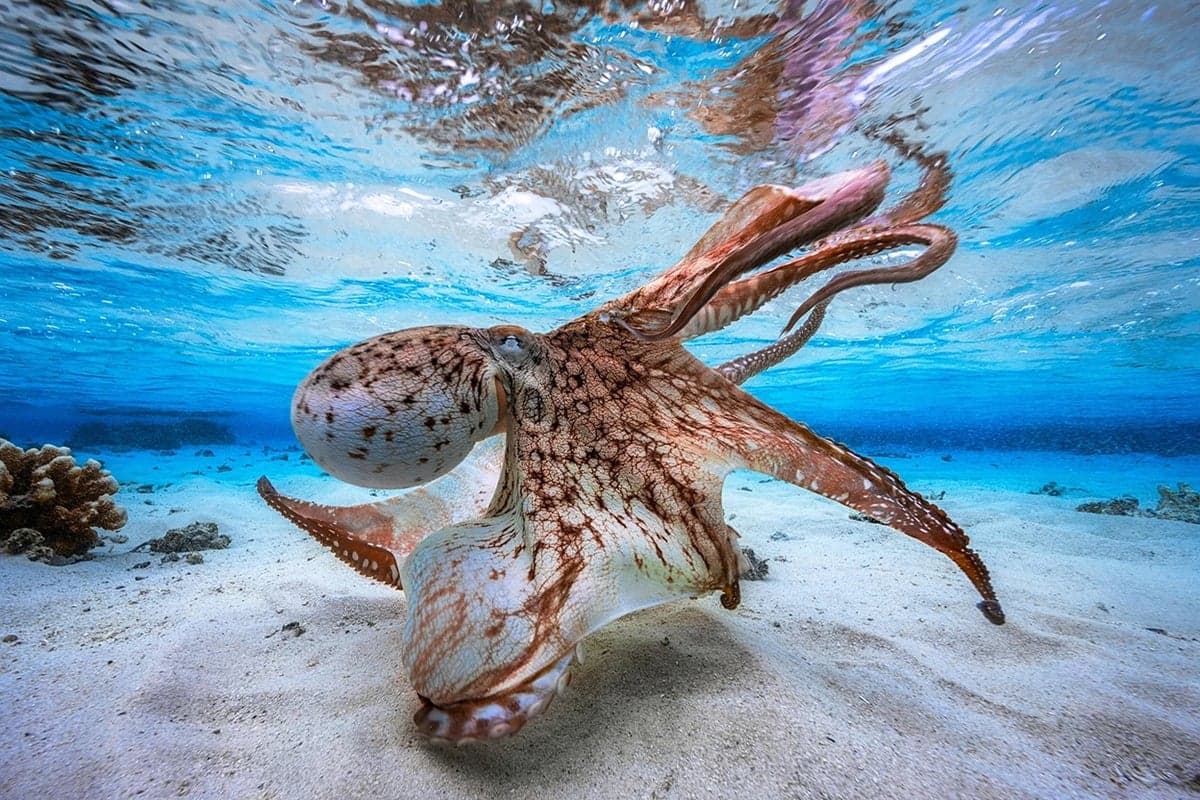
Do Octopus Brains Work Like Humans’—Or Is There Another Way to Be Smart?
Why It Matters
Understanding alternative neural architectures could reveal universal principles of cognition and inspire novel AI designs, while ethical gaps demand urgent policy attention.
Key Takeaways
- •Octopus brains contain over half of neurons in arm nerve cords
- •Researchers adapted mouse genetics tools for octopus and cuttlefish studies
- •Octopus dopamine receptor functions as an ion channel, unlike vertebrate receptors
- •Ethical guidelines vary; US lacks mandatory cephalopod welfare regulations
Pulse Analysis
Cephalopods—octopuses, squid and cuttlefish—have evolved large, distributed brains independent of vertebrates, offering a rare glimpse into convergent intelligence. Their eyes mirror vertebrate optics, yet the underlying neural processing diverges dramatically, as highlighted by a dopamine‑gated ion channel unique to octopus vision. This biological novelty positions cephalopods as a compelling model for probing fundamental questions about perception, memory and decision‑making that traditional mammalian systems cannot fully address.
In the past decade, the field has been turbocharged by genomic and molecular breakthroughs. The 2015 octopus genome revealed expanded gene families linked to nervous‑system patterning, prompting labs to adapt CRISPR, viral vectors and high‑throughput sequencing for these soft‑bodied creatures. Teams at Harvard, Stanford and the Max Planck Institute have generated partial connectomes, identified visual‑space maps, and demonstrated place‑cell‑like activity, while researchers like Montague engineer genetically modified cuttlefish to streamline imaging. Yet technical obstacles persist: the lack of a rigid skull hampers electrode placement, and the minute, irregular neurons demand innovative recording strategies.
The implications extend beyond basic science. Insights from cephalopod circuitry could inform next‑generation artificial intelligence, offering alternative architectures for flexible, decentralized processing. Simultaneously, the ethical landscape is fragmented—Europe enforces strict welfare standards, whereas the United States relies on voluntary compliance—raising concerns about pain management and humane treatment. As funding and interest surge, establishing robust ethical frameworks alongside technical tools will be essential to responsibly harness the transformative potential of cephalopod neuroscience.
Do octopus brains work like humans’—or is there another way to be smart?
Comments
Want to join the conversation?
Loading comments...