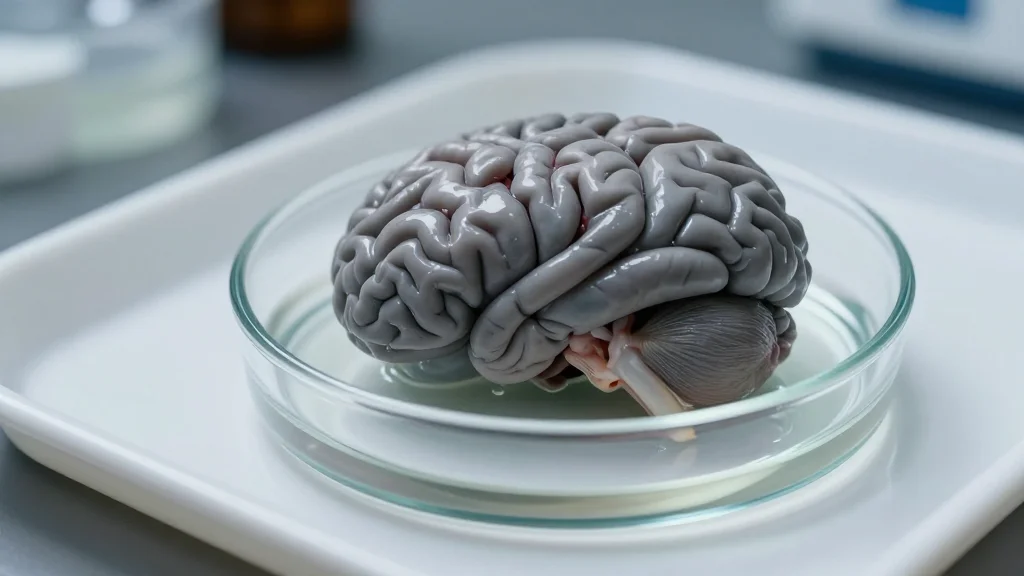
Does the Brain Really Make Its Own DMT? New Study Ignites Debate
Why It Matters
If endogenous DMT exists, it could reshape our understanding of neurotransmission, psychedelic therapy, and consciousness research; contradictory evidence highlights the need for robust replication before drawing conclusions.
Key Takeaways
- •Palner's ex vivo rat study found no detectable DMT in serotonin neurons
- •Earlier 2019 microdialysis work reported endogenous DMT in visual cortex
- •Methodological differences, not degradation, may explain conflicting results
- •Critics call for replication using both ex vivo and in vivo techniques
- •Understanding endogenous DMT could inform psychedelic therapy and consciousness research
Pulse Analysis
The latest ex vivo analysis of rat brain tissue adds a new layer to the long‑standing mystery of endogenous DMT. Palner’s team dissected whole brains, applied MAO inhibitors, and employed high‑resolution mass spectrometry, yet consistently reported “scant evidence” of DMT in serotonergic terminals. By focusing on serotonin neurons—a logical target given DMT’s structural similarity to serotonin—the study challenges the 2019 microdialysis findings that suggested the molecule is synthesized and released in specific cortical areas. This methodological clash underscores how sample preparation, timing, and detection limits can dramatically sway results in neurochemical research.
The debate pivots on whether DMT’s fleeting presence can be captured only in living tissue. Microdialysis probes sample extracellular fluid in real time, potentially catching transient spikes that degrade rapidly once the brain is removed. In contrast, ex vivo homogenates require rapid cooling and careful handling to avoid loss, but may still miss short‑lived concentrations. Critics argue that both approaches have merits and that a hybrid protocol—combining in vivo sampling with immediate ex vivo validation—could resolve the discrepancy. Moreover, the possibility that the invasive probe itself induces DMT release, given its neuroprotective properties, adds another variable to control.
Beyond the technical dispute, the stakes are high for the burgeoning psychedelic‑medicine field. Confirming a physiological role for DMT would bolster theories linking the molecule to dreaming, near‑death experiences, and innate mood regulation, potentially guiding new therapeutic targets. Conversely, a null finding suggests that exogenous administration, rather than endogenous production, drives the profound subjective effects observed in clinical trials. As analytical technologies advance—particularly ultra‑high‑resolution mass spectrometry and imaging mass spectrometry—researchers are poised to map trace psychedelics with unprecedented precision, paving the way for clearer answers about the brain’s “spirit molecule.”
Does the brain really make its own DMT? New study ignites debate
Comments
Want to join the conversation?
Loading comments...