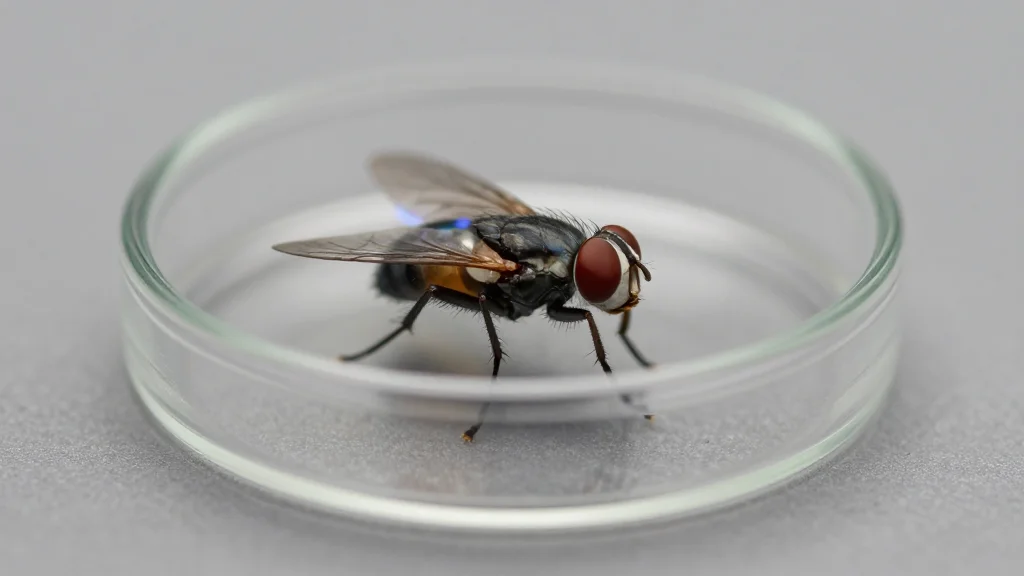
Dopamine Dictates How Long Sexual Drive Remains Suppressed After Stress
Why It Matters
The work links dopamine‑mediated signaling to stress‑induced drops in sexual motivation, offering a mechanistic bridge that could inform therapies for stress‑related sexual dysfunction in higher organisms.
Key Takeaways
- •Small-space confinement for ≥30 min suppresses male Drosophila courtship.
- •Suppression persists 1‑2 hrs; 7‑24 hr stress extends effect to 5 days.
- •Dopamine signaling required to maintain, not initiate, post‑stress suppression.
- •PAM and PPL1 dopamine neurons and mushroom‑body receptors drive lasting effect.
- •Blocking dopamine synthesis or receptors eliminates prolonged courtship inhibition.
Pulse Analysis
Stress is a universal regulator of motivation, and its impact on sexual behavior has been documented from rodents to humans. Dopamine, the brain’s reward neurotransmitter, is a key node in this circuitry, yet the precise pathways that sustain stress‑induced sexual inhibition remain elusive. Fruit flies (Drosophila melanogaster) provide a uniquely tractable system: their compact nervous system, extensive genetic toolkit, and well‑mapped dopamine circuits enable researchers to isolate the cellular contributors to behavioral change.
The recent iScience paper shows that brief confinement triggers an immediate drop in courtship, but the persistence of that drop hinges on dopamine signaling. By pharmacologically lowering dopamine, silencing dopamine‑producing enzymes, and temperature‑controlling dopamine neuron activity, the authors demonstrated that dopamine is not needed to start the suppression but is critical for its maintenance. Specifically, the PAM and PPL1 dopamine neuron clusters, together with mushroom‑body receptors Dop1R1, Dop1R2, and Dop2R, form a circuit that holds the low‑motivation state alive for hours after stress ends.
These findings have broader relevance beyond insects. The conserved nature of dopamine pathways suggests that similar mechanisms could underlie prolonged sexual disengagement after acute stress in mammals, including humans. Identifying the downstream targets of dopamine in the mushroom body may point to novel drug targets for treating stress‑related sexual dysfunction. Future work employing real‑time imaging of dopamine neuron activity and cross‑species validation could translate this basic science insight into therapeutic strategies.
Dopamine dictates how long sexual drive remains suppressed after stress
Comments
Want to join the conversation?
Loading comments...