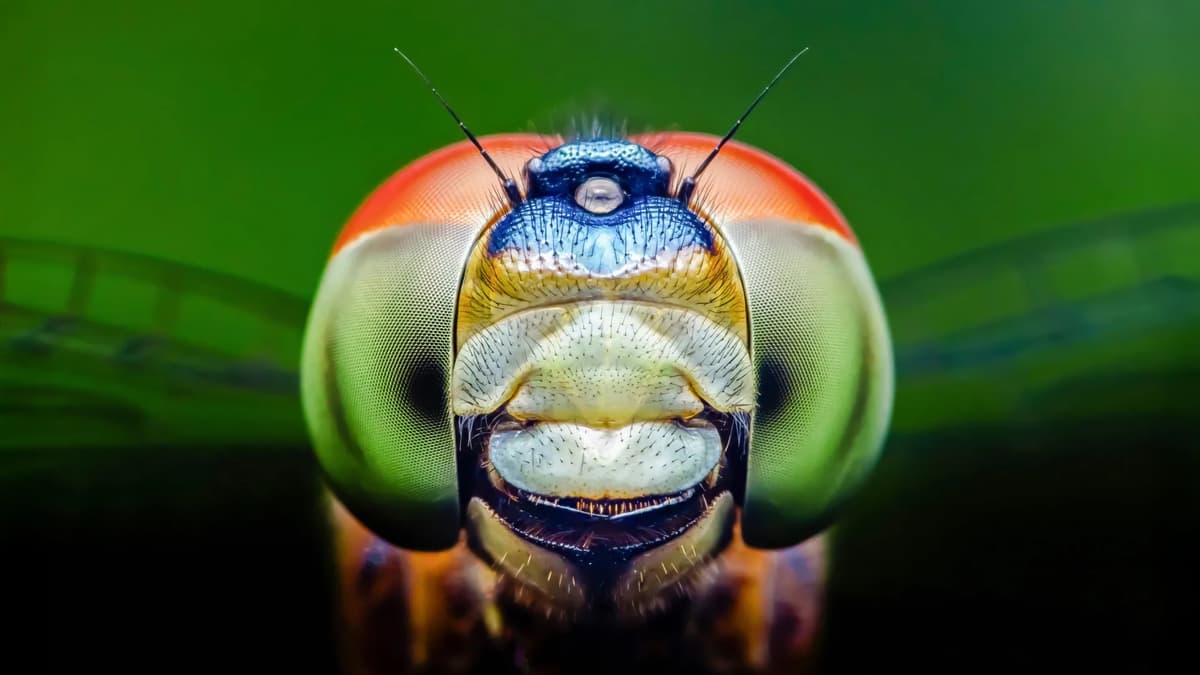
Dragonflies Can See a Color Humans Can’t and It Could Change Medicine
Why It Matters
A near‑infrared‑responsive opsin derived from insects could revolutionize optogenetics, enabling non‑invasive control of cells deep within the body and accelerating biomedical research and therapy development.
Key Takeaways
- •Dragonflies possess opsin sensitive to ~720 nm deep red light
- •Opsin mechanism mirrors mammalian red opsin, showing parallel evolution
- •Modified dragonfly opsin activates cells with near‑infrared light
- •Near‑infrared opsin enables deeper tissue optogenetic control
- •Sex‑specific red reflectance aids dragonfly mate recognition
Pulse Analysis
The discovery that dragonflies share a red‑light detection strategy with mammals reshapes our understanding of visual evolution. Opsins—light‑sensing proteins—have long been studied in vertebrates, but finding an insect pigment tuned to 720 nm reveals that distant lineages can converge on identical molecular solutions. This parallel evolution underscores the universality of certain biochemical pathways and suggests untapped reservoirs of bio‑optical diversity in arthropods.
Beyond basic science, the research demonstrates a practical breakthrough: a single amino‑acid tweak pushes the dragonfly opsin’s peak response into the near‑infrared spectrum. Near‑infrared photons penetrate skin and tissue far more effectively than visible light, a property that optogenetics has coveted for years. By engineering cells to express this modified opsin, scientists can now stimulate neuronal or cardiac activity without invasive fiber optics, potentially simplifying experimental setups and expanding therapeutic possibilities such as deep‑brain stimulation or targeted gene activation.
The broader impact reaches biotech and medical device markets. Companies developing optogenetic therapies can incorporate the dragonfly‑derived protein to create next‑generation implants or wearable light sources that operate at safe, tissue‑penetrating wavelengths. Moreover, the study invites further exploration of insect opsins for bio‑engineering, possibly yielding a suite of light‑responsive tools across the spectrum. As the field moves toward clinical translation, this cross‑kingdom insight may accelerate the timeline for non‑invasive, precision‑medicine interventions.
Dragonflies can see a color humans can’t and it could change medicine
Comments
Want to join the conversation?
Loading comments...