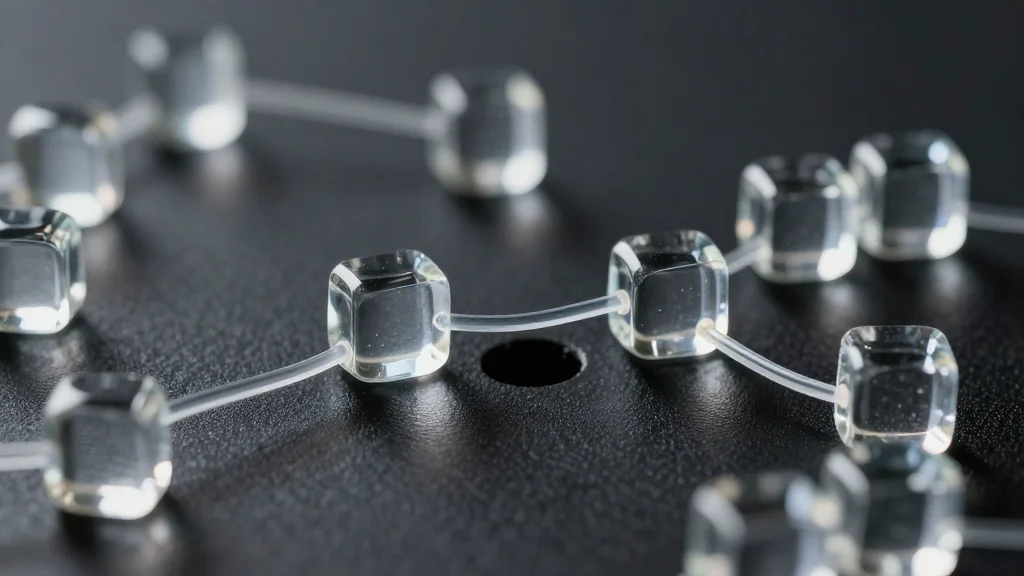
Dynamic Nanogates Let Longer Molecules Pass Faster Through Flexible Pores
Why It Matters
Understanding dynamic gating reshapes how we design artificial channels and separation membranes, promising more efficient, selective industrial processes and biomimetic technologies.
Key Takeaways
- •Longer linear alkanes cross nanocube pores faster than shorter ones
- •Pore flexibility, not just size, governs transport rates
- •Double/triple bonds speed entry; oxygen atoms slow it down
- •Two-step mechanism: surface encounter then dynamic gate opening
- •Findings guide design of selective synthetic channels and separations
Pulse Analysis
Transport through nanoscale pores underpins essential biological functions such as ion channel signaling and water filtration by aquaporins. While natural pores constantly fluctuate due to thermal motion, most synthetic filters are rigid, limiting their selectivity and efficiency. Researchers have long sought to mimic the dynamic behavior of biological gates, but quantifying how molecular shape and flexibility influence passage has remained elusive. This gap hampers the development of next‑generation membranes for energy, pharmaceuticals, and chemical manufacturing.
In the new study published in *Chem*, Hiraoka, Tachikawa and collaborators fabricated amphiphilic nanocubes that form hydrophobic cavities linked to the surrounding water by flexible pores. By varying the rigidity of these pores and employing time‑resolved luminescence, they measured uptake rates for a suite of hydrocarbons. Counterintuitively, longer linear alkanes entered the nanocubes more rapidly than their shorter counterparts, and molecules bearing terminal double or triple bonds moved even faster, whereas oxygen‑containing groups slowed transport. The authors attribute these trends to a two‑step process: an initial transient “encounter complex” forms on the pore’s exterior, and the molecule waits for a spontaneous gate opening, a step strongly modulated by pore dynamics and weak surface interactions.
These insights redefine kinetic expectations for molecular sieving and open pathways to engineer synthetic channels that exploit dynamic gating rather than static size exclusion. By tailoring pore flexibility and surface chemistry, designers can create membranes that preferentially accelerate desired species while rejecting others, boosting selectivity in gas separations, liquid chromatography, and drug delivery platforms. The work also provides a computational framework for simulating dynamic pores, accelerating the translation from laboratory nanocubes to scalable industrial materials. As the field moves toward biomimetic filtration solutions, the principle of kinetic gating may become a cornerstone of sustainable, high‑performance separation technologies.
Dynamic nanogates let longer molecules pass faster through flexible pores
Comments
Want to join the conversation?
Loading comments...