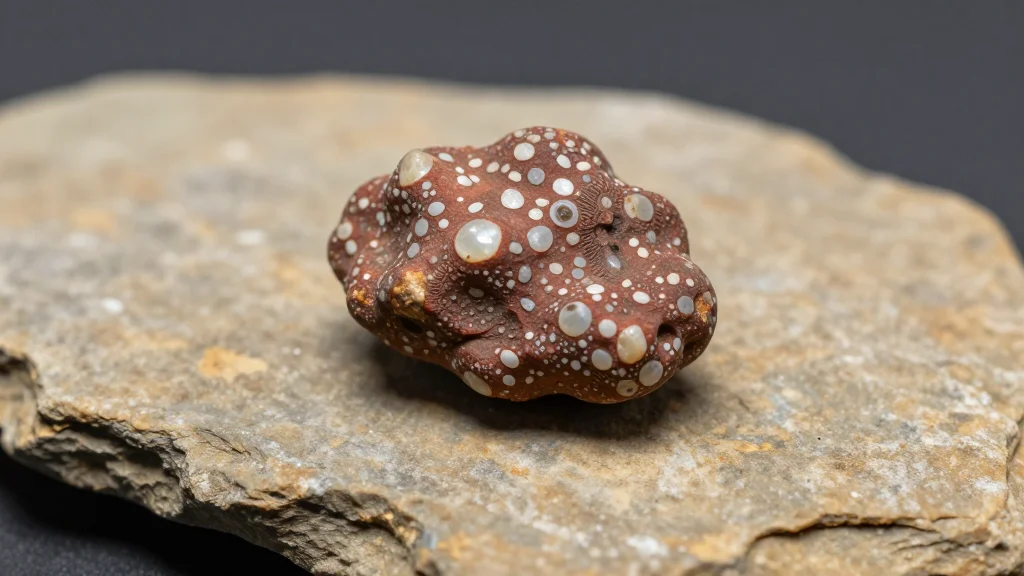
Earliest Known Vomit: This Ancient Predator Clearly Wasn't Picky
Why It Matters
The specimen provides the first direct evidence of vertebrate vomiting on land, offering rare insight into predator‑prey dynamics and digestive physiology in early terrestrial ecosystems.
Key Takeaways
- •Earliest terrestrial regurgitalite dated 290 million years old.
- •Contains 41 bones from three distinct early Permian species.
- •Phosphorus‑free matrix confirms vomit, not coprolite.
- •Suggests opportunistic apex predator, likely Dimetrodon or Tambacarnifex.
- •Enhances reconstruction of early Permian food web dynamics.
Pulse Analysis
Regurgitalites—fossilized vomit—are among the most elusive traces of ancient life, largely because they require exceptional preservation conditions. The Bromacker specimen, MNG 17001, stands out not only for its age but also for the three‑dimensional preservation that allowed researchers to scan the matrix without destructive sampling. By coupling micro‑CT imaging with X‑ray fluorescence, the team distinguished bone fragments from surrounding sediment and ruled out the phosphorus signature typical of coprolites, establishing a new benchmark for identifying regurgitalites in the rock record.
The bone assemblage reveals a snapshot of an early Permian predator’s meal. Among the 41 fragments are parts of Thuringothyris mahlendorffae, a diminutive reptile, an upper arm of the iconic bipedal Eudibamus cursoris, and a larger metapodial from an unidentified diadectid roughly 60 cm long. The diversity of prey sizes suggests an opportunistic feeding strategy rather than specialization, implying that apex predators such as Dimetrodon teutonis or Tambacarnifex unguifalcatus could switch targets based on availability. This behavioral inference enriches our understanding of trophic flexibility during a period when terrestrial ecosystems were still assembling.
Beyond the immediate discovery, the regurgitalite offers a rare window into early vertebrate digestive physiology and ecosystem structure. It confirms that complex predator‑prey interactions, including rapid expulsion of indigestible material, were already in place 290 million years ago. Such evidence helps calibrate models of energy flow and niche partitioning in the early Permian, informing both paleontological theory and modern comparative studies of vertebrate digestion. Future work targeting similar matrix compositions could uncover more regurgitalites, further illuminating the evolutionary origins of feeding strategies that persist today.
Earliest known vomit: This ancient predator clearly wasn't picky
Comments
Want to join the conversation?
Loading comments...