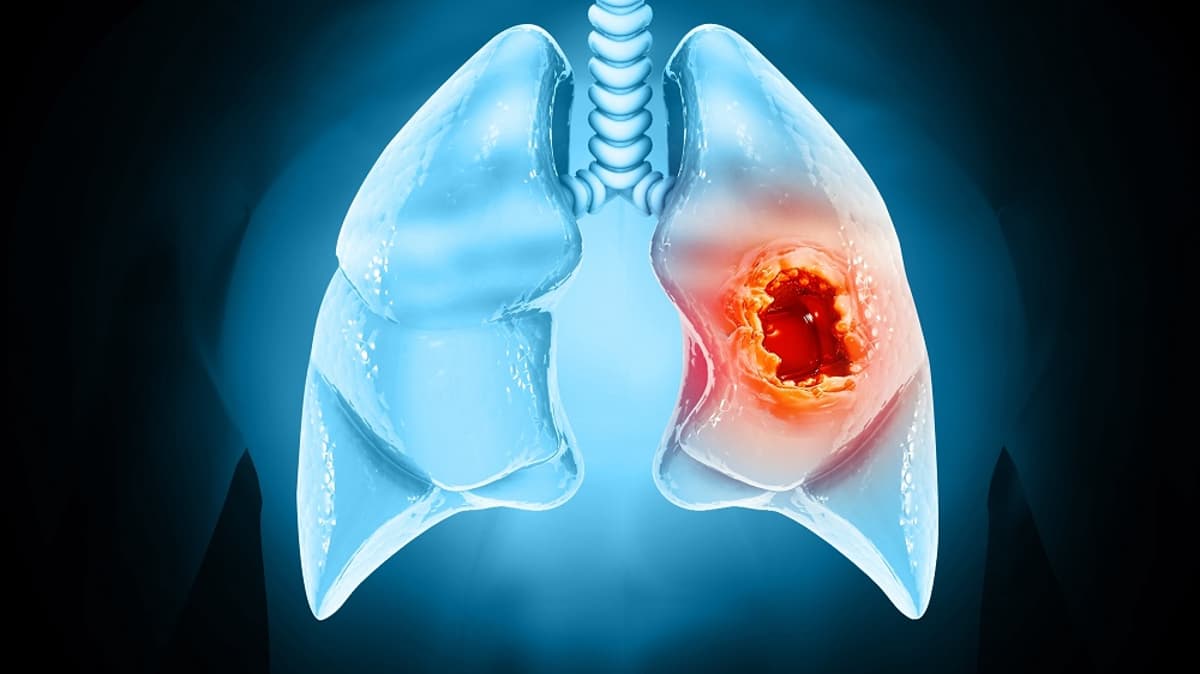
Early Cancer Cells Change Their Surroundings to Form Tumors
Why It Matters
The findings prove that early tumor‑stroma communication is druggable, opening preventive strategies for KRAS‑driven lung cancer and potentially other malignancies.
Key Takeaways
- •KRAS‑mutant AT2 cells secrete AREG, triggering EGFR on fibroblasts.
- •EGFR inhibition curtails fibroblast reprogramming and early tumor growth.
- •Deleting AREG dramatically lowers tumor formation in mouse models.
- •Human early‑stage LUAD shows same regenerative‑like cells and fibrotic fibroblasts.
Pulse Analysis
Lung adenocarcinoma rarely erupts overnight; most KRAS‑driven lesions linger in a dormant, pre‑malignant state for years. Recent work from Cardoso et al. reveals that the decisive factor is not the mutation alone but the way mutant alveolar type‑II (AT2) cells co‑opt their stromal neighbors. Upon acquiring KRAS activation, AT2 cells slip into a transient, injury‑repair program and begin broadcasting amphiregulin (AREG), a potent EGFR ligand. This early communication reshapes the surrounding fibroblasts and immune cells, laying the groundwork for a tumor‑permissive niche before any radiographic abnormality appears.
The AREG‑EGFR cascade emerges as a linchpin of this niche. In mouse models, pharmacologic EGFR blockade with gefitinib or genetic ablation of AREG blunts fibroblast activation, reduces fibrotic gene expression, and curtails the hybrid inflammatory‑immunosuppressive macrophage phenotype that would otherwise nurture malignant growth. Equally striking, direct KRAS inhibition reverses these stromal alterations, indicating that the early microenvironment remains plastic rather than irrevocably scarred. These findings reposition EGFR and KRAS inhibitors from late‑stage cytotoxic tools to potential chemopreventive agents that could intercept tumor establishment.
Translational relevance is underscored by single‑cell analyses of early‑stage human LUAD, which identify AREG‑high, regenerative‑like tumor cells and fibroblasts bearing the same fibrotic signature observed in mice. Human AT2‑derived organoids recapitulate the signaling loop, and EGFR antagonists again dismantle the niche. If similar early‑stage windows exist across KRAS‑mutant cancers, routine screening coupled with targeted microenvironmental blockade could shift oncology toward prevention rather than reaction. Ongoing challenges include detecting these pre‑clinical lesions and balancing long‑term inhibitor safety, but the study provides a concrete molecular roadmap for future clinical trials.
Early Cancer Cells Change Their Surroundings to Form Tumors
Comments
Want to join the conversation?
Loading comments...