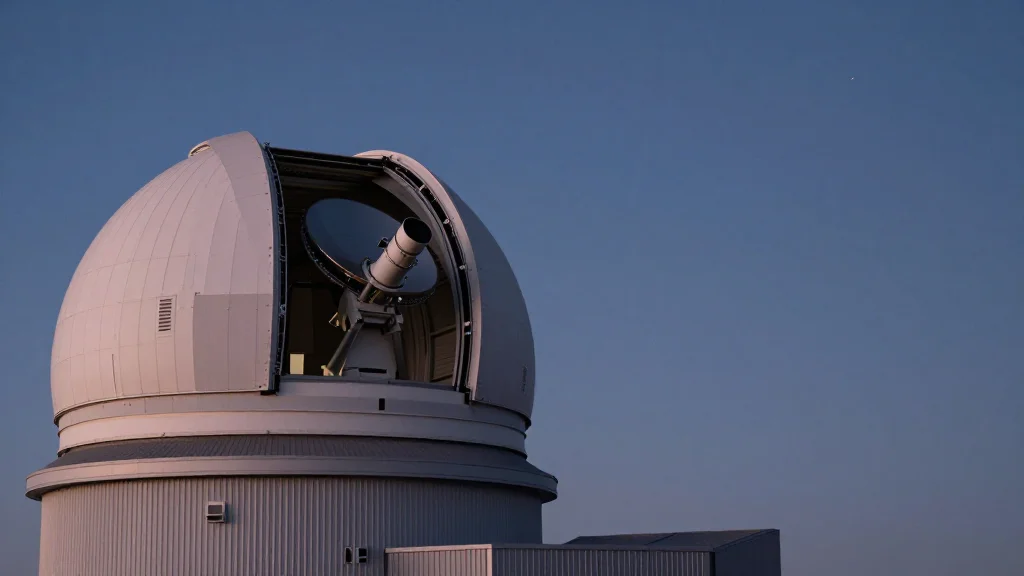
Early Data From NSF–DOE Vera C. Rubin Observatory Reveals Over 11,000 New Asteroids
Why It Matters
The discovery dramatically enlarges the inventory of near‑Earth objects, enhancing planetary‑defense assessments and providing fresh data for models of solar‑system formation. It also validates the Rubin Observatory’s role as a cornerstone of modern astronomical infrastructure.
Key Takeaways
- •Rubin Observatory detected 11,000+ previously unknown asteroids
- •Early data covers 6% of planned survey area
- •Findings boost planetary defense and solar system research
- •Survey will eventually catalog millions of small bodies
- •Collaboration leverages NSF and DOE resources for astronomy
Pulse Analysis
The Vera C. Rubin Observatory, formerly known as the Large Synoptic Survey Telescope, began its operational phase in 2024 under a partnership between the National Science Foundation and the Department of Energy. Its 8.4‑meter mirror and 3.2‑gigapixel camera enable nightly scans of the southern sky, generating petabytes of imaging data. The initial data release, though representing only a fraction of the planned 10‑year Legacy Survey of Space and Time (LSST), already showcases the system’s ability to detect faint, fast‑moving objects that elude traditional surveys.
Asteroid detection sits at the intersection of scientific curiosity and public safety. By adding over 11,000 new asteroids to the catalog, the Rubin Observatory provides critical inputs for impact‑risk models and refines orbital predictions for near‑Earth objects. The expanded dataset also offers researchers unprecedented opportunities to study asteroid composition, collisional histories, and migration patterns, feeding into broader theories about planetary formation and the dynamical evolution of the solar system.
Looking ahead, the Rubin Observatory’s full survey will image the entire visible sky every few nights, ultimately cataloging millions of minor planets, comets, and trans‑Neptunian objects. This data deluge will empower both academic institutions and commercial entities—such as space‑resource companies and satellite operators—to make more informed decisions. The successful early results reinforce confidence in the observatory’s design and the NSF‑DOE collaboration, setting a benchmark for future large‑scale, data‑intensive astronomical projects.
Early Data from NSF–DOE Vera C. Rubin Observatory Reveals Over 11,000 New Asteroids
Comments
Want to join the conversation?
Loading comments...