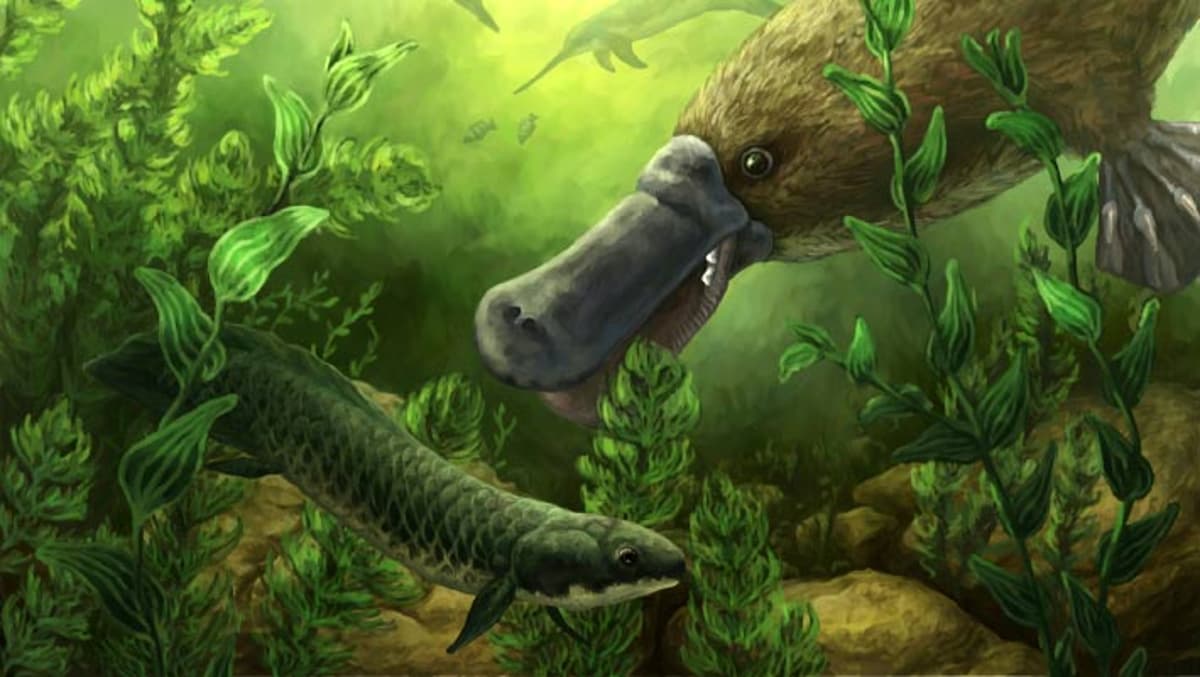
Early Platypuses Had Strong Teeth and Powerful Jaws, Fossils Show
Why It Matters
The find clarifies how modern platypus lost its teeth and adapted its diet, offering new insight into monotreme evolutionary pathways and the dynamics of ancient Australian lake ecosystems.
Key Takeaways
- •Obdurodon insignis had functional molars and premolars
- •Fossils show larger size than modern platypus
- •First premolar indicates ability to crush hard‑shelled prey
- •Partial scapulocoracoid suggests swimming proficiency
- •Species lived in rich lake ecosystem with dolphins and birds
Pulse Analysis
The newly described material from Obdurodon insignis reshapes the narrative of monotreme evolution. While modern platypuses shed their teeth shortly after hatching, this Oligocene relative retained robust molars and a premolar, indicating a diet that included hard‑shelled invertebrates such as yabbies. The presence of a strong bite apparatus suggests that early platypuses occupied a more generalized predatory niche before the lineage shifted toward the specialized filter‑feeding and soft‑food habits seen today. This functional transition is a key piece in the puzzle of how monotremes diverged from other mammalian groups.
Beyond dental anatomy, the partial scapulocoracoid reveals that Obdurodon insignis possessed forelimb morphology nearly identical to its modern descendant, confirming proficient swimming capabilities. Coupled with evidence of a lake‑dominated habitat, the fossils paint a picture of a semi‑aquatic mammal thriving in extensive inland water bodies. The surrounding fauna—freshwater dolphins, lungfish, cormorants, and even a giant eagle—highlights a richly layered ecosystem that supported both aquatic and terrestrial niches, offering a rare snapshot of Australia’s Late Oligocene biodiversity.
For paleontologists, these specimens provide a tangible bridge between the scant fossil record of monotremes and the well‑documented modern forms. Detailed comparisons of tooth wear patterns, jaw mechanics, and limb articulation can inform models of dietary shift and locomotor adaptation. Moreover, the discovery underscores the value of revisiting classic sites with modern excavation techniques, promising further revelations about the evolutionary pressures that sculpted one of the world’s most iconic mammals.
Early Platypuses Had Strong Teeth and Powerful Jaws, Fossils Show
Comments
Want to join the conversation?
Loading comments...