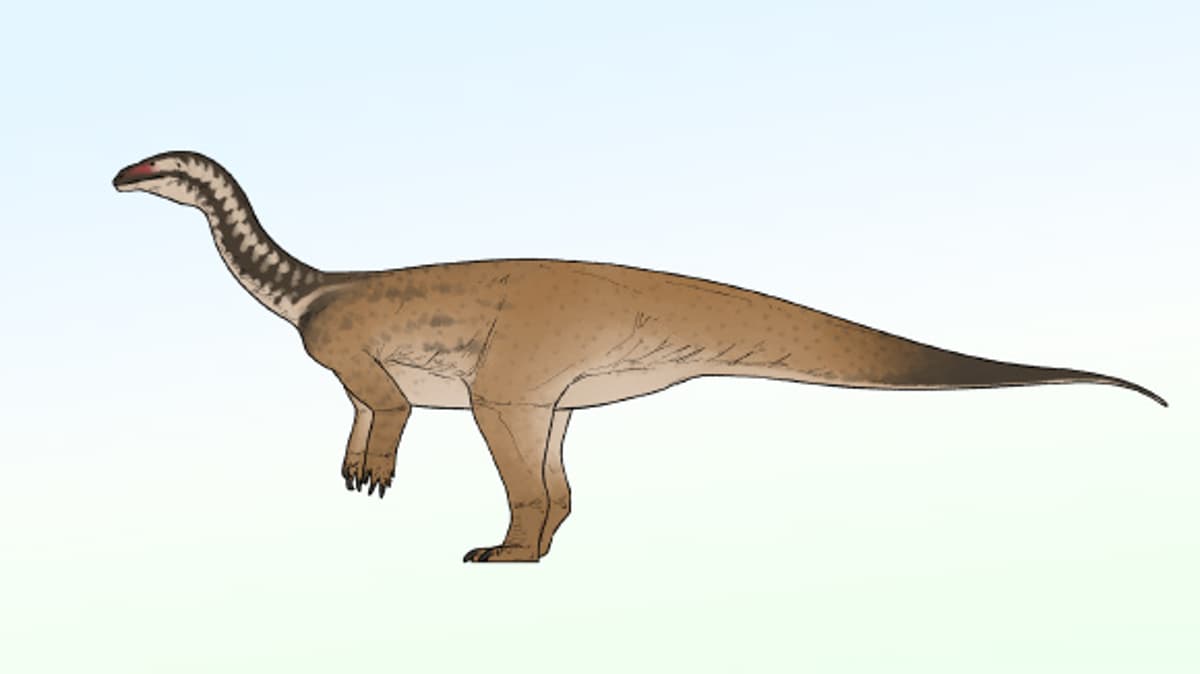
Why It Matters
The specimen fills a critical morphological gap, reshaping theories on how sauropods acquired their iconic size and feeding strategies, and it expands the known diversity of Early Jurassic dinosaurs in East Asia.
Key Takeaways
- •Xiangyunloong fengming measures 9–10 m, among largest early sauropodomorphs.
- •Fossil found in Yunnan’s Fengjiahe Formation, dating ~190 million years.
- •Robust, elongated tail suggests balance for bipedal feeding posture.
- •Phylogenetic analysis places it between early sauropodomorphs and true sauropods.
- •Discovery expands Early Jurassic dinosaur diversity in southwestern China.
Pulse Analysis
The Early Jurassic, roughly 190 million years ago, marks a pivotal interval when small, bipedal herbivores began transitioning toward the gigantic, quadrupedal sauropods that would dominate the later Mesozoic. The recent description of *Xiangyunloong fengming* from Yunnan’s Fengjiahe Formation adds a missing piece to this evolutionary puzzle. At 9–10 meters long, the dinosaur is one of the largest known early‑diverging sauropodomorphs from China, bridging the size and anatomical gap between basal plant‑eaters and the first true sauropods. Its discovery also underscores the importance of Chinese sedimentary basins for uncovering early dinosaur evolution.
What sets *Xiangyunloong* apart is its unusually robust, elongated tail, which appears to have functioned as a counter‑balance for a relatively short neck. This morphology implies a feeding strategy that may have involved rearing on its hind limbs to browse higher vegetation, a behavior rarely inferred for early sauropodomorphs. The combination of a stout torso and a powerful tail offers a tangible example of an alternative evolutionary pathway, suggesting that neck elongation was not the sole route to achieving massive body plans. Such a configuration may have also contributed to greater stability during rapid locomotion.
The find also reshapes our understanding of Early Jurassic dinosaur biogeography in East Asia. Southwestern China has yielded a growing suite of basal sauropodomorphs, indicating that the region was a hotspot for diversification before the rise of true sauropods. By providing new anatomical characters, *Xiangyunloong* refines phylogenetic models and helps resolve long‑standing debates about the timing and sequence of key innovations. Ongoing fieldwork in the Fengjiahe Formation is likely to uncover additional specimens that could further illuminate the early steps toward sauropod gigantism. These insights will inform future comparative studies across Gondwanan and Laurasian lineages.
Early Sauropodomorph Dinosaur Unearthed in China
Comments
Want to join the conversation?
Loading comments...