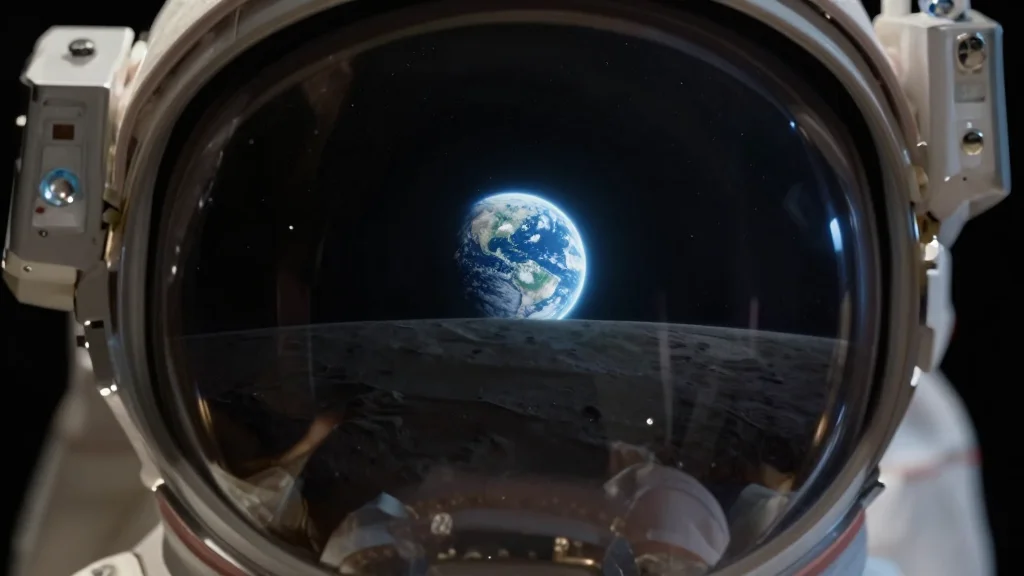
Earth and Moon, Then and Now
Why It Matters
The Earthrise image reshaped public consciousness about Earth’s fragility and fuels support for NASA’s Artemis program, highlighting the enduring power of visual storytelling in space exploration.
Key Takeaways
- •Apollo 8’s 1968 Earthrise became a symbol of planetary perspective
- •Bill Anders captured the first colour Earthrise on film during lunar orbit
- •Artemis II recreated the view, linking past and future lunar missions
- •The image underscores humanity’s renewed focus on lunar exploration
- •Iconic photos boost public support for NASA’s deep‑space programs
Pulse Analysis
The Apollo 8 mission marked a turning point in space history, not just for its technical achievements but for the emotional resonance of the Earthrise photograph. As the crew turned their capsule toward the lunar horizon, they captured a vivid blue‑marble Earth suspended against a stark, cratered landscape. This unprecedented perspective sparked a global shift in how people viewed their planet, laying groundwork for the environmental movement and reinforcing the notion that space exploration could unite humanity under a shared sky.
Beyond its scientific value, the Earthrise image became a cultural touchstone, appearing on magazine covers, posters, and even influencing art and literature. Psychologists note that such awe‑inducing visuals trigger a sense of “self‑transcendence,” encouraging public interest in science and policy support for space programs. The photograph’s legacy demonstrates how a single frame can translate complex orbital mechanics into an accessible narrative, driving funding and inspiring a generation of engineers, scientists, and dreamers.
Artemis II’s recreation of the Earthrise in April 2026 bridges the past and future, showcasing NASA’s sustained commitment to lunar exploration. By deliberately mirroring the 1968 view, the mission underscores technological continuity while signaling a new era of crewed lunar flybys and eventual surface landings. This visual link reinforces the Artemis program’s narrative of returning to the Moon as a stepping stone to Mars, bolstering public enthusiasm and political backing essential for the next decade of deep‑space endeavors.
Earth and Moon, then and now
Comments
Want to join the conversation?
Loading comments...