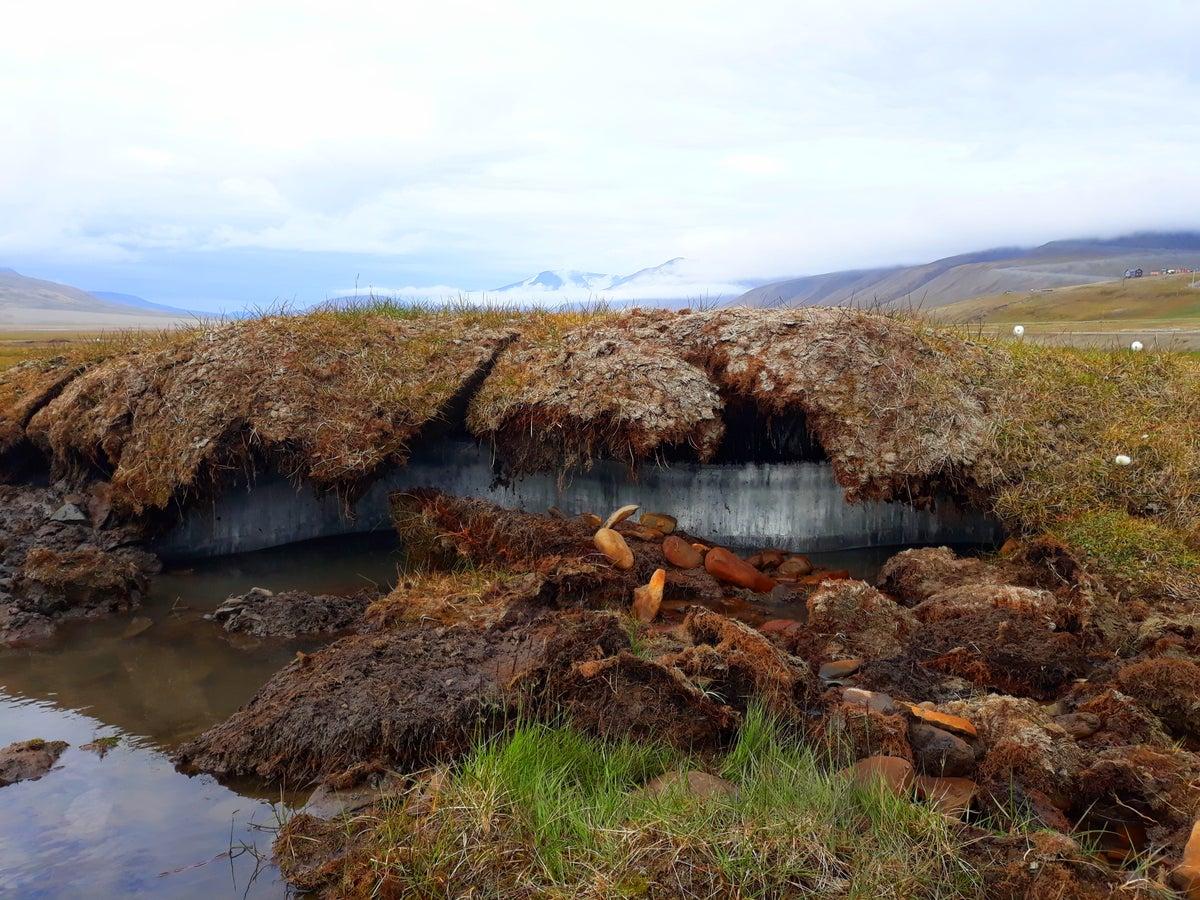
Earth’s Permafrost Could Soon Release Hidden ‘Deep Carbon,’ Supercharging Warming
Why It Matters
Accelerated deep‑permafrost emissions would amplify warming feedbacks, shrinking the remaining carbon budget and forcing stricter mitigation targets. Policymakers and climate modelers must account for this overlooked source to craft realistic adaptation strategies.
Key Takeaways
- •Permafrost stores ~2× atmospheric carbon, now at risk of release
- •Deep soils beyond 3 m could double projected emissions by 2100
- •Study narrows carbon‑budget gap, urging earlier IPCC mitigation scenarios
- •Monitoring deep permafrost becomes critical for accurate climate forecasting
Pulse Analysis
Permafrost has long been recognized as a massive carbon sink, holding roughly twice the amount of carbon currently present in the atmosphere. Traditional climate models, however, have focused on the upper three meters of frozen soil, where most organic material resides. The new study expands the scope to include deeper layers—often peatlands formed during the Holocene—revealing that these hidden stores could unleash a surge of greenhouse gases as temperatures rise. By reconstructing carbon accumulation histories below three meters and applying various IPCC warming scenarios, the researchers demonstrate that without aggressive temperature control, the deep permafrost could become a net carbon source by the end of the century.
This deeper‑soil insight reshapes our understanding of climate feedback loops. If emissions from thawing permafrost are larger than previously thought, the projected trajectory of global warming accelerates, eroding the remaining carbon budget needed to stay below the 1.5‑2 °C thresholds. Climate models that omit this component risk underestimating future warming, which in turn could misguide policy decisions. The study’s timing is crucial as the IPCC prepares its seventh assessment report, slated for 2029, where permafrost emissions will likely receive heightened attention. Integrating deep‑carbon dynamics will improve the fidelity of scenario planning and risk assessments.
For governments and businesses, the message is clear: monitoring and mitigating deep‑permafrost thaw must become a priority. Enhanced satellite observations, ground‑based borehole measurements, and collaborative international research can close data gaps and refine emission estimates. Meanwhile, accelerating decarbonization across energy, industry, and transportation sectors reduces the temperature forcing that drives permafrost melt. By acknowledging the hidden carbon threat now, policymakers can adjust mitigation pathways, allocate resources for Arctic research, and avoid costly surprises in climate impact projections.
Earth’s permafrost could soon release hidden ‘deep carbon,’ supercharging warming
Comments
Want to join the conversation?
Loading comments...