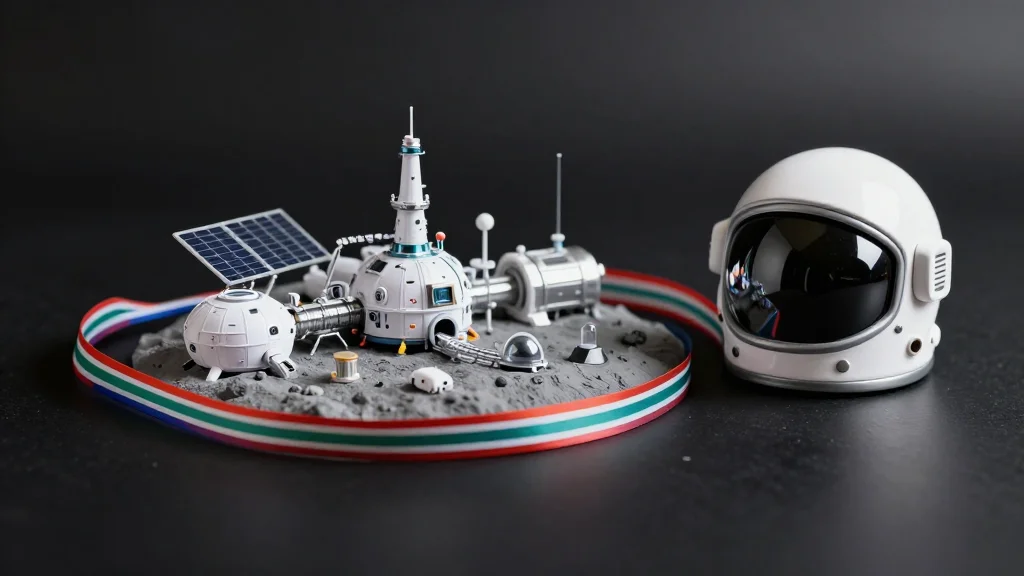
Eight South African High School Students Heading to NASA Space Design Competition
Companies Mentioned

Why It Matters
The debut of an African delegation expands the competition’s geographic diversity and showcases emerging talent in space engineering, potentially accelerating STEM development across the continent.
Key Takeaways
- •Eight South African pupils selected for NASA International Space Settlement Design Competition
- •First African representation at the competition’s global finals in July 2026
- •National contest drew 109 students, organized by UCT and founder Jagger Doubell
- •Teams built aerospace companies and pitched lunar settlement proposals to NASA judges
- •Doubell funded competition via GoFundMe and created a socioeconomic scoring algorithm
Pulse Analysis
The International Space Settlement Design Competition, hosted annually at NASA’s Kennedy Space Center, challenges university‑level teams to develop viable lunar habitats under real‑world aerospace tender conditions. Historically dominated by Europe, North America and Asia, the contest has never featured an African delegation until now. In July 2026, eight South African high‑school students will travel to the United States as the continent’s inaugural representatives, joining more than 270 competitors from around the globe. Their participation signals a widening of the talent pool and underscores growing interest in space‑related education across emerging markets.
The South African entry was built from the ground up by 19‑year‑old Jagger Doubell, who launched the national chapter after competing abroad in 2024‑25. Leveraging a self‑designed mail‑merge outreach, a custom socioeconomic scoring algorithm, and a GoFundMe campaign, Doubell mobilized 109 students at the University of Cape Town for the first national finals. Participants formed mock aerospace companies, elected leadership, and produced full engineering proposals for a permanent lunar settlement, mirroring the structure of professional industry RFPs. This hands‑on approach cultivates teamwork, communication and technical design skills among teenagers.
Beyond the immediate competition, the initiative could catalyze a broader STEM pipeline in South Africa and the African continent. Exposure to NASA engineers and former astronauts provides mentorship opportunities that may translate into university enrolments, research collaborations, and future aerospace employment. Moreover, the visibility of an African team at a high‑profile NASA event may attract corporate sponsorships and government investment in space education programs. As private space ventures expand, nurturing diverse talent early positions South Africa to contribute to the next generation of lunar and Martian settlement projects.
Eight South African high school students heading to NASA space design competition
Comments
Want to join the conversation?
Loading comments...