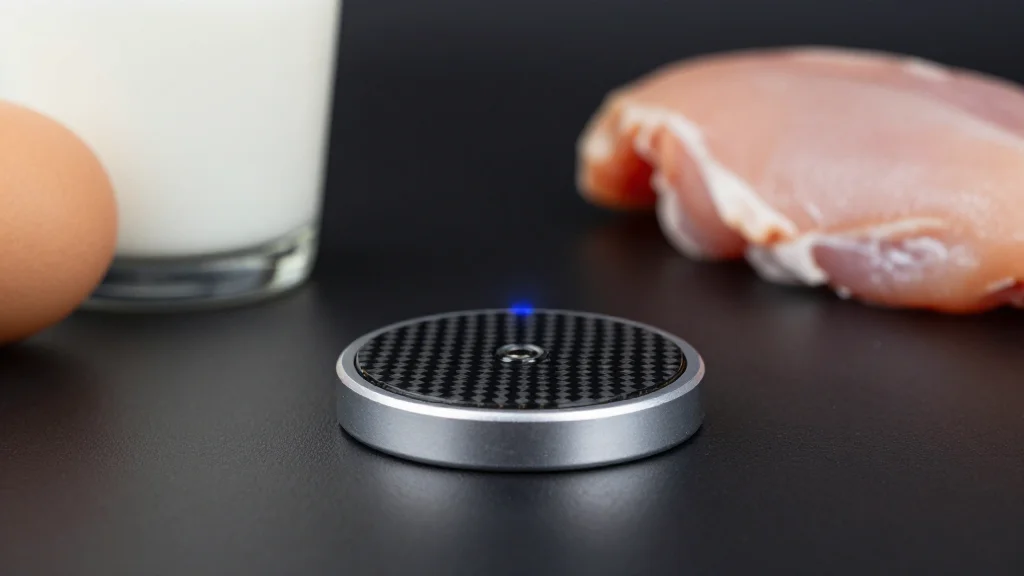
Electric Nose Detects When Your Food Has Spoiled
Why It Matters
By providing real‑time, objective freshness alerts, the technology can dramatically reduce household food waste and prevent allergy‑related incidents, reshaping food‑safety standards for both consumers and the supply chain.
Key Takeaways
- •16 carbon‑nanotube sensors detect spoilage and allergens
- •Detects as little as 0.05 g walnut, meeting allergy thresholds
- •Drop‑casting enables single‑step, low‑cost chip fabrication
- •Prototype integrates with smartphones for on‑the‑go testing
- •Could cut household food waste by early spoilage alerts
Pulse Analysis
Food waste and food‑borne illness remain persistent challenges, costing billions annually and endangering public health. Traditional visual and olfactory cues often miss early spoilage, while laboratory testing is too slow for everyday use. Digital olfaction—electronic noses—offers a data‑driven alternative, translating volatile organic compounds into actionable signals that consumers can trust. As retailers and regulators push for smarter safety solutions, the market is primed for technologies that can deliver instant, reliable freshness assessments.
The Berkeley team’s device leverages carbon‑nanotube sensor arrays, which provide a massive surface area in a tiny footprint and operate at room temperature, avoiding the heating requirements of metal‑oxide sensors. Coupled with a machine‑learning model trained on gas fingerprints from seven foods and common allergens, the system distinguishes subtle chemical shifts that signal spoilage. A single‑step drop‑casting process deposits multiple sensing films onto one chip, dramatically lowering production costs and enabling mass‑manufacture for consumer appliances or handheld units. This convergence of nanomaterials and AI creates a scalable platform ready for integration into smart refrigerators, ovens, or portable iPhone accessories.
If adopted widely, the technology could transform kitchen habits and supply‑chain logistics. Early spoilage alerts would let households discard food before it becomes hazardous, potentially cutting the average American’s food waste by up to 20 %. Retailers could monitor inventory freshness in real time, reducing recalls and improving brand trust. However, real‑world performance in mixed‑food environments and false‑positive rates remain hurdles. Ongoing research aims to refine sensor selectivity and expand the allergen library, positioning the electronic nose as a cornerstone of the next generation of food‑safety standards.
Electric Nose Detects When Your Food Has Spoiled
Comments
Want to join the conversation?
Loading comments...