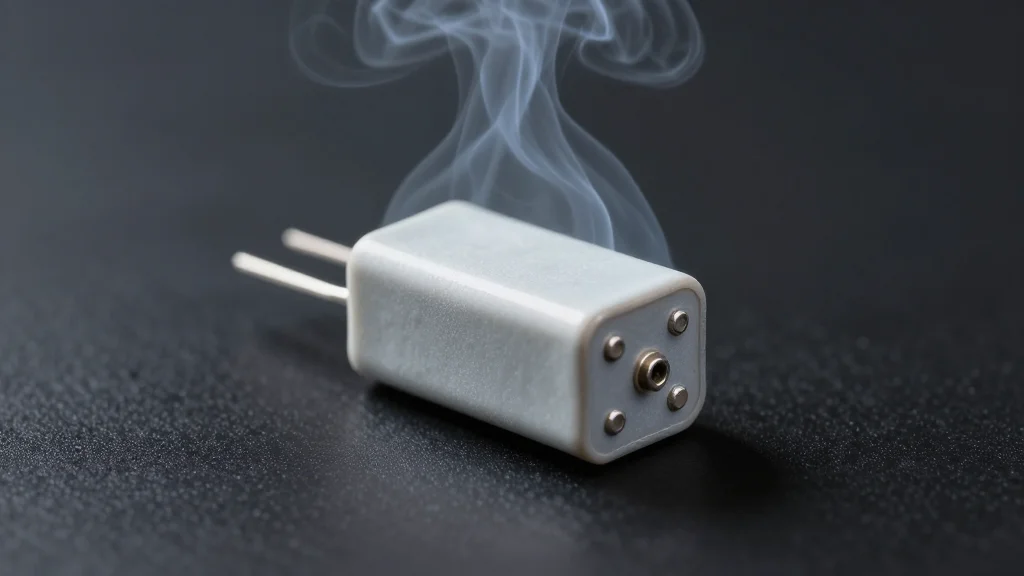
Electrocaloric Effects Across Room Temperature in Multilayer Capacitors
Why It Matters
The breakthrough enables efficient, solid‑state refrigeration that operates below, at, and above room temperature, offering a low‑cost alternative to traditional vapor‑compression and magnetocaloric systems.
Key Takeaways
- •PST‑PMW MLCs deliver ~3 K effective cooling from 230 K to 300 K.
- •600 V fields yield entropy changes up to 34 kJ K⁻¹ m⁻³.
- •Low‑temperature sintering avoids costly 42‑day anneal steps.
- •Balanced Brayton‑like cycles achieve 70‑90 % of Carnot efficiency.
- •Active‑volume fraction ~57 % enables >75 mW cooling power per device.
Pulse Analysis
The material design behind the new MLCs hinges on a delicate balance of B‑site cation ordering and dipolar disruption. By partially substituting lead scandium tantalate (PST) with lead magnesium tungstate (PMW), researchers suppress the Curie temperature without sacrificing the latent heat of the ferroelectric transition. This chemistry, combined with low‑temperature sintering at ~1,250 °C, preserves the ordered lattice while avoiding the 42‑day anneal traditionally required for PST, dramatically lowering production costs and simplifying scale‑up.
Performance metrics demonstrate that the PST‑PMW capacitors generate reversible electrocaloric temperature swings of roughly 3 K (effective up to 4.5 K in the active layers) across a 70 K window. Entropy changes peak at 34 kJ K⁻¹ m⁻³, and isothermal heat flows approach 10 MJ m⁻³. When integrated into balanced Brayton‑like regenerative cycles, these figures translate into coefficient‑of‑performance values that capture 70‑90 % of the Carnot limit, delivering cooling powers exceeding 75 mW per device at modest operating frequencies. The active‑volume fraction of about 57 % ensures that most of the applied electric energy contributes directly to heat pumping.
From a market perspective, the ability to cool loads through room temperature with solid‑state devices addresses a long‑standing gap in refrigeration technology, especially for applications such as food storage, medical equipment, and climate‑controlled environments where precise temperature control is critical. The low‑voltage, high‑efficiency operation aligns with existing power‑electronics infrastructure, reducing the barrier to adoption. As industrial R&D pivots toward electrocaloric solutions, the PST‑PMW MLC platform could catalyze a new generation of compact, environmentally friendly coolers, challenging both vapor‑compression and magnetocaloric competitors.
Electrocaloric effects across room temperature in multilayer capacitors
Comments
Want to join the conversation?
Loading comments...