Electrostatically Guided Covalent Architectures for Stable Hydrogen Evolution at Ampere‐Level Current Densities in Acidic Media
Why It Matters
The breakthrough enables durable, high‑current hydrogen production in acidic media, a key hurdle for cost‑effective green‑hydrogen scaling. Its performance and stability could lower electrolyzer capital costs and accelerate commercial deployment.
Key Takeaways
- •Mo2C nanoclusters covalently bonded to nitrogen‑doped carbon nanotubes
- •Electrostatic self‑assembly yields porous, highly conductive catalyst network
- •Overpotential 256 mV at 500 mA cm⁻², 396 mV at 1 A cm⁻²
- •Stable 865 mA cm⁻² operation for >240 hours in acidic electrolyte
- •PEM electrolyzer runs 1 A cm⁻² at 2.03 V for 150 hours
Pulse Analysis
Acidic water electrolysis promises high energy efficiency but has long struggled with catalyst degradation at industrial current densities. Bubble formation, localized pH shifts, and aggressive sulfate environments erode conventional metal surfaces, limiting operation to a few hundred milliamps per square centimeter. Researchers therefore seek materials that combine robust corrosion resistance with rapid charge transport to sustain ampere‑scale performance without frequent replacement.
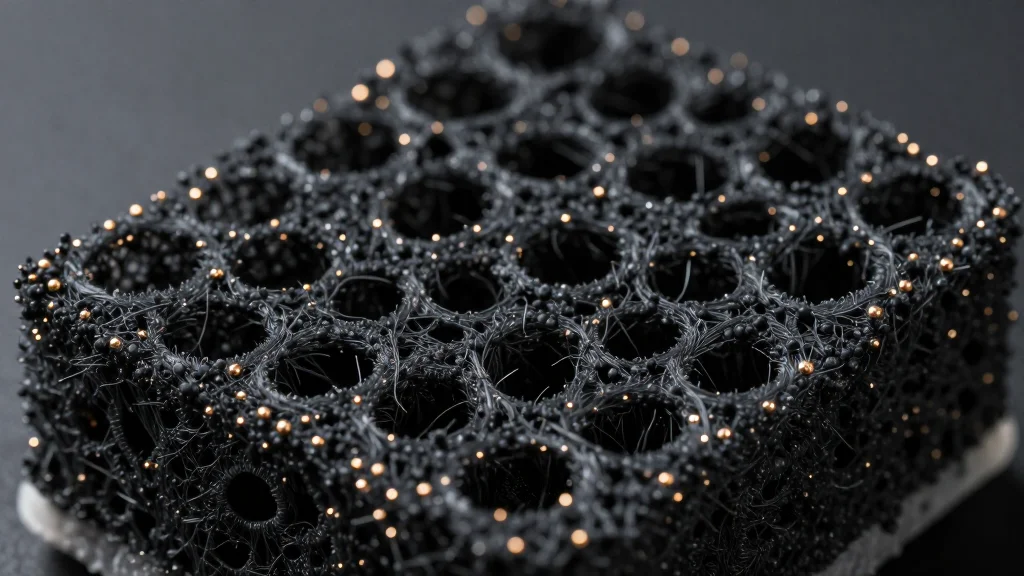
The new Mo2C‑NCNT catalyst addresses these challenges through a two‑step synthesis: electrostatically guided self‑assembly aligns molybdenum precursors on nitrogen‑doped carbon nanotubes, followed by carbonization that locks Mo2C nanoclusters into place via covalent Mo‑C and Mo‑N bonds. This architecture creates a highly porous, electrically conductive scaffold that facilitates efficient electron flow while physically shielding active sites from acidic attack. Performance metrics—256 mV overpotential at 500 mA cm⁻² and 396 mV at 1 A cm⁻²—surpass many benchmark noble‑metal catalysts, and the system endures 240 hours of continuous operation at 865 mA cm⁻², evidencing unprecedented durability.
From a commercial perspective, the catalyst’s ability to run a PEM electrolyzer at 1 A cm⁻² with a modest 2.03 V cell voltage for over 150 hours translates into lower stack voltage losses and reduced replacement cycles, directly cutting capital and O&M expenditures. Its scalable synthesis—relying on inexpensive molybdenum salts and carbon nanotube substrates—makes it attractive for large‑scale green‑hydrogen projects. As the industry pivots toward higher‑throughput electrolyzers to meet decarbonization targets, such covalent‑engineered catalysts could become a cornerstone of next‑generation hydrogen infrastructure.
Electrostatically Guided Covalent Architectures for Stable Hydrogen Evolution at Ampere‐Level Current Densities in Acidic Media
Comments
Want to join the conversation?
Loading comments...