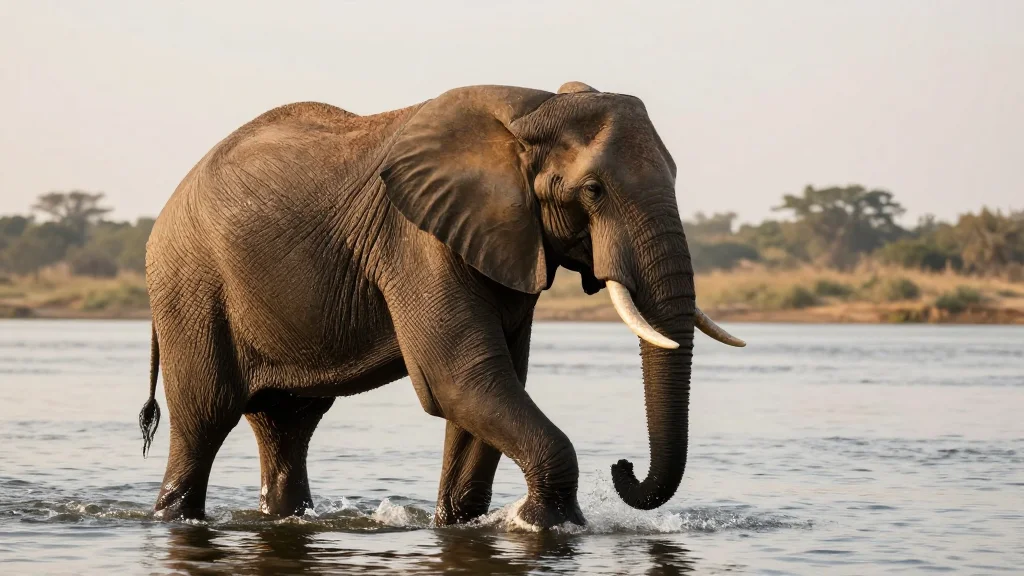
Elephants Can Swim, Charge and Rear up, yet They Cannot Jump — the Bones in Their Legs All Point Downward, and Their Sheer Mass Leaves No Spring to Lift Four Feet at Once
Why It Matters
The biomechanical limits that prevent elephants from jumping illustrate how scaling mass affects agility, offering valuable lessons for heavy‑load robotics, prosthetics, and industrial equipment design.
Key Takeaways
- •Elephant legs are columnar pillars, optimized for weight support
- •Lack of bent‑knee geometry stops elastic energy storage for jumps
- •Lower‑leg muscles and tendons are relatively weak and inflexible
- •Elephants keep at least one foot grounded at 6.8 m/s
- •Limb leverage measured at only one‑third of model predictions
Pulse Analysis
Elephants are among the few terrestrial mammals that never achieve a moment of flight. 8 metres per second (about 15 mph) the animals keep at least one foot on the ground. The underlying cause lies in their columnar limb architecture: long, near‑vertical bones that act like building pillars. This geometry eliminates the bent‑knee and bent‑ankle angles that store elastic energy in most runners, and the lower‑leg musculature and tendons are comparatively under‑developed for explosive thrust.
The biomechanical trade‑off offers a template for engineers designing heavy‑load robots and construction equipment. By mimicking the elephant’s straight‑through load path, machines can support multi‑tonne weights without constantly fighting gravity at each joint, reducing actuator size and power consumption. However, the same design sacrifices rapid vertical acceleration, a limitation that must be addressed when agility is required. Recent advances in compliant actuators and variable‑stiffness materials allow designers to blend columnar stability with localized spring mechanisms, creating hybrid platforms that balance strength and speed.
Understanding why mass‑bearing giants cannot jump also informs prosthetic limb development and exoskeletons for industrial workers. Scaling laws dictate that as body mass increases, the proportion of muscle needed for a jump grows exponentially, making true aerial phases impractical beyond a certain size. Companies that integrate these insights can market more efficient, low‑maintenance equipment for mining, logistics, and offshore construction, where continuous ground contact is an asset. As the robotics market is projected to exceed $150 billion by 2030, bio‑inspired solutions rooted in elephant biomechanics could capture a valuable niche.
Elephants can swim, charge and rear up, yet they cannot jump — the bones in their legs all point downward, and their sheer mass leaves no spring to lift four feet at once
Comments
Want to join the conversation?
Loading comments...