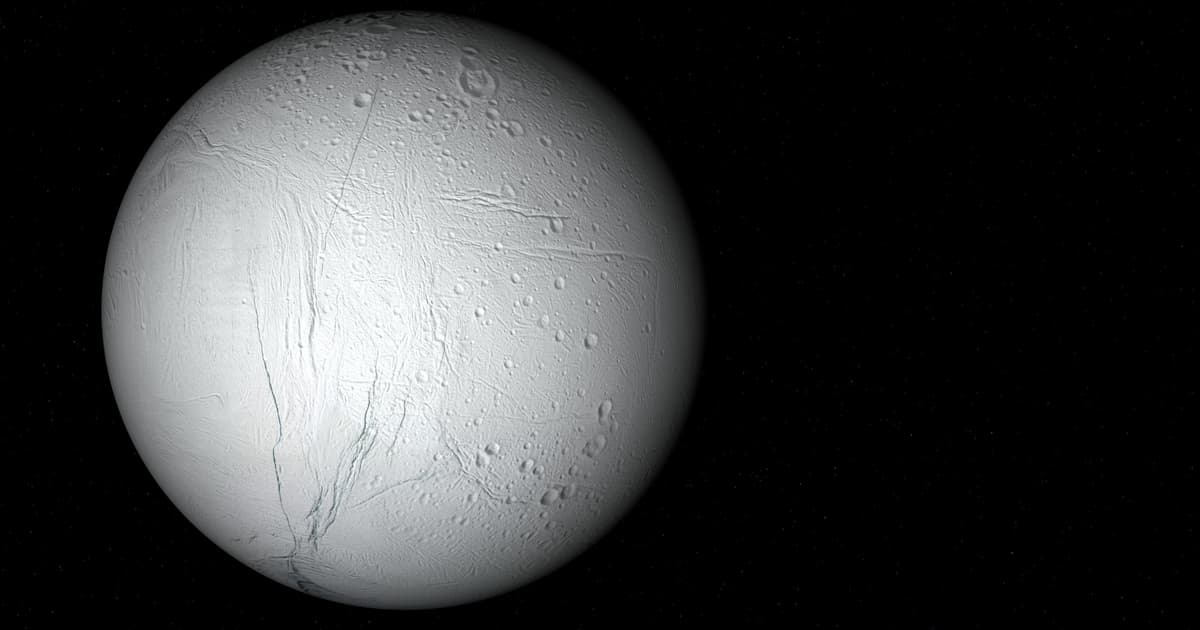
Enceladus, a Tiny Saturnian Moon only About 500 Kilometres Wide, Is Actively Venting Water Vapour and Ice Grains Into Space From a Salty Ocean Hidden Beneath Its Crust — and Modelling Suggests that Ocean May Have Remained Warm and Chemically Active for Geological Timescales, Perhaps Long Enough for Life to Have Had a Chance to Emerge.
Why It Matters
The moon’s accessible, energy‑rich ocean makes Enceladus one of the most promising near‑term targets for extraterrestrial life detection, shaping future NASA and international mission priorities.
Key Takeaways
- •Enceladus vents water vapor and ice grains from a subsurface salty ocean.
- •Cassini detected hydrogen, silica, organics, and phosphates in plume material.
- •Tidal heating may keep the ocean liquid for geological timescales.
- •Phosphate levels are about 100× Earth seawater, boosting habitability.
- •Future missions must sample the plume to search for biosignatures.
Pulse Analysis
Ocean worlds have become a central theme in planetary science, and Enceladus stands out because its subsurface sea is directly sampled by a spacecraft. Unlike distant exoplanets, the Saturnian moon offers real‑time data on water chemistry, energy sources, and mineral content, allowing scientists to test habitability models on a planetary scale. The discovery of molecular hydrogen points to hydrothermal activity, while the recent detection of abundant phosphates completes the classic trio of water, energy, and nutrients needed for life as we know it.
Cassini’s decade‑long mission transformed Enceladus from a curiosity into a laboratory. Repeated plume traverses measured silica nanoparticles that imply high‑temperature water–rock interactions, and organic compounds ranging from simple hydrocarbons to complex macromolecules were cataloged. The phosphate concentrations, reported in 2023, are roughly a hundred times higher than those in Earth’s oceans, dramatically expanding the moon’s biochemical potential. Together, these findings create a checklist of habitability criteria that few other bodies in the solar system can match, reinforcing the moon’s status as a prime astrobiological target.
The scientific community now faces a clear next step: dedicated missions designed to detect biosignatures directly. Concepts such as a plume‑sampling orbiter with advanced mass spectrometers or a lander that collects fresh ice deposits could finally answer whether life ever arose beneath Enceladus’s icy crust. Funding agencies are weighing these proposals against competing priorities, but the compelling combination of accessible ocean material and sustained energy makes Enceladus a compelling case for investment, potentially reshaping our understanding of life’s distribution beyond Earth.
Enceladus, a tiny Saturnian moon only about 500 kilometres wide, is actively venting water vapour and ice grains into space from a salty ocean hidden beneath its crust — and modelling suggests that ocean may have remained warm and chemically active for geological timescales, perhaps long enough for life to have had a chance to emerge.
Comments
Want to join the conversation?
Loading comments...