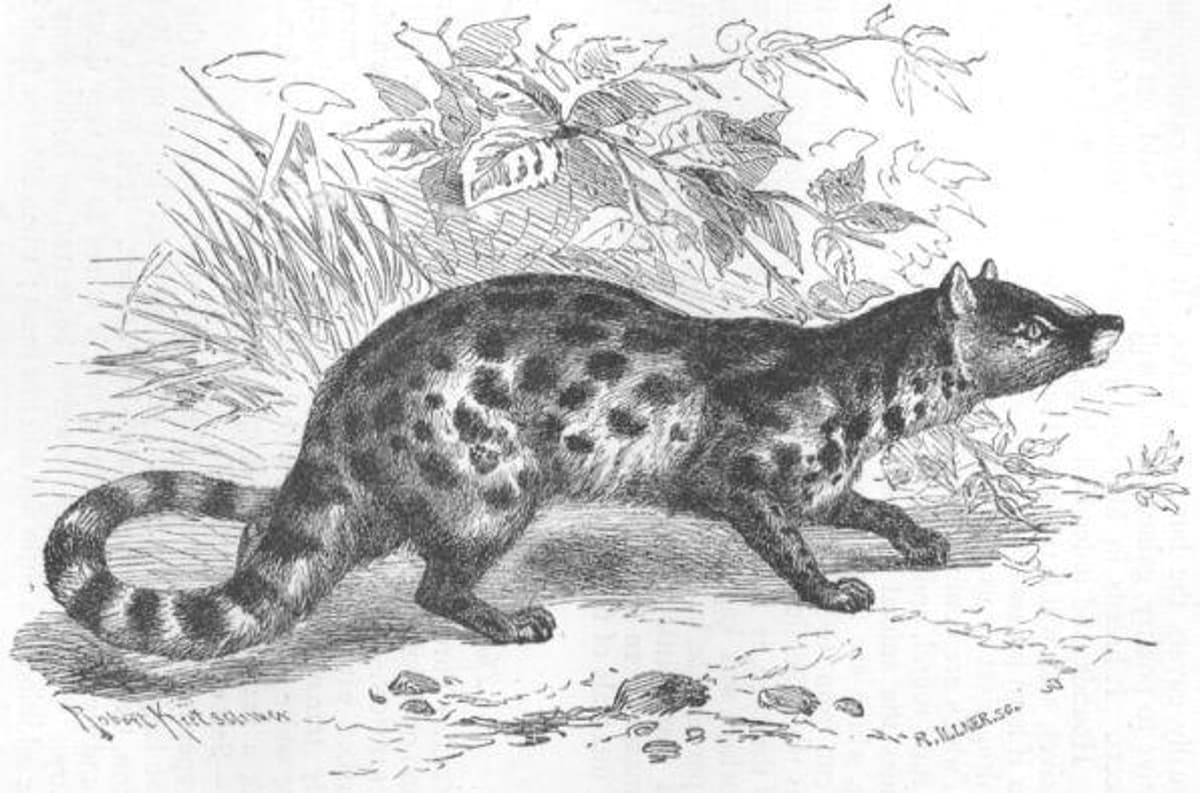
Endangered Civet Faces Local Extinction in Cambodian Sanctuary
Why It Matters
The rapid decline threatens a unique specialist carnivore and signals broader ecosystem collapse, urging urgent conservation interventions in Southeast Asia’s dwindling forests.
Key Takeaways
- •Large‑spotted civet density dropped >90% between 2009‑2019.
- •Indian civet density rose threefold in the same sanctuary.
- •Snaring increased dramatically, disproportionately harming the slow‑reproducing civet.
- •Loss of leopards and dholes sparked a mesopredator release.
- •Conservation actions needed: snare removal, enforcement, captive‑breeding research.
Pulse Analysis
The large‑spotted civet (Viverra megaspila) has long been a conservation flagship for Southeast Asian dry‑forest ecosystems, yet new data from Srepok Wildlife Sanctuary reveal an alarming 75‑95% population collapse over ten years. Camera‑trap surveys estimate the species fell from roughly 9 individuals per 100 km² to under 1, shrinking the core population from 166 to just nine animals. This steep decline contrasts sharply with the thriving large Indian civet, whose numbers tripled, underscoring how species‑specific life‑history traits dictate resilience amid mounting threats.
Researchers pinpoint three interlocking drivers. First, the large‑spotted civet’s limited breeding window (November‑April) and small litters (two offspring) cannot offset mortality from indiscriminate snaring, which surged across the sanctuary. Second, the disappearance of apex predators such as leopards and dholes created a mesopredator release, favoring generalist carnivores like the Indian civet while exposing the specialist civet to heightened competition from domestic dogs and habitat degradation. Finally, habitat loss in lowland dry forests erodes the niche the large‑spotted civet depends on, further constraining recovery prospects.
The findings carry weight beyond a single species. They illustrate how cascading trophic effects and human‑induced pressures can rapidly erode biodiversity hotspots, prompting urgent policy responses. Conservationists recommend bolstering law‑enforcement to curb snaring, launching community‑based incentive programs that reward wildlife‑friendly practices, and accelerating research into the civet’s reproductive ecology to assess captive‑breeding feasibility. Without swift, coordinated action, Srepok may lose another iconic predator, weakening ecosystem function and diminishing the region’s conservation value.
Endangered civet faces local extinction in Cambodian sanctuary
Comments
Want to join the conversation?
Loading comments...