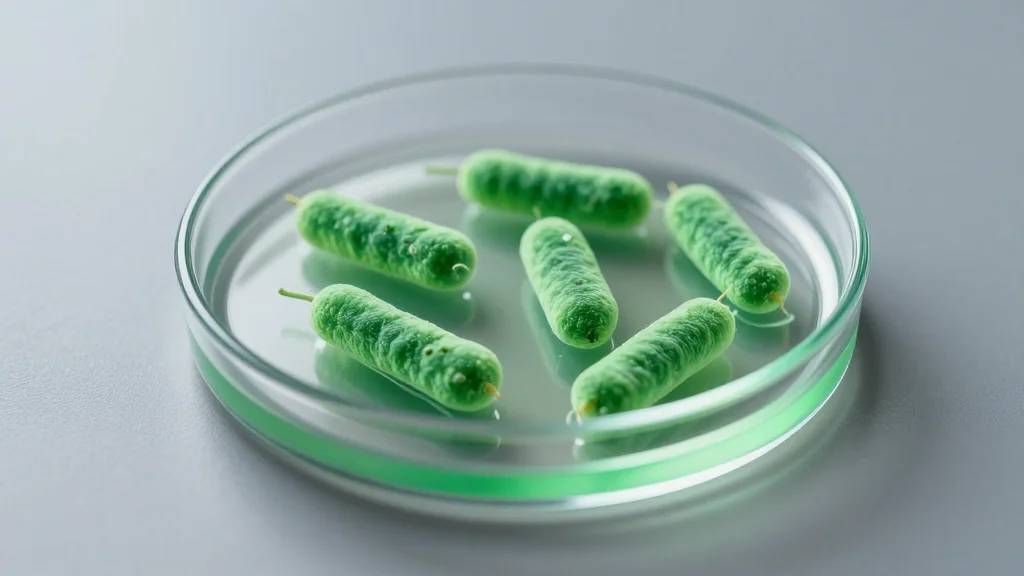
Engineered E. Coli Strain Uses 19 Amino Acids, Defying Long‑Held Biological Rule

Why It Matters
The ability to sustain life with a truncated amino‑acid alphabet challenges a cornerstone of biochemistry and opens a pathway to redesign organisms from the ground up. For the scientific community, it provides a testbed to probe the minimal requirements for protein folding, enzymatic activity, and cellular metabolism. In industry, the approach could streamline the production of bespoke enzymes, reduce the metabolic burden of engineered pathways, and enable the incorporation of designer amino acids that confer novel functions such as enhanced stability or catalytic activity. By demonstrating that AI can reliably redesign a living genome, the work also validates computational protein design as a practical tool for large‑scale synthetic biology. Beyond immediate applications, the findings raise philosophical and safety considerations. If the genetic code can be reshaped at will, the line between natural and synthetic life becomes increasingly blurred, prompting discussions about containment, biosecurity, and ethical stewardship of engineered organisms.
Key Takeaways
- •Ec19, an engineered E. coli strain, operates with 19 amino acids after removal of isoleucine.
- •The strain remains genomically stable and grows at near‑wild‑type rates for over 450 generations.
- •Design leveraged generative AI and AlphaFold2 to predict viable protein sequences without isoleucine.
- •No natural organism is known to use fewer than 20 amino acids, though some use more.
- •The breakthrough could simplify incorporation of synthetic amino acids and accelerate bio‑manufacturing.
Pulse Analysis
The Ec19 experiment underscores a paradigm shift: the genetic code, once thought immutable, is now a programmable substrate. Historically, attempts to expand the code have focused on adding non‑canonical residues, often encountering toxicity or misincorporation issues. By contrast, Ec19 demonstrates that subtraction is feasible and may even be advantageous for simplifying cellular engineering. This inversion could reduce the metabolic cost of maintaining redundant pathways, a benefit for large‑scale bioproduction where efficiency translates directly to cost savings.
From a market perspective, companies developing AI‑driven protein design platforms stand to gain credibility and investment as their tools prove essential for real‑world biological redesign. The success of Ec19 may also catalyze partnerships between computational biology firms and biotech manufacturers seeking to create next‑generation therapeutics and industrial enzymes. However, the path forward is not without hurdles. Scaling the minimal‑code approach from laboratory strains to industrially relevant microbes will require rigorous validation under diverse process conditions, and regulatory frameworks will need to adapt to organisms whose fundamental biochemistry diverges from natural precedents.
Looking ahead, the most compelling question is how far the code can be compressed before cellular viability collapses. If researchers can push the limit down to a dozen amino acids, the resulting organisms could serve as ultra‑clean chassis for synthetic pathways, free from cross‑talk with native metabolism. Conversely, each reduction may expose hidden dependencies that only manifest under environmental stress, reminding us that evolutionary robustness is a product of billions of years of selection. The Ec19 breakthrough is a bold first step, but the journey to a fully re‑engineered genetic alphabet will likely span many iterative cycles of design, testing, and ethical review.
Engineered E. coli Strain Uses 19 Amino Acids, Defying Long‑Held Biological Rule
Comments
Want to join the conversation?
Loading comments...