Entomologists Reconstruct Evolutionary History of Millipedes
Why It Matters
The research rewrites the timeline of terrestrial colonization, showing millipedes pioneered land ecosystems far earlier than vertebrates, and highlights the deep evolutionary roots of chemical defense mechanisms.
Key Takeaways
- •DNA from the last two unsampled millipede orders finally obtained
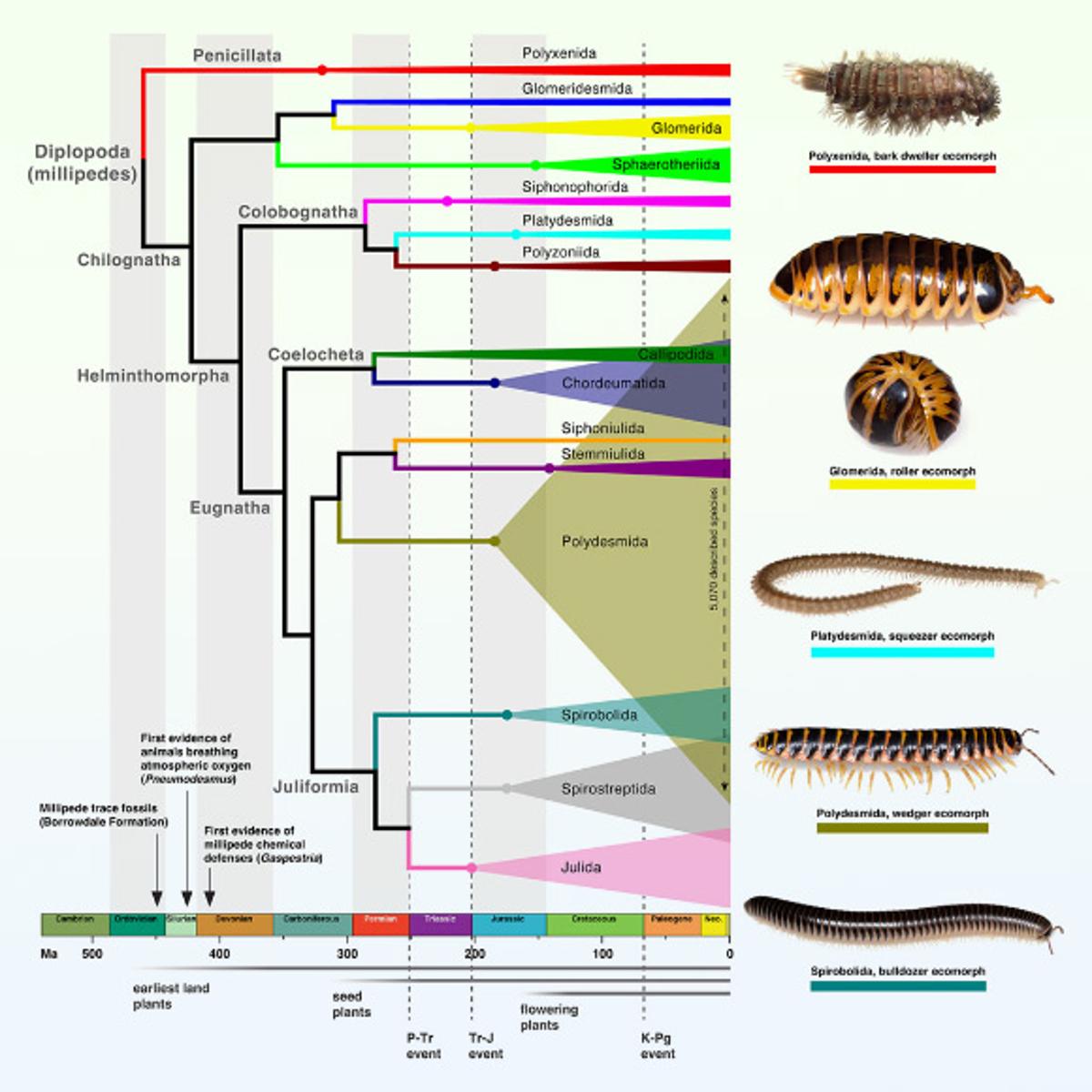
- •Millipede origins traced to ~460 million years ago
- •One ‘missing’ order merged into known lineage
- •Chemical defenses date back 260 million years
- •Study fills major gap in arthropod evolutionary tree
Pulse Analysis
The new phylogenomic study reshapes our understanding of early terrestrial life by confirming that millipedes colonized land nearly half a billion years ago, well before the first vertebrate explorers. This pushes back the timeline for complex ecosystem development, suggesting that detritivores like millipedes were already processing organic matter and influencing soil formation during the Ordovician. By integrating hundreds of genes from 82 extant species with 29 fossil records, researchers created a robust, time‑calibrated tree that resolves long‑standing ambiguities in arthropod evolution.
Fieldwork in Mexico’s Los Tuxtlas and Spain’s Canary Islands yielded the elusive specimens of Siphoniulus neotropicus and Hirudicryptus canariensis, enabling the first successful DNA extraction from these groups. Advanced sequencing and morphological analysis revealed that Siphonocryptida does not represent a distinct order but nests within an existing lineage, while Siphoniulida finally secures its place on the millipede timeline. This methodological breakthrough demonstrates the power of combining modern genomics with classic paleontology to fill evolutionary gaps that have persisted for decades.
Beyond taxonomy, the findings have broader implications for the evolution of chemical defenses. The study dates the emergence of millipede defensive compounds to roughly 260 million years ago, making them some of the earliest producers of biological chemical weapons. Understanding these ancient biosynthetic pathways can inform modern drug discovery and pest management. Moreover, the revised timeline underscores millipedes’ role as ecological engineers, shaping early terrestrial habitats and setting the stage for later vertebrate diversification, including the ancestors of humans.
Entomologists Reconstruct Evolutionary History of Millipedes
Comments
Want to join the conversation?
Loading comments...