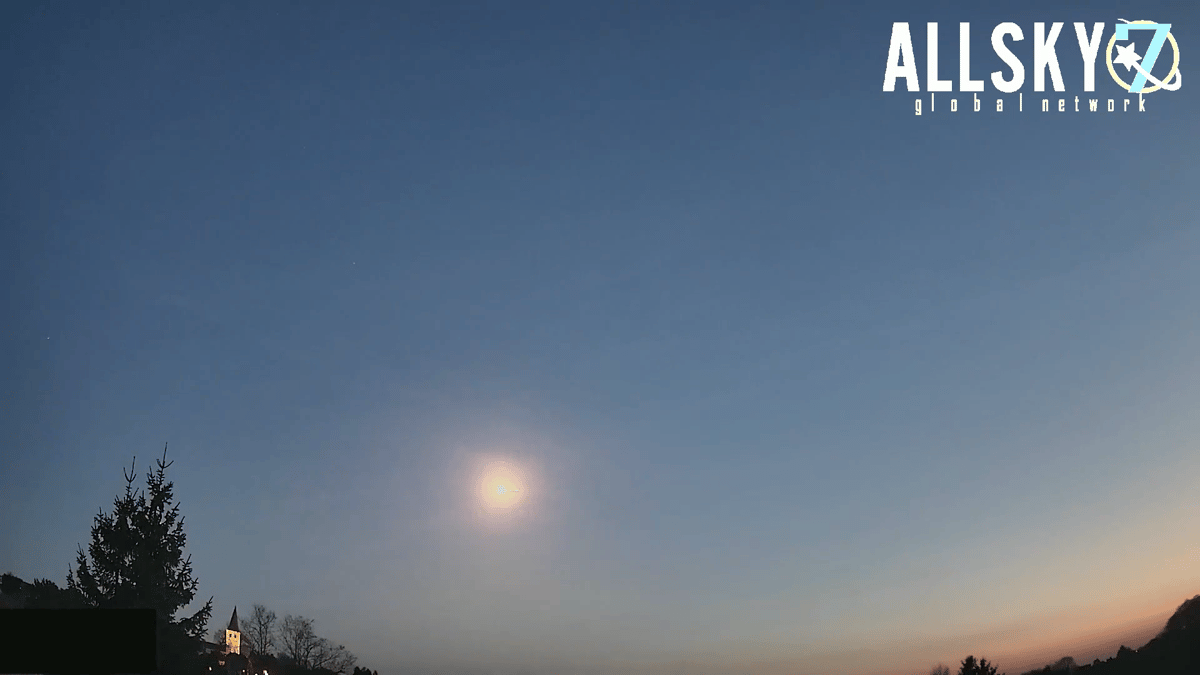
ESA Analysing Fireball over Europe on 8 March 2026
•March 9, 2026
0
Why It Matters
The incident underscores the difficulty of spotting metre‑scale space objects before impact, a gap that threatens both public safety and satellite operations. Improving early detection is critical for effective planetary defence and risk mitigation.
Key Takeaways
- •Fireball observed across Belgium, France, Germany, Luxembourg, Netherlands.
- •Meteor fragments struck house in Koblenz‑Güls, no injuries reported.
- •Object estimated up to metres; impacts occur weeks to years.
- •Large telescopes missed detection; only 11 pre‑entry detections recorded.
- •ESA's Flyeye telescope aims to improve early asteroid detection.
Pulse Analysis
The 8 March fireball highlighted Europe’s dense observational network, from the AllSky7 cameras to citizen‑recorded videos, providing a rare, multi‑angle dataset for scientists. Such high‑resolution recordings allow researchers to reconstruct the meteoroid’s trajectory, composition, and fragmentation behavior, feeding directly into impact risk models. While the event caused minimal damage, it serves as a reminder that even small space rocks can reach the ground, prompting municipalities to consider emergency protocols for unexpected meteorite falls.
Detecting metre‑scale objects remains a persistent challenge because they are often too faint for current sky‑survey telescopes, especially when approaching from twilight or daylight directions. To date, only eleven natural objects have been identified before atmospheric entry, illustrating a systemic blind spot in planetary defence. The European Space Agency’s analysis confirms that the fireball’s trajectory and timing likely kept it outside the coverage of large‑scale surveys, reinforcing the need for dedicated, wide‑field instruments capable of continuous monitoring regardless of illumination conditions.
In response, ESA is accelerating the deployment of the Flyeye telescope, a novel, ultra‑wide‑field system designed to scan the entire visible sky each night. By increasing the detection rate of sub‑kilometre asteroids, Flyeye aims to provide crucial warning times that could enable deflection missions or civil protection measures. Strengthening early‑warning capabilities not only safeguards lives and property but also protects the growing commercial satellite infrastructure, making planetary defence a strategic priority for both governments and the private sector.
ESA analysing fireball over Europe on 8 March 2026
0
Comments
Want to join the conversation?
Loading comments...