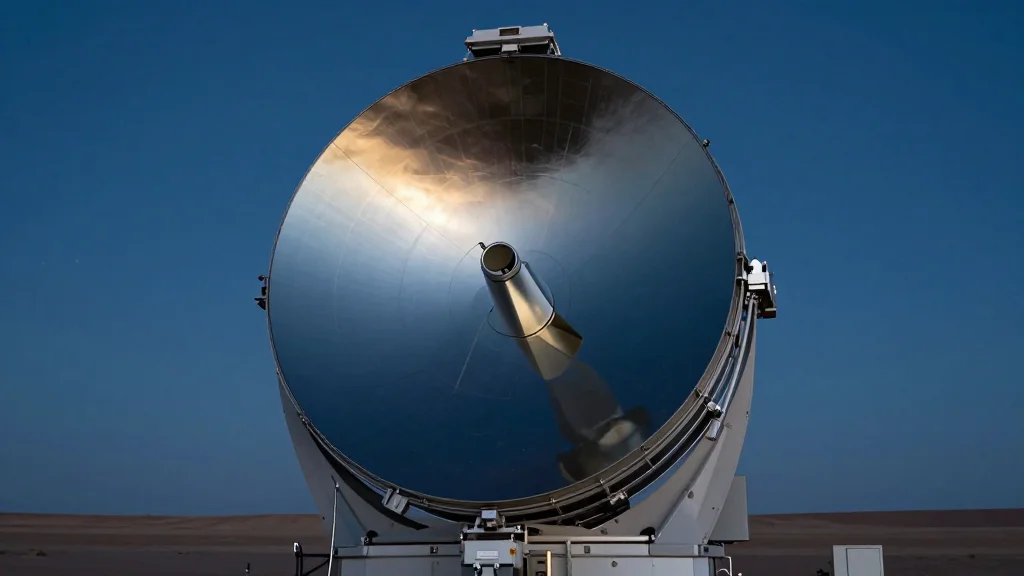
ESO's 39‑Meter Extremely Large Telescope Nears First Light, Aiming to Image Earth‑Like Worlds

Companies Mentioned

Why It Matters
The ELT’s ability to directly image Earth‑size exoplanets could finally answer the long‑standing question of whether life exists elsewhere in the universe. By providing spectroscopic data on planetary atmospheres, the telescope will enable tests of planetary formation theories and refine the criteria for habitability. Moreover, the ELT’s unprecedented resolution will push the boundaries of astrophysics, delivering insights into dark matter, cosmic inflation, and the physics of extreme environments. Beyond pure science, the ELT represents a major international collaboration, showcasing how shared investment in large‑scale infrastructure can accelerate discovery. Its success will likely influence funding decisions for future ground‑based observatories and shape the strategic roadmap for exoplanet exploration worldwide.
Key Takeaways
- •ESO’s 39‑meter Extremely Large Telescope (ELT) aims for first light in 2028.
- •The ELT’s adaptive‑optics system will enable direct imaging of Earth‑size exoplanets.
- •Construction on Cerro Armazones is advancing, with the primary mirror segments to be installed later this year.
- •Total project cost is about €2.6 billion (≈$2.8 billion) for telescope and instruments.
- •The ELT will complement space telescopes, expanding capabilities for atmospheric characterization of nearby worlds.
Pulse Analysis
The ELT marks a paradigm shift in ground‑based astronomy, moving from the era of 8‑10‑meter class telescopes to a truly giant aperture that can rival space observatories in resolution while offering far greater flexibility for upgrades. Historically, each leap in mirror size has unlocked new scientific frontiers: the 4‑meter class telescopes opened up deep‑field imaging, the 8‑meter Very Large Telescope (VLT) enabled high‑resolution spectroscopy, and now the ELT promises to resolve planetary surfaces beyond our Solar System. This progression underscores a broader trend: the convergence of adaptive optics, advanced detector technology, and massive collaborative funding models.
From a competitive standpoint, the ELT will sit alongside two other next‑generation giants—the Thirty Meter Telescope (TMT) in Hawaii and the Giant Magellan Telescope (GMT) in Chile. While each project pursues similar scientific goals, the ELT’s larger aperture and earlier commissioning schedule give it a potential lead in exoplanet direct imaging. However, geopolitical and environmental challenges have slowed the TMT and GMT, suggesting that the ELT could dominate high‑contrast imaging for at least a decade.
Looking ahead, the ELT’s data will likely drive a new wave of interdisciplinary research, blending astrophysics, planetary science, and data science. The sheer volume and complexity of the observations will demand sophisticated algorithms for speckle suppression and atmospheric retrieval, fostering innovation in machine learning. Moreover, successful detection of biosignature gases could reshape public perception of space exploration, influencing policy and funding priorities for both ground‑based and space missions. In short, the ELT is not just a telescope; it is a catalyst for the next chapter of humanity’s quest to understand its place in the cosmos.
ESO's 39‑Meter Extremely Large Telescope Nears First Light, Aiming to Image Earth‑Like Worlds
Comments
Want to join the conversation?
Loading comments...