Europe Proposes AtLAST Telescope to Map Dusty Half of Universe

Companies Mentioned
Why It Matters
Understanding the dusty component of the universe is crucial for a complete picture of cosmic evolution. Dust obscures roughly half of the star‑formation activity, meaning that without direct observations, models of galaxy growth remain incomplete. AtLAST’s ability to conduct wide‑field, high‑resolution surveys will fill this gap, enabling astronomers to reconcile discrepancies between optical and infrared measurements and to refine estimates of the total baryonic mass in the cosmos. Beyond astrophysics, AtLAST’s renewable‑energy design sets a precedent for future large‑scale scientific facilities. By demonstrating that a flagship observatory can operate without fossil fuels, the project could influence policy and funding decisions across the global research infrastructure, encouraging greener approaches in an era of heightened climate awareness.
Key Takeaways
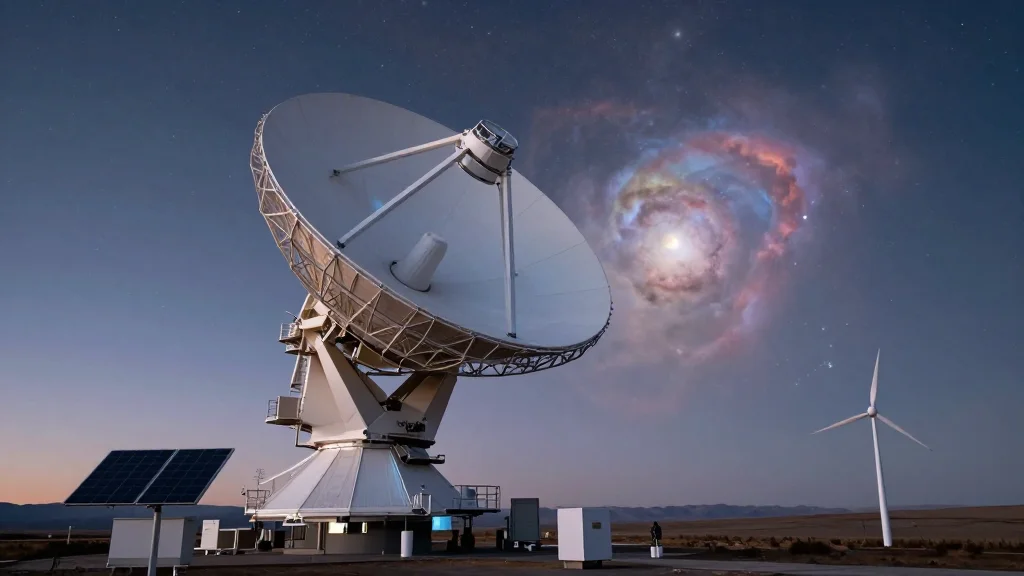
- •European consortium unveils AtLAST, a 50‑meter sub‑millimetre telescope to map cosmic dust.
- •Design includes over one million kinetic inductance detectors for rapid, wide‑field surveys.
- •Project budget estimated at €1.2 billion (≈ $1.3 billion) with funding sought from Horizon Europe.
- •AtLAST will operate on renewable energy, aiming for a carbon‑neutral footprint.
- •First light targeted for 2037, aligning with next‑generation space observatories.
Pulse Analysis
AtLAST represents a strategic pivot for European astronomy, moving from the era of niche, high‑resolution instruments toward a survey‑centric paradigm. The telescope’s scale and detector count are reminiscent of the transition that occurred when the Sloan Digital Sky Survey (SDSS) shifted the field from targeted observations to massive data‑driven mapping. By delivering a comprehensive dust map, AtLAST could become the infrared analogue of SDSS, providing a baseline dataset that will be mined for decades.
Financially, the €1.2 billion price tag is steep, but the consortium’s emphasis on renewable power may offset long‑term operational costs and mitigate political resistance to large carbon footprints. The project’s success will hinge on securing multi‑national commitments, a challenge that mirrors the collaborative funding models of the Large Hadron Collider and the Square Kilometre Array. If Europe can marshal the necessary resources, AtLAST could cement the continent’s leadership in sub‑millimetre astronomy and create a platform for future upgrades, such as spectroscopic capabilities that would further enhance its scientific reach.
Looking ahead, AtLAST’s timeline dovetails with the maturation of JWST’s scientific legacy and the upcoming launch of the Nancy Grace Roman Space Telescope. The synergy between space‑based infrared observations and ground‑based sub‑millimetre surveys could unlock a new era of multi‑wavelength cosmology, where dust‑obscured star formation, galaxy assembly, and dark‑energy constraints are tackled simultaneously. In this context, AtLAST is not merely a new telescope; it is a keystone for the next generation of integrated, sustainable astrophysical research.
Europe Proposes AtLAST Telescope to Map Dusty Half of Universe
Comments
Want to join the conversation?
Loading comments...